
Trump Leaves China, Lacking Tangible Outcomes But Hinting at a More Stable Dynamic
Trump leaves China short on deliverables – President Donald Trump concluded his two-day visit to Beijing on Friday afternoon, departing without definitive answers on critical issues that have long strained U.S.-China relations. However, his exit was marked by a sense of renewed stability in the bilateral relationship, at least for the present moment. The leaders addressed a spectrum of topics, from trade and technology to regional security, during intense meetings. Yet, the overall atmosphere suggested a blend of cooperation and competition, with both sides expressing cautious optimism about their ongoing partnership.
The Framing of a ‘Stabilized’ Relationship
Despite the absence of immediate breakthroughs, Trump emphasized that the visit had laid the groundwork for a stronger connection with Chinese President Xi Jinping. “We’ve settled a lot of different problems that other people wouldn’t have been able to settle, and the relationship is a very strong one,” the president said during initial talks. This statement, however, offered no specific details on the agreements reached, leaving observers to speculate on the true extent of progress.
“We discussed the Taiwan, the whole thing with the arm sales, in great detail, actually, and I’ll be making decisions, but you know, I think the last thing we need right now is a war that’s 9,500 miles away,” Trump remarked aboard Air Force One as he left China.
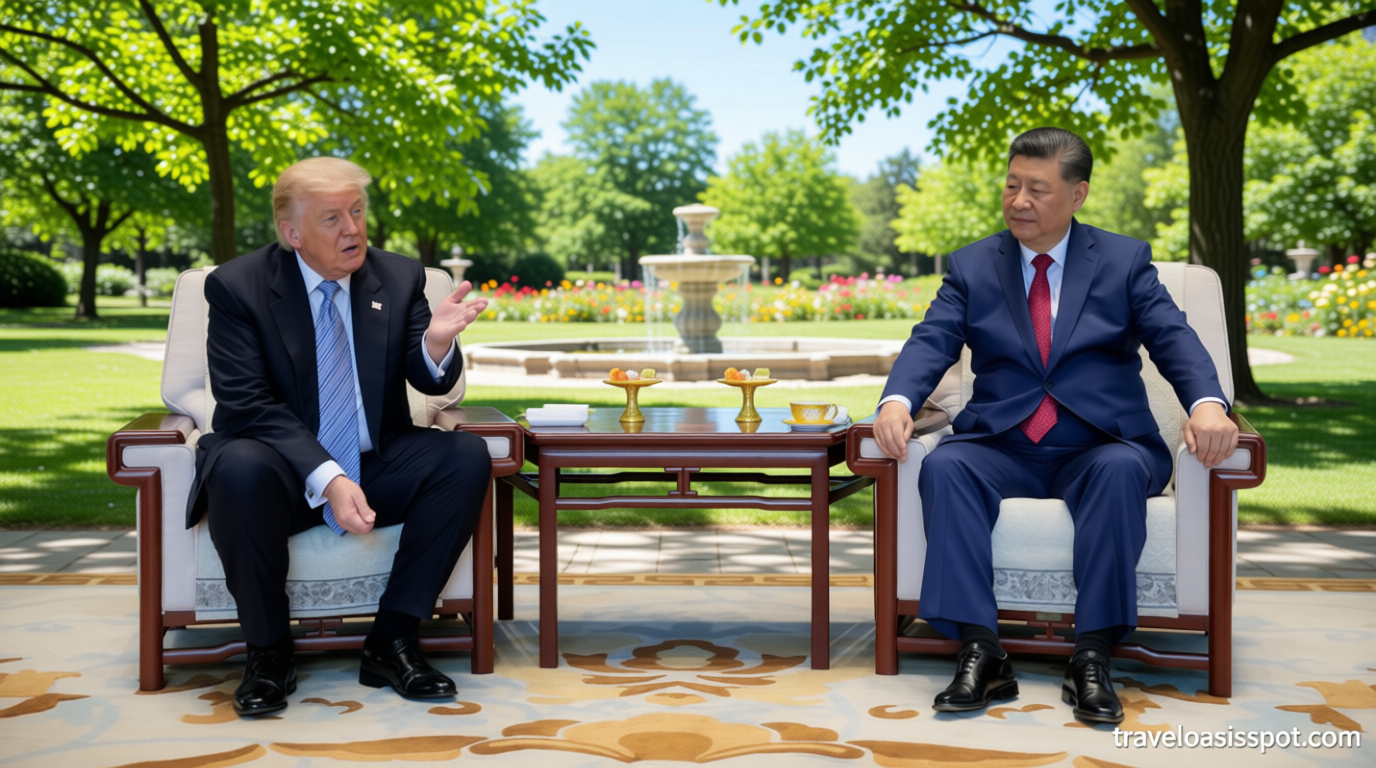
Trump’s remarks highlighted the delicate balance between strategic alignment and ideological differences. While he praised Xi’s willingness to engage, the Chinese leader also demonstrated a calculated approach to diplomacy. The visit included grand gestures of soft power, with Xi extending a literal and figurative red carpet to his guest, underscoring the symbolic importance of the meeting for their relationship.
Geopolitical Context and Regional Priorities
The summit occurred against a backdrop of global uncertainty, with tensions in the Middle East and concerns over economic stability casting a long shadow. Trump and Xi acknowledged the importance of maintaining a stable relationship, particularly as the world grapples with escalating conflicts and shifting alliances. The U.S.-Israel-Iran dispute, a recurring theme in recent discussions, was a key focus during their talks, though it remained unresolved.
China’s role in the Iran conflict emerged as a central topic. As a close diplomatic ally of Tehran and the largest buyer of its oil, Beijing has consistently positioned itself as a mediator in the region. Trump’s administration had hoped for China’s active support in easing tensions, but the final outcome suggested a more measured approach. Both leaders reiterated their commitment to keeping the Strait of Hormuz open and preventing Iran from acquiring nuclear capabilities, yet concrete steps toward resolving the crisis remained elusive.
Trade Talks and Economic Ambitions
The trade discussions, a staple of U.S.-China interactions, were no exception. Trump had promised sweeping agreements ahead of the trip, but details remained vague. While the White House released a readout stating that the two nations agreed on maintaining open trade routes and reducing tariffs, no formal commitments were made. Analysts noted that China’s position on trade concessions had not shifted significantly, leaving room for future negotiations.
Trump’s remarks on Taiwan, a flashpoint in Sino-American tensions, revealed his intent to assert U.S. influence without provoking a direct confrontation. “We discussed the Taiwan, the whole thing with the arm sales, in great detail,” he explained, suggesting that his administration might take a more flexible stance on the island’s status. This shift could be seen as a strategic move to avoid a costly military conflict, even as China continued to emphasize its sovereignty claims.
Amid these discussions, the potential for a U.S.-China energy deal was mentioned. The readout from the White House indicated that Beijing might increase its oil purchases from the U.S., a move that could help reduce its reliance on Iranian crude. However, the deal’s specifics were not confirmed, and its impact on broader trade relations remains uncertain.
Behind the Scenes and Unseen Agendas
While the public meetings showcased diplomatic warmth, the real negotiations likely took place in private. Trump’s team had hoped to leverage the visit to secure China’s backing in the Iran conflict, but the Chinese leader appeared to retain control of the agenda. Xi’s early proposal to help resolve the crisis was met with cautious acceptance from Trump, who did not immediately commit to specific actions.
Experts had speculated that Xi entered the talks with the upper hand, given China’s economic leverage and growing technological prowess. Yet, the summit provided an opportunity for the U.S. to assert its own influence. Trump’s emphasis on Taiwan and arms sales signaled a willingness to address regional concerns, even as China reiterated its opposition to U.S. military involvement in the island’s affairs.
Secretary of State Marco Rubio, in a separate interview with NBC News, noted that the U.S. had not explicitly asked China to mediate the Iran dispute. This raised questions about the extent of American leverage during the talks. The White House readout, released after the summit, highlighted shared goals such as maintaining open sea lanes and preventing nuclear proliferation, but it also reflected China’s steadfast position on its territorial disputes.
Legacy of the Summit and Future Implications
Trump’s departure from China marked a pivotal moment in the evolving dynamics of the U.S.-China relationship. While the visit did not yield major concessions on all fronts, it signaled a willingness to engage in dialogue and manage differences. The leaders’ public praise for each other and their emphasis on mutual interests suggest a transition from adversarial competition to a more cooperative framework.
Despite these signs of stability, challenges remain. The trade war, which had dominated headlines for years, showed no clear resolution, and the Iran conflict continues to test the limits of U.S.-China coordination. However, the summit’s outcome may be seen as a necessary step toward establishing a more predictable geopolitical order. “I think it will go down as a very important moment in history,” Trump told Fox News. “And maybe more than anything else, a great moment of respect.”
As Trump prepares to return to Washington, the focus will shift to domestic policy and the upcoming presidential election. The China visit, while lacking definitive deliverables, has provided a framework for future cooperation. Whether this translates into lasting agreements or continued friction will depend on the priorities of both nations in the months ahead. For now, the leaders’ ability to engage in dialogue, even amid diverging interests, offers a glimmer of hope in a world increasingly divided by ideological and strategic divides.
Meanwhile, the U.S.-China relationship continues to evolve, shaped by shifting global circumstances and domestic political agendas. The summit’s mixed results underscore the complexity of managing such a multifaceted alliance, where cooperation and competition coexist. As both leaders look to the future, the question remains: will this renewed sense of stability endure, or will it prove to be a temporary truce in an ongoing struggle for influence?





