
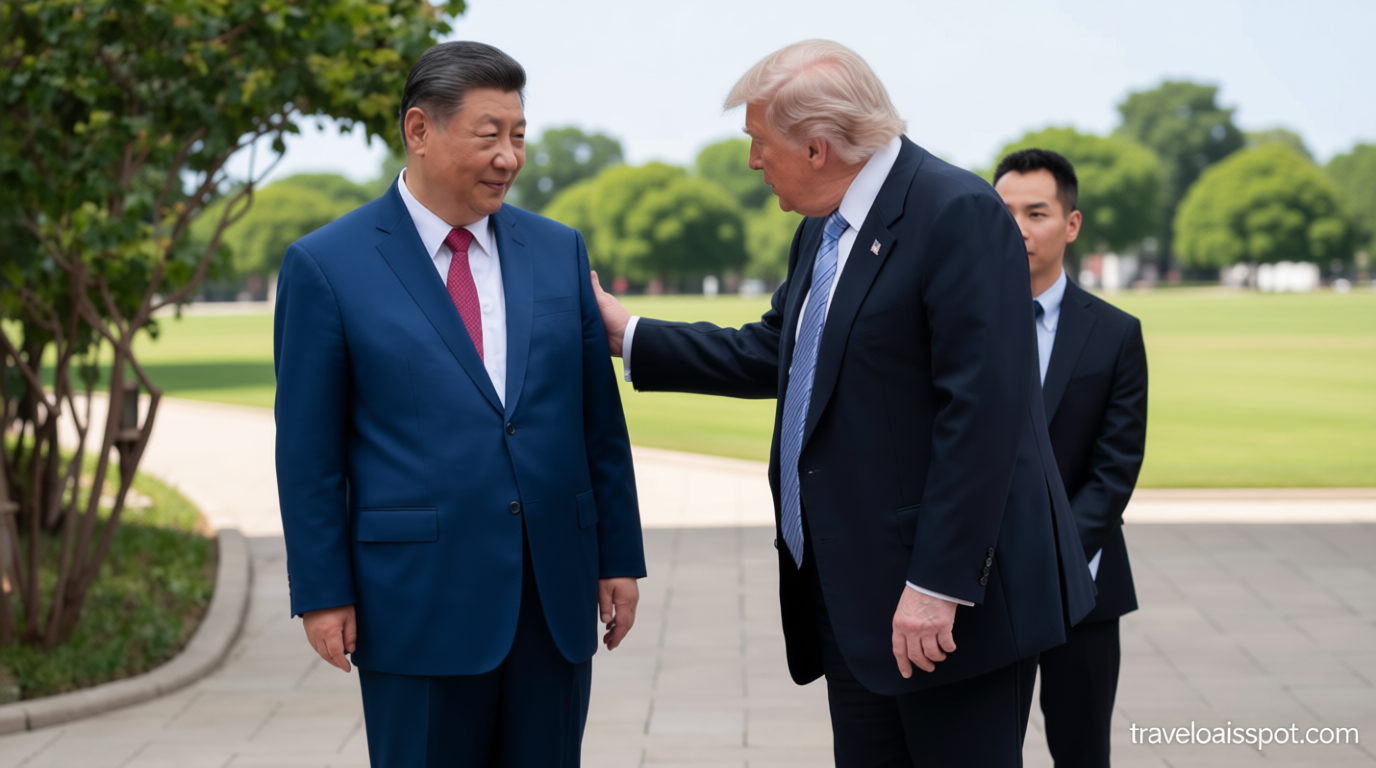
Trump’s Soft Approach to China, in Stark Contrast
Trump s soft touch on China – During his recent visit to Beijing, President Donald Trump’s demeanor toward China diverged sharply from his earlier public rhetoric. While he had long framed himself as a firm leader in the trade wars against Beijing, his actions and statements during the trip hinted at a more conciliatory stance. This subtle shift in tone, characterized by a willingness to compromise, became evident as he engaged with Chinese officials and addressed key issues at the conclusion of his journey.
Concessions on Taiwan
Taiwan emerged as a central topic during the visit, reflecting the strategic complexity of U.S. policy toward the island. The “one China” policy, which acknowledges Taiwan as part of China, has long been a cornerstone of American foreign relations, yet the U.S. also maintains a policy of “strategic ambiguity” to deter Chinese aggression. For much of the trip, Trump sidestepped direct commentary on Taiwan, even as his aides and media outlets focused on it. Notably, Fox News’ Sean Hannity did not raise the issue during his post-trip interview with the president, signaling a deliberate effort to avoid confrontation.
“What am I going to do, say I don’t want to talk about it?” Trump remarked when asked about the 1982 agreement that previously tied U.S. arms sales to Taiwan to China’s approval. “Because we have an agreement signed in 1982? No, we discussed arms sales.”
At the end of the trip, Trump acknowledged that he and President Xi Jinping had debated a pending $14 billion arms sale to Taiwan. While he stopped short of confirming the deal, his statement that he would “make a determination over the next fairly short period” was a clear concession to Beijing. This hesitation contrasts with past administrations, where the U.S. often positioned itself as a defender of Taiwan’s autonomy. Trump’s ambivalence on the issue suggests a prioritization of broader diplomatic goals over the island’s political status.
Softening on Sanctions and Espionage
Trump’s willingness to accommodate China extended beyond Taiwan. During a press conference aboard Air Force One, he expressed openness to lifting sanctions on Chinese firms involved in purchasing Iranian oil, a move that could ease tensions with Beijing. This decision, while not definitive, marks a departure from his earlier stance of economic pressure.
His approach to China’s espionage activities was equally measured. When questioned about cyberattacks, Trump dismissed the issue as a mutual concern, asserting, “You know, what they do, we do too.” He added, “We spy like hell on them too. I told him, ‘We do a lot of stuff to you that you don’t know about.’” This line, delivered with characteristic bluntness, underscored his preference for dialogue over confrontation, even on matters that had previously been central to U.S.-China tensions.
“Honestly, you know, they do things to us, and we do things to them.”
Trump’s diplomatic style has always been marked by a blend of assertiveness and flexibility. His comments on China’s “nefarious” intent during the trip further exemplified this balance. By refraining from harsh criticism and instead emphasizing mutual interests, he signaled a shift toward cooperation, even as he hinted at future challenges.
Reversing Campaign Promises
Trump’s Beijing visit also marked a significant reversal on two key campaign pledges. In 2024, he had vowed to free Jimmy Lai, a prominent Hong Kong journalist imprisoned for criticizing the Chinese government, calling it “going to be so easy.” He claimed the effort would be straightforward because of Xi’s perceived lack of respect for Biden and Kamala Harris. However, during the trip, Trump tempered this rhetoric, acknowledging that freeing Lai was “a tougher one” and that he had “brought it up” but no guarantees were made.
Similarly, his commitment to banning Chinese ownership of American farmland was called into question. Trump had previously framed the issue as a threat to U.S. interests, arguing that politicians were “allowing our country to be sold out from under us.” Yet, on Air Force One, he suggested the policy might not be as rigid as once thought. “Look, it’s not that I love it,” he said, “You want to see farm prices drop? You want to see farmers lose a lot of money? Just take that out of the market.” This line, while not a complete reversal, hinted at a pragmatic recalibration of his position.
“Do you think China would let us go in and buy their land and do what they do? I don’t think so, OK?”
Trump’s comments on Chinese student visas further illustrated his evolving perspective. He had previously pledged to aggressively revoke visas for Chinese students, warning that their presence in the U.S. would “see our university system die.” On the trip home, however, he described the students as “good students,” implying a more favorable view. “‘I don’t want any students’ is a very insulting thing to say to a country,” he noted, emphasizing the importance of maintaining goodwill with Beijing.
Implications for U.S.-China Relations
While Trump’s trip did not yield major breakthroughs in trade or strategic agreements, the concessions he made suggest a growing focus on managing relations rather than aggressively challenging China. His tendency to keep options open has always been a hallmark of his leadership, but this trip reinforced that flexibility. Whether these moves reflect a genuine softening or a tactical adjustment to ensure smooth diplomatic interactions remains a subject of debate.
Trump’s willingness to pivot on multiple issues—Taiwan, arms sales, sanctions, and student visas—highlights the fluid nature of his foreign policy. Critics argue that his softening stance risks undermining U.S. commitments to Taiwan and other allies, while supporters see it as a necessary step to foster economic and political cooperation. The question now is whether these concessions will solidify his administration’s relationship with China or pave the way for future tensions.
As Trump’s comments during the trip demonstrate, his approach to China is as much about pragmatism as it is about rhetoric. By avoiding direct confrontations and emphasizing shared interests, he has created a narrative of collaboration that could reshape the U.S.-China dynamic. Yet, the enduring challenge remains: balancing the need for strength with the appeal of diplomacy, even in a landscape as complex as international relations.
Ultimately, Trump’s Beijing visit serves as a microcosm of his broader strategy. While he has consistently portrayed himself as a tough negotiator, the concessions he made during the trip reveal a willingness to adapt. This duality—combining firm rhetoric with flexible actions—has defined his leadership style, and it continues to influence his interactions with China. The real test will come in the months ahead, as his administration navigates the intricate web of global alliances and economic dependencies.





