US Demands Iran Public Guarantees for Strait of Hormuz
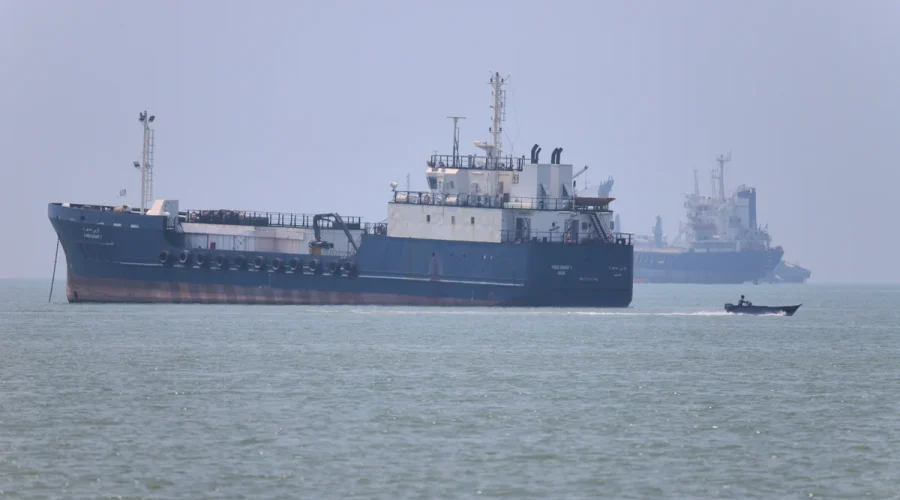
US demands Iran publicly guarantees Strait – The United States has formally demanded that Iran publicly guarantees the Strait of Hormuz remains open and safe for international shipping. This diplomatic pressure comes as Washington seeks explicit assurances that vessels navigating the critical waterway will face no hostile actions. The demand follows escalating tensions and recent military confrontations in the region.
Internal Power Struggle Behind Attacks
US officials have attributed the most recent attacks on commercial vessels to an internal power contest within Tehran. According to sources, hardline factions are attempting to undermine the delicate truce agreement that was recently established, while more moderate elements seek to maintain stability through diplomatic channels.
Trump Signals Continued Engagement
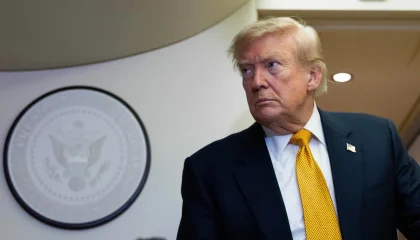
President Donald Trump announced that American representatives would maintain dialogue with Iranian officials despite the conclusion of hostilities. However, he made clear that the temporary cessation of fighting has officially ended.
“The Islamic Republic of Iran has asked us to continue ‘talks’. We have agreed to do so, but the United States has stated to them, in no uncertain terms, that the Cease Fire is OVER!”
Trump’s statement appeared on his Truth Social platform on Friday, emphasizing that while negotiations would proceed, the window for a lasting resolution remains constrained by the current circumstances.
Iran Asserts Sovereignty Over Gulf Waters
As Washington sought explicit commitments from Tehran, Iran’s highest-ranking representative at the United Nations countered by declaring that all operations within the Gulf corridor fall solely under Iranian jurisdiction. Amir Saeid Iravani, Iran’s ambassador to the UN, warned that outside intervention would breach the interim arrangement.
“Any attempt, by external actors, to interfere with or establish a power arrangement would violate the (interim deal), and undermine its implementation, delay the restoration of normal commercial navigation, jeopardise maritime safety, and increase regional tensions.”
The ambassador’s remarks highlighted Tehran’s position that the interim agreement grants Iran exclusive authority over maritime activities in the region.
Commercial Disruption and Economic Implications
The initial agreement between the two nations establishes a sixty-day period during which ships may navigate the strait without tolls, pending resolution of Iran’s nuclear program disputes. Under this framework, Iran and Oman, alongside other Gulf nations, will determine how the waterway will be administered going forward.
Despite these provisions, Iran has pursued strategies to strengthen its position, including requiring vessels to obtain authorization before transiting and signaling that fees may be introduced in the future. These measures have contributed to a significant decline in shipping traffic through the channel, with volumes already substantially reduced compared to pre-conflict levels.
The American military has been actively working to challenge Iranian assertions that it maintains complete control over the sea route and that navigation is restricted to designated corridors approved by Tehran.
Broader Diplomatic and Military Developments
Earlier in the week, President Trump characterized the Iranian leadership as “scum” and expressed skepticism about the value of continued engagement with the current regime. His comments came following Iran’s targeting of three oil tankers in the strait, which has become a focal point of regional conflict since the United States and Israel initiated military operations on February 28.
Looking ahead, Trump indicated that Washington might reinstate its blockade of Iranian ports, building upon the decision to revoke Tehran’s authorization to export oil. In a complementary action, the US Treasury Department imposed sanctions on Ali Ansari, a Dubai-based banker and businessman who had previously been penalized by Britain for his financial support of Iran’s Islamic Revolutionary Guard Corps.
Before the most recent escalation, both sides were preparing to resume negotiations following the funeral of Ayatollah Ali Khamenei, Iran’s supreme leader, who died on the opening day of the conflict. International mediators have been conducting intensive diplomatic work to revive the damaged peace process.
Meanwhile, Israel has positioned itself to respond decisively if renewed confrontation becomes necessary. Defense Minister Israel Katz declared that his country would return with enhanced military capability should the situation demand it.