
Scotland’s Skywatchers Await Rare Lunar Shadow Despite Cloudy Forecast
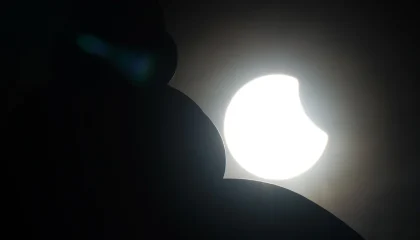
Traveloasisspot.com – Residents across Scotland ventured outdoors on Wednesday evening, hoping to witness one of the most significant celestial events of their lifetime. A partial solar eclipse, which would obscure the vast majority of the sun’s disk, promised to be a once-in-a-generation spectacle for many observers. Unfortunately, a persistent layer of cloud threatened to obscure the view for numerous spectators across the nation. The astronomical phenomenon occurred between approximately 6pm and 8.15pm on August 12, marking the most substantial solar obscuration visible above British skies since the total eclipse of 1999. For many Scots, this represented a rare opportunity to observe such a dramatic celestial alignment without traveling abroad.
A Celestial Milestone for Local Skies
The eclipse was projected to remain the most complete over local horizons until the year 2081, making it particularly meaningful for families with young children. The moon’s shadow swept across the British Isles, with varying degrees of coverage depending on geographic location. In Inverness, the eclipse reached its zenith at 7:03pm, with 90.74% of the sun’s surface hidden from view. Edinburgh observers experienced their peak moment slightly later at 7:06pm, when 90.71% of the solar disk was concealed. Western regions of Scotland enjoyed even more dramatic coverage, with some areas experiencing over 92% obscuration.
Community Gathering and Creative Viewing
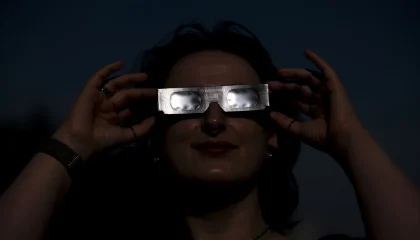
Skywatchers converged on popular viewing locations throughout the evening, creating a festive atmosphere in cities and towns alike. Calton Hill in Edinburgh became a particular hotspot, with the city’s astronomical society organizing a formal viewing event that attracted crowds of enthusiasts. The demand for proper viewing equipment was evident, as long queues formed at the observatory gates early in the evening. Supplies of eclipse glasses proved popular, though many were distributed by approximately 6pm. Undeterred by the shortage, creative spectators brought alternative viewing tools, including kitchen colanders and homemade devices constructed from cereal boxes or paper sheets.
Weather Forecasts and Reality
Prior to the event, meteorological experts had offered cautious optimism. The Met Office indicated that while cloud cover was present across much of Scotland, there remained a “reasonable chance” for observers in the majority of the country to witness the eclipse. Those positioned in the far northwestern regions faced more challenging conditions, with forecasters describing their prospects as only a “low chance.” The prediction proved partially accurate, as the forecaster noted: “North-west Scotland will see the poorest conditions, while cloud breaks across Scotland, Northern Ireland and northern England should allow many to observe it.” Edinburgh’s skies presented a mixed picture throughout the eclipse period. Hazy clouds persisted for much of the duration, with the sun entirely concealed behind thicker cloud formations during the fifteen minutes preceding the peak moment.
Personal Reflections on a Shared Experience
As the eclipse progressed, observers could be heard discussing the cloud patterns, wondering whether a temporary gap would allow them to catch a clear view of the phenomenon. Their patience was eventually rewarded when the sun re-emerged shortly before 7pm, revealing a partially-covered solar disk to cheering crowds. Sophie Harju, a 26-year-old NHS worker from Edinburgh, utilized both a homemade pinhole camera and a colander to observe the event. She described the experience as “impressive,” noting that while the darkness hadn’t deepened as much as anticipated, the social aspect was rewarding. “It was a nice experience to see so many people out,” she reflected. “It was a cool event to be part of and nice to see a little bit.” Jack Nevin, 27, who works in sustainability, appreciated the communal nature of the occasion. “They like when you can metric something, when you can say ‘this won’t happen again until this time’,” he explained. “I think people like to get together when there is something they can say is unique and novel.” David Ellis-Shea, 34, brought his wife and eight-month-old daughter to witness the celestial display. Wearing eclipse glasses, he described watching the moon pass slowly across the sun through breaks in the clouds. “We got very lucky to see it perfectly as it crossed over a sort of gap in the clouds. Almost perfect timing really,” he said. For Ellis-Shea, the significance extended beyond the immediate moment. He emphasized the importance of sharing this experience with his infant daughter, noting that the next eclipse of comparable scale would not occur until 2081. “We were both reflecting that we probably won’t be here for that, but she may well be,” he shared. “And it was just a special moment to share with her, and hopefully she’ll be able to share that moment in the future with her family if she’s still around then, and remember the time she spent with us here.”
Looking Ahead
The eclipse served as a reminder of humanity’s enduring fascination with the cosmos. While modern technology allows us to predict celestial events with remarkable precision, the experience of watching the moon’s shadow sweep across the sun remains profoundly moving. For the families who gathered on Wednesday evening, the event offered not only a glimpse of astronomical wonder but also a tangible connection to future generations who might one day witness the same phenomenon. As Scotland’s skywatchers packed up their viewing equipment and headed home, many expressed satisfaction that despite the clouds, they had been fortunate enough to experience this rare celestial alignment. The eclipse of August 12 would join the annals of Scottish astronomical history, remembered fondly by those who braved the weather to witness it.
Related Reading
Frequently Asked Questions
What is Scots contend with clouds to catch?
Scots contend with clouds to catch is the main topic of this guide. The article explains the context, practical details, and next steps readers should understand.
Why does Scots contend with clouds to catch matter?
Scots contend with clouds to catch matters because readers are looking for a useful answer, not just a short summary. Good content should match search intent and help them decide what to do next.