
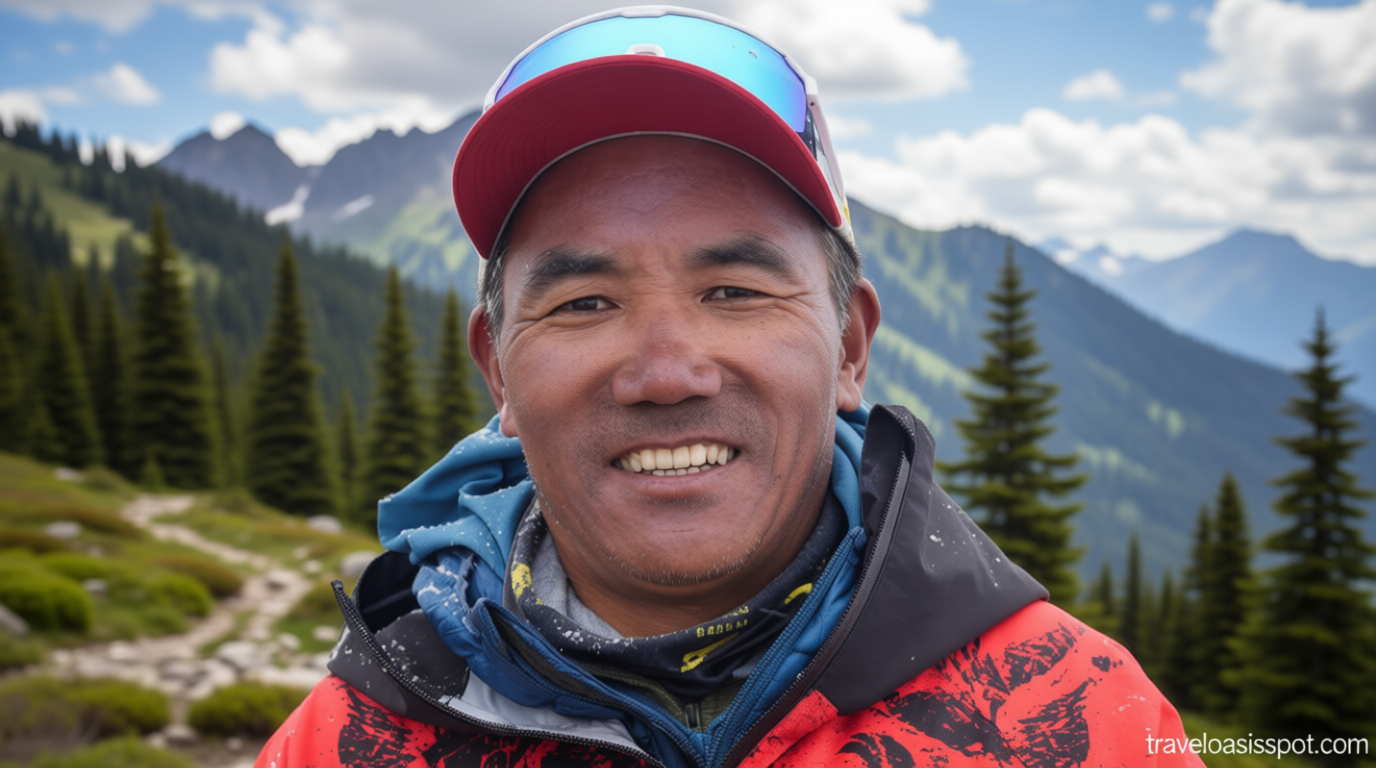
Nepali Sherpa scales Mount Everest for a record 32nd time
Nepali Sherpa scales Mount Everest – On Sunday, a celebrated Nepali Sherpa guide, Kami Rita Sherpa, made history by reaching the summit of Mount Everest for the 32nd time, according to an official statement. This achievement surpassed his own previous record, which was set last year, marking a significant milestone in mountaineering. At 56 years old, Rita, hailing from the Thame village in Solukhumbu district, climbed the 8,849-metre (29,032-foot) peak while assisting clients from the 14 Peaks Expedition company. The Nepal Department of Tourism hailed his accomplishment as a “historic milestone,” emphasizing his role in advancing mountain tourism through his dedication and expertise.
According to the statement, Rita summited the world’s highest mountain at 10:12 a.m. local time, which translates to 12:27 a.m. ET. The same report noted that a female Sherpa, Lakhpa, 52, also achieved her 11th successful ascent to Everest’s summit, a remarkable feat that highlights the contributions of women in the region’s climbing community. While details of the specific climbs were not disclosed, the milestone underscores the resilience and skill of the Sherpa people, who have long been integral to the success of expeditions on Everest.
“Kami Rita’s 32nd summit represents not just a personal triumph but a testament to the enduring legacy of Sherpa guides in the annals of mountaineering,” said a representative from the Nepal Department of Tourism. The agency also praised the Sherpa community for their unwavering support of climbers and their cultural ties to the mountain, which have made them indispensable to the global climbing industry.
Rita’s journey to Everest began in 1994, when he first reached the summit. Since then, he has repeated the ascent annually, with the exception of 2014, 2015, and 2020, when the mountain was temporarily inaccessible due to logistical and environmental challenges. His record-breaking climbs have often occurred in a single season, with some years seeing him conquer the peak twice. This consistency has made him a symbol of perseverance in the world of high-altitude mountaineering.
The 32nd ascent by Kami Rita places him among the most accomplished climbers in history, though he is not the only one to have achieved multiple summits. Over 8,000 individuals have climbed Everest since it was first conquered in 1953 by Tenzing Norgay and Edmund Hillary, a New Zealander. However, the majority of these climbers are Sherpas, whose work on the mountain has been vital to the success of expeditions. Their role as porters, fixers, and guides has not only enabled countless adventurers to reach the top but also provided essential economic stability to their families.
Kami Rita shares a deep connection with Tenzing Norgay, as both originate from the Thame village in Solukhumbu district. This shared heritage has fostered a sense of pride and purpose among Sherpas, who often view their work on Everest as a blend of tradition and modern achievement. The 14 Peaks Expedition company, which Rita guides, is one of many organizations that rely on the Sherpa community’s expertise. Their ability to navigate the treacherous terrain, adapt to extreme weather, and maintain a steady pace has made them indispensable to the climbing industry.
Meanwhile, the record for non-Sherpa climbers remains with British guide Kenton Cool, who has summited Everest 19 times. Cool is followed closely by American climbers Dave Hahn and Garrett Madison, each with 15 ascents. Both Cool and Madison are currently on Everest, aiming to further their records during this climbing season. Their presence on the mountain reflects the competitive spirit that drives climbers to push their limits, even as the challenges of high-altitude climbing grow more demanding.
As the climbing season progresses, hundreds of adventurers are gathering at Everest’s base camp, eager to attempt the daunting journey to the summit. However, the path to the top has been complicated by the presence of a glacier, which has partially blocked access to the traditional routes. This obstacle has forced climbers to take alternative paths, adding an extra layer of difficulty to their ascent. Despite these challenges, the mountain remains a focal point for thrill-seekers and professionals alike, with its allure undiminished by the elements.
Authorities have issued 492 permits for Everest climbs during the current March-May season, allowing a steady flow of climbers to attempt the peak. This figure reflects the scale of international interest in the mountain, even as concerns about environmental impact and safety persist. Tragically, three Nepali climbers have lost their lives this month, underscoring the risks inherent in Everest expeditions. The combination of natural hazards, altitude sickness, and the physical demands of the climb continues to challenge even the most experienced climbers.
The Sherpa community’s role in Everest climbing extends beyond mere support; it is a way of life. For many Sherpas, guiding foreign climbers provides a critical source of income, particularly in a region where economic opportunities are limited. This financial stability allows families to meet basic needs and invest in their children’s futures. However, the reliance on climbing also means that the Sherpas are deeply affected by the mountain’s challenges, both environmental and human.
As Kami Rita’s record stands as a symbol of perseverance, it also raises questions about the sustainability of such frequent climbs. With over 8,000 people having summited Everest, the question of whether the mountain can continue to support this level of activity without long-term damage to its ecosystem is increasingly relevant. Experts argue that the balance between economic benefits and environmental preservation must be maintained, ensuring that future generations can also experience the majesty of Everest.
For now, Kami Rita’s 32nd ascent remains a defining moment in the history of the mountain. His journey highlights the intersection of tradition, skill, and modern ambition, as Sherpas continue to play a central role in the global quest to conquer Everest. As the climbing season unfolds, the mountain’s summit will once again be a beacon of human achievement, drawing adventurers from every corner of the world to test their limits against the elements.





