
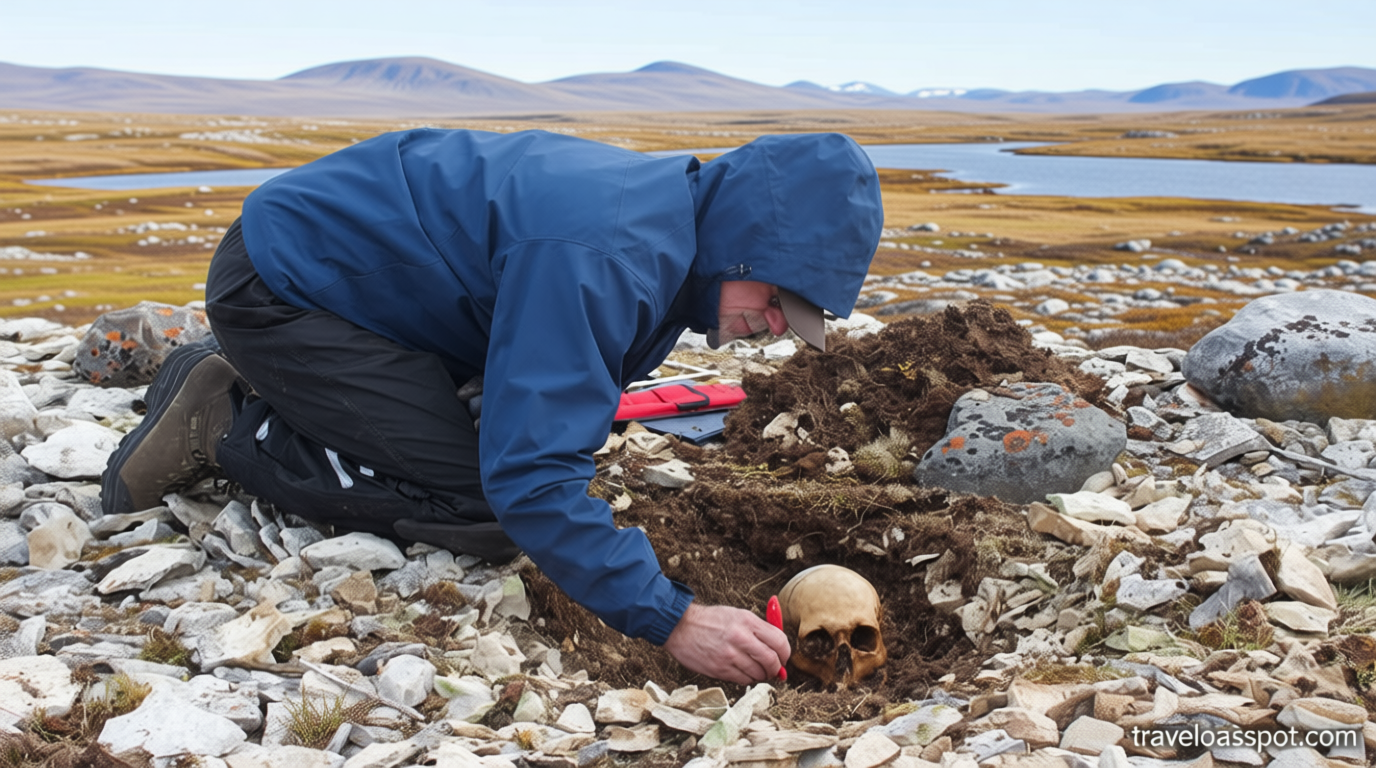
DNA Unveils the Identities of Four Crew Members from the 1845 Franklin Expedition
DNA reveals identities of 4 sailors – For over a century and a half, the mystery surrounding the Franklin expedition has captivated historians and scientists alike. The discovery of four sailors’ remains through DNA analysis, matched with their living descendants, has brought new clarity to the tragic journey of the 1845 voyage. This breakthrough, achieved by a team from Ontario’s University of Waterloo and Lakehead University, not only resolved a long-standing case of misidentification but also expanded the understanding of the crew’s fate in the Arctic.
A Quest for the Northwest Passage
The Franklin expedition aimed to chart the Northwest Passage, a vital maritime route connecting the Atlantic and Pacific oceans through the Arctic. This goal held immense significance for British naval authorities and merchants, as it promised a more efficient trade path between Europe and Asia. Two ships, the HMS Erebus and HMS Terror, set sail with 129 crew members, but their journey ended in disaster. After becoming immobilized by Arctic ice for nearly two years, the crew abandoned the vessels in April 1848. The remaining 105 men struggled to survive on King William Island, now part of Nunavut, but none lived to see the end of the expedition.
The ships’ wreckage and scattered artifacts were later found by Inuit hunters and early explorers, yet the identities of the crew members remained elusive. Until recently, researchers relied on fragmented remains and limited historical records to piece together the story. However, a new approach using genetic testing has transformed this field of study. By comparing DNA from the skeletal remains with genetic profiles of living descendants, scientists have been able to confirm the identities of individuals long presumed lost to history.
Breaking the Identity Puzzle
Four crew members have been identified through this method: John Gregory, an engineer aboard the Erebus; James Fitzjames, the ship’s captain; and three others whose remains were previously unlinked to specific individuals. The identification of Fitzjames, in particular, offered compelling evidence of the crew’s desperation, as his bones showed signs of cannibalism. This finding aligns with accounts of the expedition’s final days, when starvation forced survivors to consume the bodies of the dead.
Among the most intriguing revelations is the resolution of a case of mistaken identity. Researchers had long been puzzled by a set of remains found with documents that suggested a different individual, but DNA analysis provided the missing link. “We are trying to add more pieces to the puzzle, the genetic side of it, since it hadn’t been done before,” said Dr. Douglas Stenton, lead study author and adjunct assistant professor of anthropology at the University of Waterloo. His words underscore the transformative role of genetics in unraveling the expedition’s secrets.
“We had to track down people who were directly related to a member of the Franklin expedition with an uninterrupted inheritance of DNA from one generation to the next,” he explained.
The process began with the collection of bone fragments from the Arctic sites, which were then analyzed for age, sex, and physical traits. Some remains were ideal for DNA extraction, allowing scientists to create a genetic profile that could be matched against living relatives. This work was made possible by the collaboration between researchers and the Inuit community, whose oral traditions played a critical role in locating the wreck sites of the Erebus in 2014 and the Terror in 2016.
Mapping the Wreck Sites
Dr. Stenton, who served as the director of heritage for Nunavut’s government in 2008, was instrumental in the search for the Franklin expedition’s remains. Using a combination of sonar technology and insights from Inuit oral histories, the team located the wreckage and conducted extensive surveys of the surrounding land. Over six years, from 2008 to 2023, they mapped the sites using photography and lidar, a method that employs laser pulses to create detailed topographical maps.
These efforts revealed not only the physical locations of the ships but also the paths the surviving crew took during their desperate attempt to reach safety. The researchers collected artifacts and skeletal remains for conservation, ensuring they could be studied further. “We wanted to think about how we might be able to contribute to work that others had done before us,” Stenton added. “Something that hadn’t been done was genetic analysis to see if we could identify who these men were.”
A New Chapter in the Expedition’s Story
The use of DNA has opened a new chapter in the Franklin expedition’s narrative, one that connects the past to the present. As more descendants participate in the research, the team continues to uncover details that were previously hidden. “It’s opening up a new chapter in the story of the Franklin expedition, and something that I like about this is that chapter is being written by the families of the men who never made it home,” Stenton noted.
The findings have also raised important questions about the causes of the crews’ desertion and ultimate demise. While the DNA analysis confirms identities, it does not explain the conditions that led to the expedition’s failure. Researchers hope that the growing genetic database will shed light on these mysteries, offering answers to why the crew resorted to cannibalism and how they navigated the harsh Arctic environment.
Stenton’s work highlights the interdisciplinary nature of modern archaeological research. Combining traditional methods like sonar and lidar with genetic analysis, the team has brought together history, science, and indigenous knowledge to piece together the story of the Franklin expedition. This collaboration underscores the importance of preserving cultural heritage and the role of local communities in uncovering historical truths.
The Legacy of a Frozen Expedition
The Franklin expedition remains a poignant symbol of human ambition and the perils of exploration. The Arctic, with its unforgiving climate and isolation, proved to be a formidable challenge. Yet, the recent genetic breakthroughs offer a glimmer of hope, transforming scattered bones into personal stories. As more family connections are discovered, the expedition’s legacy continues to evolve, with each new identification adding depth to the narrative of those who perished in the icy wilderness.
For Stenton, the work is both a scientific endeavor and a personal tribute. “Once you get hooked by the Franklin expedition, you want to keep going back to try and find as many more pieces of the puzzle as possible that you can,” he remarked. This dedication reflects the enduring fascination with the expedition and the power of modern technology to resurrect the past. The DNA revelations may not solve all the mysteries, but they provide a foundation for future discoveries, ensuring that the stories of these sailors are never forgotten.
As the research progresses, the team is expanding their efforts to include more descendants and explore additional sites. The Arctic, once a graveyard of secrets, is now a living archive of human history, with every bone fragment and artifact offering a new clue. The Franklin expedition’s tragic tale continues to unfold, thanks to the persistence of researchers and the invaluable contributions of those who carry their genetic legacy forward.





