Recovery Cranes Roll In as Lewes–Haywards Heath Line Stays Shut Through Late August
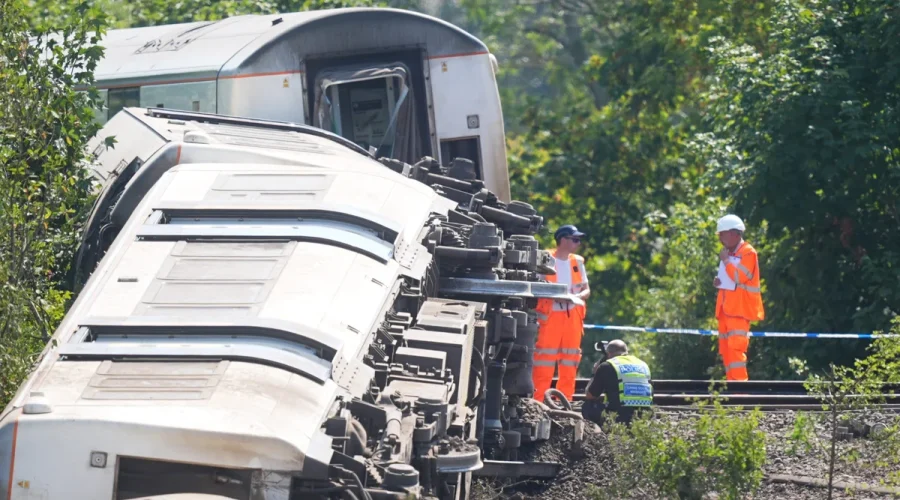
Traveloasisspot.com – The stretch of rail linking Lewes in East Sussex with Haywards Heath in West Sussex will not reopen before Wednesday 26 August at the earliest, Network Rail and Southern Rail confirmed in a joint announcement on Sunday. The closure follows a derailment that occurred Thursday near Lewes, sending three carriages partway down an embankment and leaving two passengers with serious injuries aboard a Southern service carrying roughly 150 travellers.
The recovery operation has now entered its most physically demanding phase. Two rail-mounted cranes rated at 125 tonnes each — among the heaviest lifting assets available anywhere on Britain’s railway network — are being positioned at the accident site. Because road access to the derailment location is severely constrained, specialist equipment had to be delivered by rail itself, a logistical complication that adds days to an already protracted timeline.
Why This Recovery Is Unusually Complex
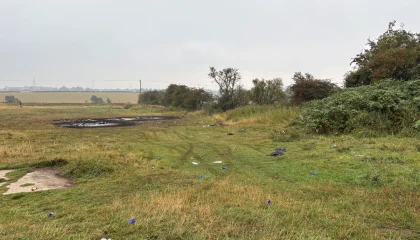
The geography around the crash site compounds every challenge. The embankment sits adjacent to a river, and the surrounding land is designated as a Site of Special Scientific Interest, meaning engineers must work within tight environmental constraints while heavy machinery operates metres from sensitive habitats. Road access into the area is limited, which is precisely why the cranes arrived on rails rather than by lorry.
Network Rail described the combined effect of these factors as making the recovery “particularly difficult.” Until all three derailed carriages are fully lifted clear of the trackbed, engineers cannot conduct a complete structural assessment of the rails, sleepers, ballast, and embankment. Only once that assessment is finished can a realistic repair schedule be drawn up and services safely restored.
Injury Picture and Investigation Status
British Transport Police updated the public on Friday, confirming that the two passengers with serious injuries were not considered to be in life-threatening condition. Eighteen additional passengers who had been taken to hospital for observation or minor treatment had since been discharged.
The Rail Accident Investigation Branch (RAIB), which holds statutory authority over all major rail incidents in the UK, completed its on-site examination on Saturday and formally returned control of the location to Network Rail. The RAIB’s final report will examine track geometry, signalling, vehicle condition, and operational factors to determine what caused the carriages to leave the rails.
What Travellers Need to Know
For the coming weeks, commuters and holidaymakers using the Lewes–Haywards Heath corridor face significant disruption. Network Rail and Southern Rail advised customers travelling in the period ahead to check journey status before setting out and to consider alternative routes via Brighton wherever possible.
A limited number of rail replacement buses will operate between Lewes and Haywards Heath, calling at Cooksbridge and Plumpton stations along the way. Capacity on these services will be restricted, so peak-hour journeys may require waiting for subsequent departures.
Ticket holders are not left without options: valid Southern, Thameslink, and Southeastern tickets will be honoured on relevant alternative train services. Brighton & Hove Buses and London Underground routes connecting the two London terminal stations also accept these tickets, giving passengers a multimodal fallback for getting across the capital.
Leadership Response
John Whitehurst, Chief Executive Officer of Greater Thameslink Railway (GTR), the operator behind Southern services, addressed both affected customers and local residents directly.
“It has been an incredibly difficult time for our customers and colleagues, and our thoughts remain with everyone affected by this, particularly the family and friends of those who have been injured. We recognise the impact this incident will have on customers’ journeys in the days ahead, and we’re working closely with Network Rail to do everything we can to keep people moving while recovery work continues and the railway is restored safely.”
Whitehurst also acknowledged that the closure ripples beyond the rail network into the daily lives of Lewes residents.
“We know this recovery effort is not only affecting rail customers, but also local communities around Lewes, and I’d like to thank them for their patience and understanding while our teams work to restore the railway.”
Lucy McAuliffe, Network Rail’s Sussex Route Director, framed the operation in engineering terms while underscoring its human cost.
“This is a complex recovery operation in a very difficult location, and our teams are working hard to recover the carriages and repair the railway, to resume services safely as soon as we can. We know the closure is disruptive and the recovery work also affects people living close to the railway. I’m grateful for the support and understanding of the local community while we carry out this work, and for the patience of our customers during this time. We are working around the clock to get this done. We will share more updates as the recovery work progresses.”
Broader Context
The Lewes–Haywards Heath line forms part of a key commuter artery connecting East Sussex towns with London Victoria and other central terminals via Southern’s network. A closure of ten days or more during late August — when school holidays push holiday traffic onto the rails — amplifies pressure on alternative routes, particularly through Brighton station, which will see elevated passenger volumes as displaced travellers funnel through its platforms.
For Lewes itself, a town of roughly 35,000 residents whose economy depends partly on tourism and day-trippers arriving by rail, the loss of direct train access for two weeks or more represents a tangible economic and social disruption beyond the inconvenience of longer journeys. Local businesses, schools, and healthcare services that rely on rail connectivity will feel the knock-on effects throughout the closure period.
Network Rail has indicated it will issue further updates as each stage of the crane operation and subsequent track inspection progresses. The earliest possible reopening date remains Wednesday 26 August, though engineers have cautioned that the final timeline depends entirely on what the post-recovery structural assessment reveals about the extent of damage to the embankment and track infrastructure.
Related Reading
Frequently Asked Questions
What is Line where train derailed to remain?
Line where train derailed to remain is the main topic of this guide. The article explains the context, practical details, and next steps readers should understand.
Why does Line where train derailed to remain matter?
Line where train derailed to remain matters because readers are looking for a useful answer, not just a short summary. Good content should match search intent and help them decide what to do next.