Six Decades of Urgent Aid: How the Disasters Emergency Committee Raised Over £2.5 Billion Through Television
Traveloasisspot.com – When a major catastrophe strikes thousands of miles away, the question that follows within hours is rarely “what happened?” but rather “how do we help right now?” For sixty years, a single British mechanism has answered that question by uniting charities, broadcasters, and the public into one coordinated fundraising effort. The Disasters Emergency Committee (DEC) marked its six-decade anniversary alongside World Humanitarian Day, a milestone that coincides with the charity’s cumulative total exceeding £2.5 billion raised across eighty separate broadcast appeals.
From a 1966 Earthquake to a Global Response Network
The DEC’s origins trace back to 1966, when a devastating earthquake struck the town of Varto in eastern Turkey. In the aftermath, British broadcasters and aid organisations recognised that fragmented, competing appeals diluted both public generosity and operational efficiency. The solution was a single coordinating body that could pool resources, assign one appeal per crisis, and direct donations straight to the charities on the ground. That model has persisted, with modifications, ever since.
Over the decades, the DEC has responded to humanitarian emergencies spanning continents and decades — from the 1983 famine in Ethiopia to ongoing conflicts across the Middle East. Its operational structure relies on fifteen member charities, including World Vision, Save the Children, and the British Red Cross, each bringing specialised expertise to different types of crisis response.
Royal Patronage and Mainstream Broadcast Reach
The organisation has enjoyed sustained endorsement from the British royal family. The late Queen, the current King, the Queen, and the Prince and Princess of Wales have all lent their support to DEC appeals over the years. On the broadcast side, appeals have aired on the BBC, ITV, Channel 4, and Sky, giving them access to virtually every television household in the United Kingdom.
That reach has been amplified by a long roster of high-profile presenters. Dame Joanna Lumley, known to millions from Absolutely Fabulous, and Daniel Craig, the actor who brought James Bond to screen, have both fronted televised appeals. Sir Lenny Henry, Keira Knightley, Simon Pegg, Pakistani education activist Malala Yousafzai, and actor-rapper Riz Ahmed are among the many public figures who have stepped in front of cameras to urge viewers to give.
Stephen Fry on Why the Model Still Works
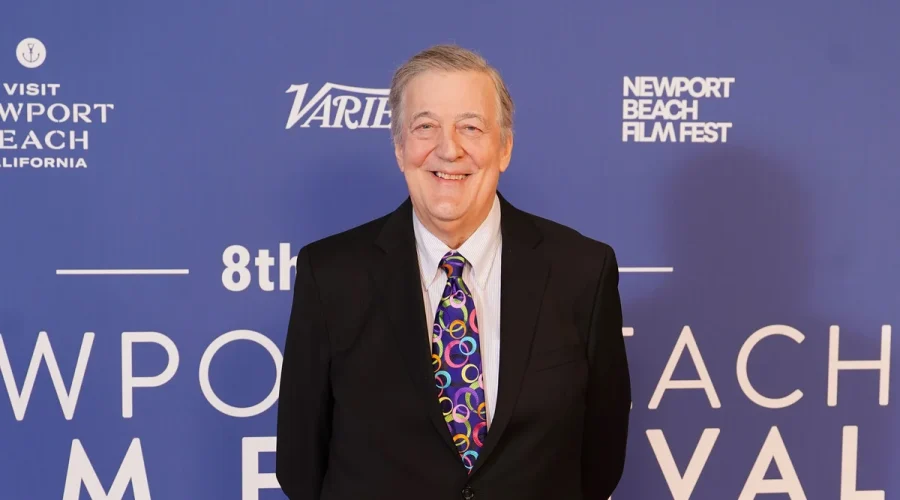
Actor and comedian Sir Stephen Fry, now 68, served as the face of the DEC’s appeal following Cyclone Nargis in Myanmar in 2008. Speaking on the occasion of the anniversary, he framed the organisation’s value in terms of speed and coordination:
“The DEC is all about bringing help where it’s needed at the time. The charities work together, and the money gets funnelled through straight away. It’s a brilliant system, and it’s worked for 60 years, and I hope will continue to do so.”
Fry’s emphasis on immediacy reflects a core design principle of the DEC: donations collected during a broadcast appeal are routed directly to member charities responding to that specific crisis, rather than being absorbed into general funds. This reduces administrative lag and ensures that aid reaches affected populations while the emergency window is still open.
Myleene Klass Remembers a Four-Year-Old in the Philippines
Myleene Klass, a Save the Children ambassador, visited the Philippines in the wake of Typhoon Haiyan in 2014. Her recollection of that trip, shared during the anniversary tributes, underscores the personal dimension that drives many celebrity advocates:
“I held a little girl’s hand, and she told me it was her birthday, and she asked me if I wanted to come and see her mum. I said, ‘of course’ and she walked me to her grave and this girl was four. When you’re a mum, that hits hard.”
Klass went on to connect that experience to the DEC’s broader function:
“It makes you determined to be able to do something if you can. So, I think in a time where no one knows what to do, the DEC does, and 60 years down the line it’s just incredible.”
Channel 4’s Krishnan Guru-Murthy on the Power of Coordinated Appeals
Channel 4 News presenter Krishnan Guru-Murthy was part of a team that appealed for aid to the former Yugoslavia in the early 1990s, a period when the region’s conflicts demanded sustained international attention. He described the experience as “really special” and highlighted the unusual coalition the DEC creates:
“The DEC brings together the charities and the broadcasters, all of whom sometimes compete for audiences, to try and raise money and change lives. All of us who go to those places around the world that are so in need have seen how much aid is needed and how much good that money can do.”
Guru-Murthy’s observation touches on a structural challenge: broadcasters normally vie for the same viewers, and charities often operate in overlapping regions. The DEC’s role as a neutral coordinator allows those entities to set aside competition during a crisis and present a unified message to the public.
Leadership Perspective: Saleh Saeed on Sixty Years of Public Generosity
Saleh Saeed, chief executive of the DEC, expressed pride in what he called the organisation’s “incredibly proud” record of successful emergency appeals over six decades. He pointed to the tangible outcomes of donor contributions:
“I’ve seen firsthand many times how donations have supported some of the world’s most vulnerable communities when they needed it most, helping people in the face of crisis to survive and recover.”
Saeed also directed gratitude toward the British public, whose repeated willingness to give during televised appeals has underpinned the model’s longevity:
“I am extremely grateful to the incredibly generous UK public for their longstanding support. As we look to the future and a changing world, DEC appeals continue to make a difference to families in urgent need.”
Why the Model Matters in an Era of Fragmented Attention
The DEC’s sixty-year track record arrives at a moment when global crises are more frequent and more geographically dispersed than at any point in the organisation’s history. Climate-driven disasters, protracted armed conflicts, and displacement crises now compete for public attention within the same news cycle. A coordinated broadcast appeal concentrates that attention into a single, time-limited call to action, channeling it toward verified, on-the-ground partners rather than leaving donors to navigate a maze of individual charity websites.
The £2.5 billion figure accumulated across eighty appeals represents not merely a financial total but a sustained public commitment: millions of households, over six decades, choosing to respond when a camera asks them to. Whether that commitment endures into the next sixty years will depend on the DEC’s ability to adapt its broadcast partnerships, member-charity coordination, and public messaging to a media landscape that is increasingly fragmented across digital platforms. The anniversary, timed to World Humanitarian Day, serves as both a retrospective and a reminder of what the mechanism was built to achieve — rapid, coordinated, life-saving aid delivered at the moment of greatest need.
Related Reading
Frequently Asked Questions
What is Stephen Fry pays tribute to brilliant?
Stephen Fry pays tribute to brilliant is the main topic of this guide. The article explains the context, practical details, and next steps readers should understand.
Why does Stephen Fry pays tribute to brilliant matter?
Stephen Fry pays tribute to brilliant matters because readers are looking for a useful answer, not just a short summary. Good content should match search intent and help them decide what to do next.