Funeral Mass Marks Fourth Burial After Wrong-Way M9 Crash That Claimed Five Teenage Lives
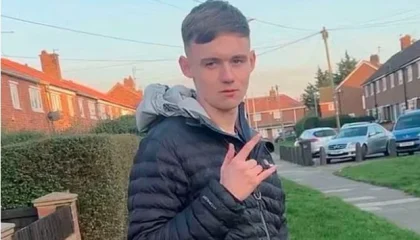
Traveloasisspot.com – The small town of Carlow in County Carlow became a scene of solemn mourning on Monday as hundreds gathered for the funeral of 18-year-old Jeremy O’Brien, the fourth of five young men killed when their car was driven the wrong way down Ireland’s M9 motorway in County Kildare. A head-on collision with another vehicle travelling in the correct direction turned what should have been an ordinary journey into a catastrophe that has left two families shattered and an entire community reeling.
The crash occurred over the weekend and sent shockwaves through the region. Five teenagers travelling together in one vehicle lost their lives instantly. In the opposing lane, a child and three women — all members of the same family — were struck and sustained serious injuries. That family had been en route to Dublin Airport, preparing to depart on a holiday, when the collision occurred. All four remain in hospital, fighting for recovery.
A Visible Security Presence Surrounds the Ceremony
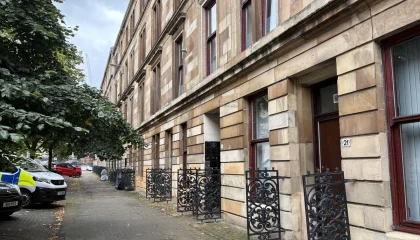
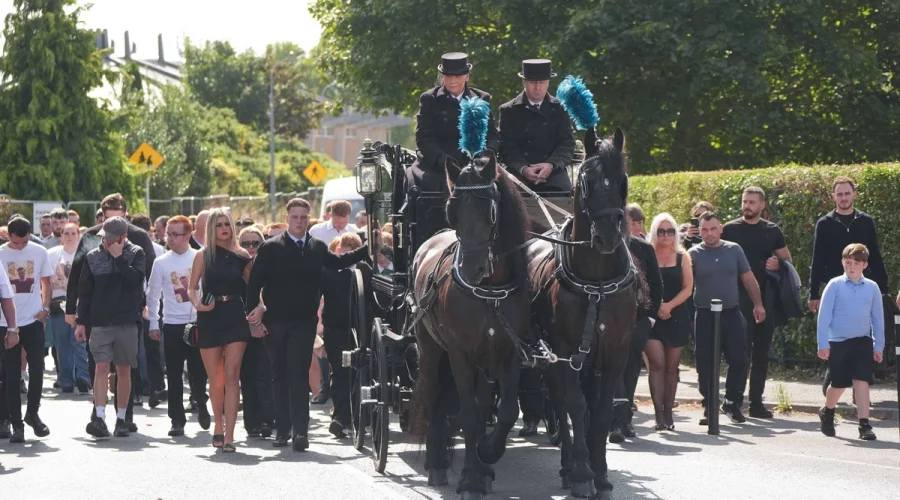
Given the scale of public grief and fears of unrest following the crash, Irish police deployed a substantial operational footprint around the funeral. Garda checkpoints were established on the roads feeding into the Holy Family Church in Askea, where the mass was held. Armed detectives manned those checkpoints, and multiple Garda vehicles — including units from the Public Order division — were positioned throughout Carlow town. The visible show of force reflected both a desire to protect mourners and a recognition that raw emotion, combined with questions about how the wrong-way driving came to happen, could provoke disorder.
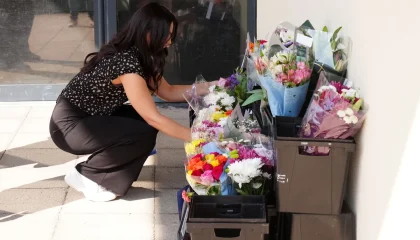
Among the mourners, young men wore T-shirts bearing a photograph of Mr O’Brien on the front, a personal tribute that underscored how close-knit the group of five had been. Their deaths, separated by days of individual funerals, have turned an already unbearable week into a prolonged period of communal sorrow.
The Priest’s Words: Grief, Accountability, and a Call Not to Let Tragedy Define the Whole Story
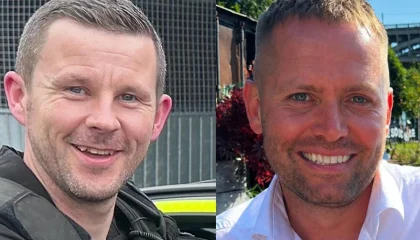
Fr Tom Little, who delivered the homily, spoke directly to the assembled congregation about the weight of losing young lives in such sudden and preventable circumstances. His remarks balanced pastoral compassion with an unflinching acknowledgment of fault.
“We pray for those who have been injured and mourn those who have died. The death of a young person is always difficult to accept. There is something especially sad about a young life being taken suddenly, unexpectedly and before so many hopes and dreams have been realised.”
He went on to note that the accident’s impact was multiplied because it did not claim a single life but several, and because it left others gravely wounded.
“Today our grief and sadness is made even heavier because this was an accident that affected not just one person alone. Several lives have been lost and others have been seriously injured. There are people in hospital fighting to recover, and there are families who are beginning the painful journey of learning to live with an empty place at their table.”
In the closing portion of his address, Fr Little offered a prayer for the medical staff tending the injured, wishing them a full and speedy recovery, before turning to the question of responsibility.
“At times like this, we are left with no words to express our sadness and loss. Today, we give thanks for the gift of life, however short it may have been. We entrust our loved ones who have gone before us into the merciful hands of God, acknowledging that what the boys did was wrong. But we must not allow tragedy to become the whole story as we pray for those who were injured and those who have died.”
The Five Young Men and the Road Ahead
Alongside Jeremy O’Brien, the crash killed Jack Kennedy, a 17-year-old from Athy in County Kildare; Kamil Pustkowski; Joe Carthy; and Alex McCarthy. Jack’s funeral is expected to take place on Tuesday, making him the fifth and final burial from the group. The sequence of funerals over consecutive days has meant that the community has been in a state of continuous mourning, with each ceremony reopening wounds that had barely begun to close.
The M9 is a major motorway linking Dublin to the west of Ireland, and wrong-way driving on such a route is rare but devastating, given the speeds at which vehicles travel. The circumstances under which the car ended up travelling in the opposite carriageway remain under investigation, and public attention has focused on whether road design, signage, or driver error contributed to the sequence of events.
For the families of the five teenagers and for the injured members of the other household, the coming weeks will involve not only grief but practical and legal questions. The child and three women in hospital face uncertain recoveries, and the families of the dead must navigate an Irish funeral tradition that, in this case, stretched across multiple days and locations. The community of Carlow and County Kildare, meanwhile, has been forced to confront a question that few expect: how to hold space for both accountability and compassion when the people who died were also, in the words of their own priest, responsible for the act that led to their deaths.
Related Reading
Frequently Asked Questions
What is What the boys did was wrong?
What the boys did was wrong is the main topic of this guide. The article explains the context, practical details, and next steps readers should understand.
Why does What the boys did was wrong matter?
What the boys did was wrong matters because readers are looking for a useful answer, not just a short summary. Good content should match search intent and help them decide what to do next.