Record-Breaking El Nino Set to Shift UK Weather Into Storm-Driven Autumn
Traveloasisspot.com – After months of scorching heat and near-record dryness that pushed vast swathes of England and Wales into drought, forecasters now point to a dramatic reversal in the pipeline. An El Nino event of extraordinary intensity is building in the tropical Pacific, and its downstream effects are expected to deliver persistent rainfall and storm activity across north-western Europe through the coming autumn and into early winter.
What Makes This Event Unprecedented
El Nino is formally identified when sea-surface temperatures in the tropical eastern Pacific climb at least 0.5 °C above the long-term mean, reshaping atmospheric circulation patterns and redistributing rainfall across continents. Typical episodes produce warming of roughly one to two degrees, with two degrees already representing a major event. The current forecast, however, projects temperatures exceeding three degrees above average within the coming months — a magnitude the Met Office describes as the largest El Nino signal recorded since the nineteenth century.
Professor Adam Scaife, who leads long-range forecasting at the Met Office, stressed the rarity of what the models are showing:
“We should be clear that this is an unprecedented event. I have never seen an El Nino signal this intense in our forecasts.”
He cautioned that if independent forecast systems continue to converge on similar extreme values, the climate footprint of 2026 will far outstrip anything experienced in recent decades.
Global Consequences of a Super El Nino
The atmospheric reorganisation triggered by such intense oceanic warming does not affect all regions uniformly. Tropical zones, southern Africa, and north-eastern Australia face elevated drought risk as rainfall patterns shift poleward and eastward. Conversely, north-western Europe — the UK included — sits squarely in the band where enhanced westerly flow and deepened low-pressure systems bring above-average precipitation and frequent storm passages.
Beyond regional weather, a large El Nino injects substantial additional heat from the ocean into the atmosphere, nudging global mean temperatures upward. Dr Nick Dunstone, a Met Office Science Fellow, explained the mechanism:
“During large El Nino events significantly more heat is released from the ocean to the atmosphere leading to an increase in global average temperature, particularly in the calendar year following the winter peak of the El Nino.”
The practical implication: 2027 is projected to overtake 2024 as the warmest calendar year ever measured, temporarily pushing the global mean above the 1.5 °C threshold relative to pre-industrial levels for yet another year.
UK Context: From Parched Ground to Saturated Soil
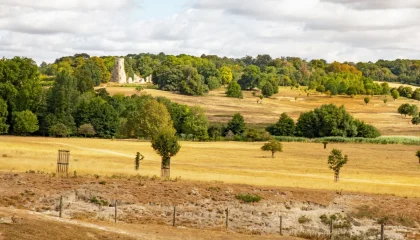
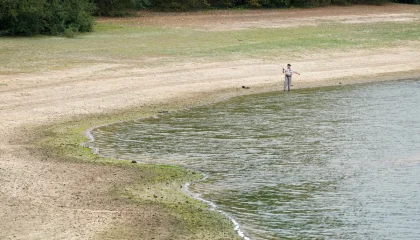
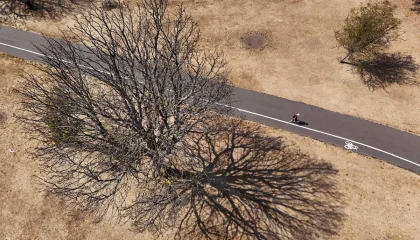
The timing of this forecast lands against a backdrop of acute water stress. The summer of 2025 produced the driest July in 190 years of UK records, driving 71.3 % of England and the entirety of Wales into drought conditions. Reservoir storage has slipped to 62.6 %, a deficit of 16.3 percentage points below the seasonal norm, according to Defra data. Farmers, water utilities, emergency services, and wildlife habitats have all felt the pressure of sustained low flows.
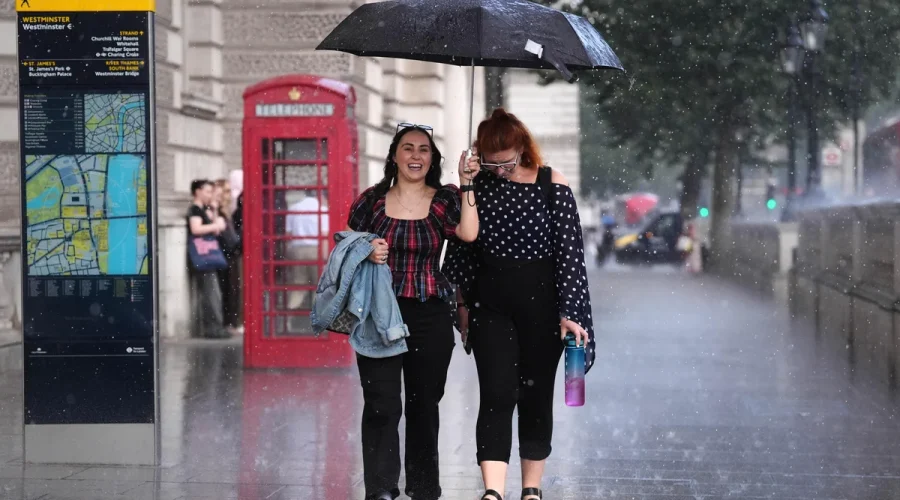
Yet the first signs of atmospheric change arrived earlier than expected. On Wednesday and Thursday of this week, heavier showers swept through parts of the country. Morecambe in Lancashire logged 52.5 mm of rain in a single 24-hour period — roughly a third of the average rainfall total for the entire June 1 to August 18 window, which peaked at 156 mm. In the south, Pevensey Bay in East Sussex recorded 32 mm over the same span, Environment Agency gauges confirmed.
Those brief downpours, falling on baked, compacted earth, briefly raised flash-flood anxieties. Officials and hydrologists, however, cautioned that months of sustained, above-average rainfall would be required before rivers, aquifers, and reservoirs return to healthy levels — the point at which a drought is formally declared over.
Government Response and Broader Climate Picture
Prime Minister Andy Burnham addressed the transition at an emergency Cobra meeting convened last week to review the heatwave’s aftermath:
“We might be in for a wet autumn and winter straight after this, because of El Nino and some of the issues there, which was reported to Cobra.”
Professor Stephen Belcher, the Met Office’s chief of science and technology, framed the episode within the wider climate context. He noted that the summer’s European heatwaves underscored the ongoing influence of anthropogenic warming, while the emerging El Nino reminded the public that natural variability continues to operate on top of that trend, compounding short-term stresses.
For households, farmers, and infrastructure operators across the UK, the coming months therefore carry a dual challenge: managing the residual effects of an exceptional dry spell while preparing for a wetter, stormier season that may arrive with little warning. The National Drought Group — a body convening the Met Office, regulators, government departments, water companies, farming representatives, scientists, and conservation groups several times a year — confirmed that this week’s scattered showers and cooler temperatures will not materially alter current water-scarcity assessments. The real test, forecasters emphasise, lies in whether autumn rainfall sustains itself at levels well above the seasonal average, a scenario the unprecedented El Nino now makes considerably more probable.
Related Reading
Frequently Asked Questions
What is Unprecedented El Nino event to bring?
Unprecedented El Nino event to bring is the main topic of this guide. The article explains the context, practical details, and next steps readers should understand.
Why does Unprecedented El Nino event to bring matter?
Unprecedented El Nino event to bring matters because readers are looking for a useful answer, not just a short summary. Good content should match search intent and help them decide what to do next.