Burnham Eyes September US Trip as Ukraine Defence Lobbying Intensifies
Traveloasisspot.com – Prime Minister Andy Burnham has signalled his intention to fly to New York in September, where he plans to join fellow European leaders in pressing President Donald Trump for continued military backing of Ukraine. The visit, timed to coincide with the annual UN General Assembly session, would represent his first trip to American soil since assuming the premiership in July.
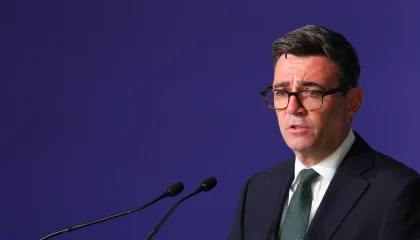
Speaking to Bloomberg, Burnham described the prospect of the New York stop as something he was “looking forward to,” though he cautioned that logistical details had not yet been “fully confirmed.” He characterised the itinerary as “likely” to proceed, leaving open the possibility of last-minute adjustments.
A First Kyiv Visit and a Data Windfall
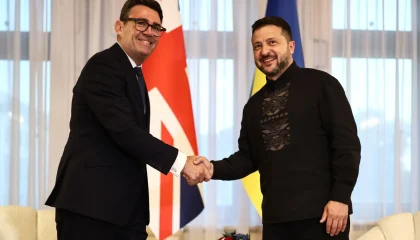
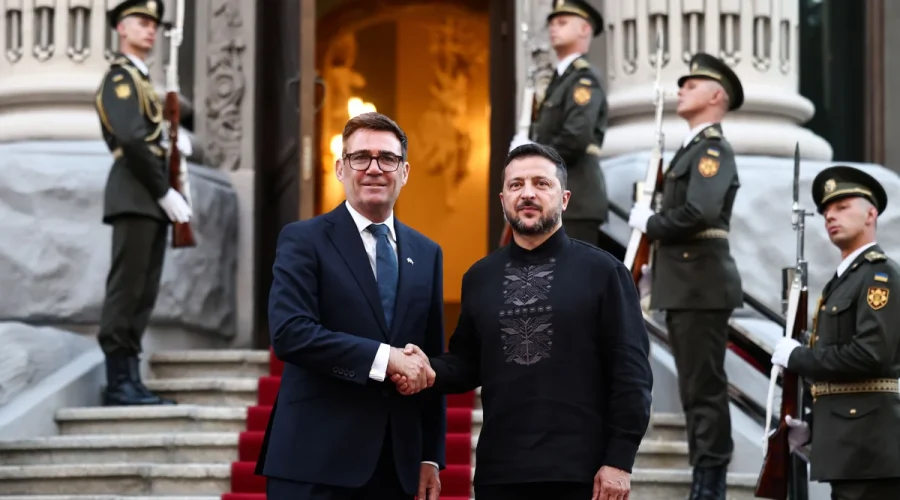
The announcement of the American trip lands against the backdrop of Burnham’s inaugural visit to Kyiv as Prime Minister, during which the British government reaffirmed its “unwavering” commitment to Ukraine’s territorial integrity. The two leaders held bilateral talks in which Burnham told President Volodymyr Zelensky there would be “no change in the UK’s steadfast support” for Kyiv’s defence efforts.
The visit also produced a tangible security dividend for Britain. Ukrainian officials handed over what they described as a “goldmine” of battlefield data, a trove intended to sharpen British intelligence and defence planning. Formalising that exchange, the two governments signed an agreement granting the Ministry of Defence, in partnership with selected British firms, access to Ukraine’s “Avengers” artificial-intelligence database. Downing Street framed the deal as a mechanism through which London could absorb lessons from Ukraine’s front lines and co-develop AI-driven solutions to national-security challenges on both sides of the North Sea.
The Interceptor Missile Shortfall
One of the most pressing operational issues raised during the Kyiv meeting was Ukraine’s dwindling stock of Patriot interceptor missiles. Zelensky has repeatedly called on Western partners, particularly Washington, to replenish Kyiv’s air-defence inventory. The shortfall has deepened since the outbreak of hostilities between Israel and Iran, which has diverted Patriot systems and their associated interceptor rounds to the Middle East. Ukraine received markedly fewer missiles this year compared with previous annual allocations.
Burnham used the occasion of his first coalition-of-the-willing session to urge allied nations to draw down their own reserves and ship additional interceptors to Kyiv. He told the gathering that the group was doing “everything we can” to “dig into our own stocks and help others dig into their stocks.”
“It’s probably going to be a solution that involves a lot of layers and a lot of negotiation.”
That remark, offered during the Bloomberg interview, reflected Burnham’s view that the missile-supply gap was “fixable” but would require multilateral coordination. He noted that “there are other players who could help in the mix who we have influence with,” pointing to European and allied stockpiles that could be redirected.
Russia Escalates as Supplies Thin
The diplomatic push for more interceptors comes at a moment of acute military pressure. Russian forces have exploited the interceptor shortage by intensifying ballistic-missile barrages against Ukrainian cities and infrastructure. In the three days preceding the Kyiv visit, at least 23 people were killed and more than 100 wounded in those strikes, underscoring the urgency with which Kyiv’s air-defence gaps must be addressed before winter conditions compound the threat.
A No 10 spokeswoman summarised the coalition meeting as “an honest and productive conversation,” adding that leaders present agreed the international community needed to “step up and ensure Ukraine got the support it needed to defend itself from Russia’s barbaric attacks going into the winter.” She highlighted the announcement that Britain had authorised defence firm MBDA to release classified information on UK components for the long-range Scalp missile, a move Burnham described as a further symbol of the depth of British commitment.
Kremlin Adviser Floats Threat Against UK Factories
Separately, a senior Kremlin adviser suggested that British factories producing drones for Ukraine could become targets of “unknown sources” following London’s decision to share long-range missile blueprints with Kyiv. Andrei Fedorov, former Russian deputy foreign minister, told BBC Newsnight that he could not “100% exclude” the prospect of “semi-military” action against Britain.
“Sooner or later, there might be not only verbal, but maybe some visible reaction from Russia towards the UK.”
Pressed to define what he meant by “semi-military,” Fedorov offered a range of possibilities: “so-called technical reaction, maybe some hackers attack from unknown source, not from official level of course,” and added that “there might be different political steps.” He stopped short of specifying a timeline or mechanism, leaving the remark in the realm of strategic signalling rather than concrete threat assessment.
For British industry, particularly the drone and missile-manufacturing clusters in the Midlands and the North, the comment adds a layer of uncertainty to an already stretched supply chain. Yet it also underscores how far the conflict has moved beyond a purely bilateral Ukraine-Russia contest, drawing allied production capacity into the crosshairs of Moscow’s strategic calculus.
What Comes Next
The September New York trip, if it proceeds, will place Burnham in direct dialogue with the administration that controls the largest single source of Patriot interceptors. European leaders attending the General Assembly will likely coordinate messaging ahead of the meeting, seeking to present a unified front on air-defence resupply. Whether that coordination translates into additional missile deliveries before the winter campaign remains the central question facing both Kyiv and its backers.
Related Reading
Frequently Asked Questions
What is Burnham says he is planning US trip?
Burnham says he is planning US trip is the main topic of this guide. The article explains the context, practical details, and next steps readers should understand.
Why does Burnham says he is planning US trip matter?
Burnham says he is planning US trip matters because readers are looking for a useful answer, not just a short summary. Good content should match search intent and help them decide what to do next.