Scottish Workers Face £700 Annual Tax Penalty as Personal Allowance Freeze Enters Its Ninth Year
Traveloasisspot.com – The Scottish National Party has launched a fresh attack on Westminster’s decision to hold the tax-free personal allowance at its 2021/22 level, arguing that millions of households across Scotland and the wider UK are absorbing an unwelcome £700 annual hit to their take-home pay. The claim rests on analysis prepared by the House of Commons Library at the SNP’s request, which models what workers’ incomes would look like had the allowance continued its statutory inflation-linked trajectory.
How the Freeze Works and Why It Matters
Under normal operation, the standard personal allowance — the threshold below which an individual pays no income tax — is automatically adjusted each year to track inflation. This mechanism, embedded in tax legislation, ensures that workers do not get pushed into a higher tax bracket simply because prices have risen. In March 2021, however, the then-Conservative government intervened to lock the figure at £12,570, overriding the indexation formula. Successive budgets since then have kept the cap in place.
The current Labour administration confirmed in its autumn budget that the freeze will persist at the £12,570 mark through to the 2030/31 tax year. In practical terms, every employee earning above that threshold now pays income tax on a slice of their salary that would previously have been tax-free, and the gap between what they pay and what they would have paid under normal indexation widens with each passing year of inflation.
SNP Westminster Leader’s Case
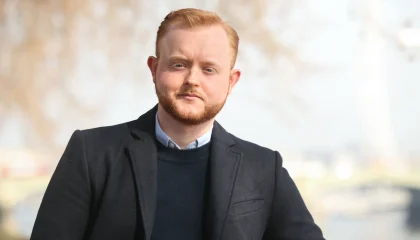
Dave Doogan, the SNP’s leader in Westminster, framed the issue as a matter of class fairness, insisting the policy “disproportionately affects low-income workers” and urging the UK Government to reverse course. His remarks carried a distinctly Scottish political edge, tying the tax question to broader grievances about the post-Brexit economy.
“Brexit Britain is broken and families across Scotland are paying the price for the Labour Government’s record of failure, its creeping stealth taxes, and the dire state of the UK economy.”
Doogan went further, characterising the freeze as a form of hidden taxation that compounds the pressure already felt by households managing soaring utility and grocery costs.
“The news that millions of workers are £700 a year worse-off, as a result of the Labour Party’s freeze on the tax-free personal allowance, will stick in the craw for the majority of hard-pressed families who are struggling to get by as the cost of living in the UK continues to soar out of control under the Labour Government.”
He singled out state pensioners as a particularly vulnerable group, noting that retirees on fixed incomes are being compelled to surrender a growing share of their already-constrained earnings to the state.
“This punitive Labour Party policy hits every income taxpayer in Scotland, and across the UK, and it disproportionately affects low-income workers and state pensioners, who are increasingly being forced to hand more of their already-squeezed incomes back to the UK Government.”
The Projected Financial Damage by 2030
The Commons Library modelling paints a starker picture looking forward. If the allowance had been permitted to rise with inflation as the law ordinarily requires, it would stand at approximately £17,440 by the 2030/31 tax year. Against that counterfactual, the continued freeze means a typical worker will be roughly £974 a year worse off by the close of the decade. Cumulatively, since the freeze took effect in 2021, the analysis estimates each affected taxpayer will have forfeited close to £6,000 in aggregate income-tax relief.
“If nothing changes, workers will soon be £1,000 a year worse off under Labour Party plans to freeze the personal allowance until the end of the decade, and will have lost a total of almost £6,000 each since the freeze began.”
Doogan linked the tax issue to the autumn energy-price outlook, warning that household bills and food costs are expected to climb again in the coming months.
“People are really struggling to get by as bills soar in Brexit Britain. The Labour Government should be helping them – not making the cost of living even more expensive.”
“With energy bills and food prices expected to rise again in the autumn, it is clear the Labour Party isn’t taking the cost-of-living crisis seriously enough and must deliver urgent help.”
The SNP leader also pointed to what he described as broken promises on energy pricing, citing a £600 increase in bills since the party took office, and pledged that SNP MPs would press Westminster for intervention.
“The SNP Government will continue to deliver the best cost-of-living support anywhere in the UK, and SNP MPs will demand meaningful action from the UK Government, including on energy bills where the Labour Party has broken its promises and seen bills rise by £600.”
He closed by returning to the independence argument, contending that Scotland’s economic malaise is rooted in its post-referendum position within a UK economy he characterised as structurally damaged.
“Ultimately though, the poor standard of living in the UK is a result of Brexit Britain’s broken economy – and only independence will give Scotland the powers we need to build a better future instead of being stuck in this never-ending Westminster doom loop.”
UK Government Response
A spokesperson for the UK Government pushed back, arguing that the administration is already easing household pressures through a combination of measures. The response highlighted the reduction in VAT applied to electricity bills, the freeze on prescription charges and rail fares, and the uplift to the national minimum wage affecting millions of workers.
“The Government is focused on giving families breathing space and recognises the pressure working people can be under to make ends meet. That’s why we have cut VAT on electricity bills on top of freezing prescriptions and rail fares, and increasing the national minimum wage for millions of workers.”
The government did not directly address the Commons Library modelling or the projected £974 annual shortfall by 2030, instead framing its defence around the aggregate package of cost-of-living interventions rather than the specific question of whether the personal allowance should resume its inflation-linked path.
Why the Issue Carries Extra Weight in Scotland
For Scottish households, the freeze intersects with a fiscal landscape already shaped by the Scottish Government’s own tax powers — including a separate income-tax system with different thresholds and rates. A worker in Edinburgh or Glasgow therefore faces the UK-wide allowance cap while also navigating Scotland’s distinct tax bands, making the interaction between Westminster’s frozen threshold and Holyrood’s graduated rates a particularly complex calculation for middle-income earners. The SNP’s framing of the issue as a “stealth tax” is designed to highlight that complexity: because the allowance does not move, workers who would have remained below the Scottish basic-rate threshold under normal indexation can find themselves nudged into a higher Scottish band purely through inflation, without any visible legislative change.
The debate is likely to intensify as the autumn budget season approaches and energy-price signals tighten. Whether Westminster chooses to revisit the freeze before the 2030/31 deadline, or whether the SNP escalates the issue through parliamentary questions and Scottish parliamentary scrutiny, will shape the political temperature around income-tax policy for the remainder of the decade.
Related Reading
Frequently Asked Questions
What is Millions of Scots paying the price?
Millions of Scots paying the price is the main topic of this guide. The article explains the context, practical details, and next steps readers should understand.
Why does Millions of Scots paying the price matter?
Millions of Scots paying the price matters because readers are looking for a useful answer, not just a short summary. Good content should match search intent and help them decide what to do next.