Zelensky takes aim at Russian-owned companies in Europe during Dublin address
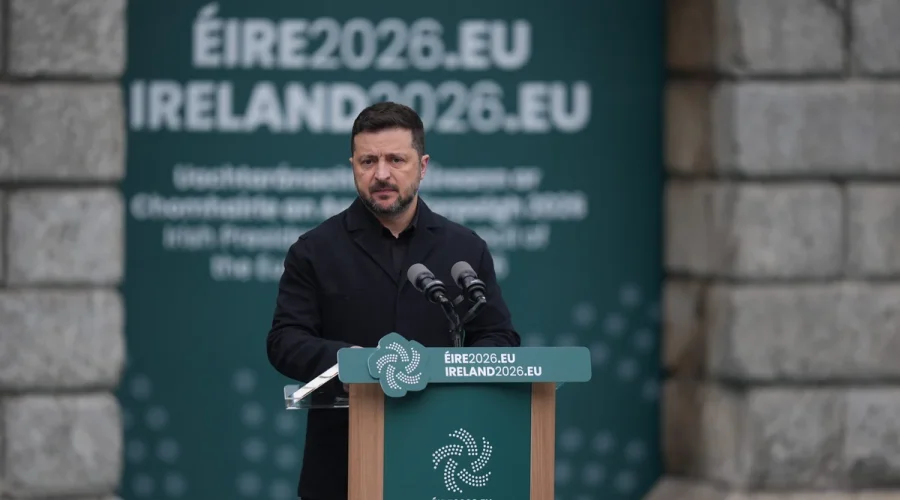
Zelensky takes aim at Russian owned – During a speech delivered at Dublin Castle on Wednesday, Ukrainian President Volodymyr Zelensky highlighted concerns about Russian-owned enterprises operating within the European Union. His remarks came as Ireland assumed the EU presidency, marking a critical moment for transatlantic cooperation in the ongoing conflict with Russia.
Zelensky began by expressing gratitude to Ireland for its unwavering support for Ukraine since the Russian invasion. He emphasized the importance of solidarity, stating, “Ireland has been a steadfast ally from the very outset of this crisis.” This sentiment set the tone for his broader critique of entities that continue to benefit Russian interests despite the war.
“We can open five more clusters, Antonio. What do you think?”
Zelensky addressed European Council President Antonio Costa, urging accelerated progress toward Ukraine’s EU membership. He noted that the accession process involves structured negotiations, and his quip during the speech underscored the urgency of the situation. While Costa’s reply—“maybe”—was captured by the audience, the exchange highlighted the delicate balance between political ambition and practical challenges.
The president also outlined specific measures to weaken Russia’s war effort, focusing on economic tools. He called for intensified sanctions targeting Russian shadow fleets and infrastructure critical to the conflict. “European firms that operate solely to serve Russian interests are a key concern,” Zelensky stated. These companies, he argued, supply essential materials to the aggressor, even as the war rages on.
In a separate discussion, Ireland’s Taoiseach Micheál Martin addressed allegations that the country’s export of alumina from its Aughinish Alumina refinery in Limerick had inadvertently bolstered Russia’s military capabilities. Martin dismissed the claims, asserting, “I don’t accept that our support has been damaged in that respect.” He reiterated Ireland’s commitment to sanction packages, having endorsed 20 rounds of measures aimed at isolating Russia economically.
Zelensky’s speech emphasized the need for Europe to take a unified stance. “We do not want to, in any shape or form, be supporting the Russian war machine,” he said. Martin later confirmed that the two leaders had delved into this issue during their post-ceremony meeting, with an ongoing investigation set to provide clarity on the full scope of the alumina exports.
Following the investigation, Martin indicated that Ireland would escalate efforts to prevent further shipments of alumina to Russia. “The matter will be brought to the European Commission for further action,” he stated, underscoring the political weight of the issue. Zelensky, speaking through a translator, praised the level of engagement with Martin, calling it “very substantial.” He expressed appreciation for Ireland’s proactive approach, noting, “We very much hope for a positive result in this investigation.”
Riad Bouchaker found guilty of attempting to murder three children in Dublin
In a separate legal development, Riad Bouchaker was convicted of attempting to murder three children in Dublin. The verdict followed a trial that detailed his actions during a violent attack, which had sparked public outcry and raised questions about safety in the city. The case was closely watched, as it underscored the intersection of domestic crime and international scrutiny.
The stabbing incident in Dublin preceded a wave of disorder, during which buses and trams were set ablaze. Witnesses described a chaotic scene as the attackers fled the scene, leaving behind a trail of destruction. Heroic interventions by bystanders helped save the children, who were targeted during the attack. This event was later referenced in a broader discussion about security measures in public spaces.
Choosing the right education path for your child
Meanwhile, the focus on Ireland’s role in supporting Ukraine extended to education. During the press conference, Martin outlined Ireland’s commitment to providing non-lethal aid, including mining and defensive equipment. “This aid is paid for through Irish funds,” he clarified, stressing that the country’s support remains humanitarian in nature.
When asked whether the mention of military support crossed the line of neutrality, Martin responded, “Europe will do everything it possibly can.” He framed the assistance as part of the EU’s collective strategy, emphasizing that Ireland’s contributions align with the bloc’s goals. “Ireland’s aid remains non-lethal and humanitarian,” he reiterated, “but it is essential for Ukraine’s defense.”
As the ceremony and subsequent discussions unfolded, Zelensky’s address served as both a critique and a call to action. He urged the EU to prioritize the drone deal, a proposal aimed at bolstering Ukraine’s aerial capabilities. “This agreement is a cornerstone of our strategy to counter Russian aggression,” he stated, highlighting the strategic importance of the initiative.
Throughout the event, Zelensky’s focus remained on dismantling Russia’s economic and logistical advantages. He pointed to the dual role of European companies in facilitating the war effort, arguing that their actions directly impact the conflict’s trajectory. “These entities are not just businesses—they are instruments of Russian power,” he declared.
At the press conference, Martin acknowledged potential hurdles in Ukraine’s EU accession process, particularly regarding relations with Hungary and Poland. “It is not the first time that bilateral issues have been problematic for accession,” he admitted. Examples from the Western Balkans were cited, illustrating the complexities of integrating nations into the EU.
Zelensky’s visit to Dublin was a pivotal moment, blending diplomacy with direct confrontation. His emphasis on sanctions and economic leverage signaled a shift in Ukraine’s approach to securing European backing. “We must ensure that Russia’s tools of war are cut off at every opportunity,” he said, rallying support for a coordinated response.
As the meeting concluded, the tone of the discussions reflected both optimism and caution. While Ireland’s commitment to Ukraine was reaffirmed, the issue of alumina exports remained a point of contention. The outcome of the investigation would determine whether the country’s support for the war effort is compromised, and whether the EU can maintain its unified front.