9 in 10 Unsolved London Murders Involve Ethnic Minorities
Traveloasisspot.com – Ethnic minority victims make up 9 out of 10 unsolved murders in London, according to a four-year review published by the charity Action on Armed Violence. The study examined homicide cases opened between 2019 and 2023 that remained without a conviction or identified suspect, and found that nearly 93 per cent of those unresolved victims belonged to ethnic minority groups. The finding underscores a persistent gap in how investigative outcomes are distributed across the capital’s communities.
How the Numbers Break Down
Across all recorded homicides in the study window, ethnic minority victims made up 61 per cent of cases. Narrow the scope to murders that were never solved, however, and the proportion climbs to almost three-quarters of every ten victims. Black Londoners specifically appeared in 40 per cent of all recorded killings but in 73 per cent of those left unsolved.
Weapon type sharpens the disparity further. Among unsolved shooting cases, black victims accounted for 83 per cent — 36 incidents in total. In unsolved stabbing cases the figure stood at 73 per cent, covering 39 incidents. Action on Armed Violence also flagged that fatal shootings were statistically more likely to remain unsolved than fatal stabbings, a distinction with direct implications for how resources are deployed in the hours after a shooting.
Age, Demographics, and Institutional Response
The average age of a London homicide victim over the study period was 36. In unsolved cases that figure drops to 28, pointing to a specific demographic: young Black men living in areas where firearm and knife violence is most concentrated. This age gap compounds the racial disparity and suggests that younger victims are overrepresented among cases that stall without resolution.
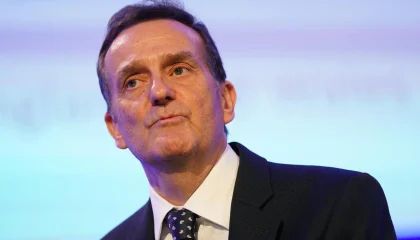
Iain Overton of Action on Armed Violence framed the findings in terms of systemic concentration rather than random distribution:
“Our data suggest that London’s unsolved murders are not evenly distributed. Instead, they are concentrated among young Black men and in cases involving firearm violence.”
“While there are many reasons for why such murder investigations are especially difficult, the result must seem often clear to the victims’ families: those communities most affected by deadly violence are often the least likely to see those responsible brought to justice. This in itself risks deepening existing mistrust and creating the perception of unequal protection under the law. And that can’t be a good thing.”
The Metropolitan Police offered a contextual explanation. Commander Paul Brogden, head of homicide at the Met, acknowledged the pattern while emphasising the investigative complexity involved:
“We know serious violence disproportionately affects certain communities, particularly young black men, who have the lowest trust in policing. This means sadly victims or witnesses are less likely to come forward and trust us. As this report outlines, that is an added complexity following shootings or stabbings on the streets, where identifying suspects requires more detailed investigative work, particularly when compared to domestic murders. While we use every tool at our disposal such as CCTV and forensics, often it’s witness evidence which can prove vital in securing convictions.”
Despite the troubling distribution of unsolved cases, the Met’s overall clearance record remains comparatively strong. Roughly nine out of ten murders in the capital result in a conviction, a rate that places London ahead of many comparable international cities. The force also recorded 97 homicides in the most recent year of data — the lowest annual total in a decade and a marked decline from the 153 killings logged in 2019. That downward trend in total homicide numbers, however, does not erase the structural problem highlighted by the ethnic-minority disparity in unsolved cases.
Frequently Asked Questions
What organisation produced the report? Action on Armed Violence, a London-based charity focused on reducing gun and knife violence, compiled and published the four-year review.
What time period does the study cover? The analysis covers homicide cases opened between 2019 and 2023 that remained unsolved at the time of review.
What does “unsolved” mean in this context? A case is classified as unsolved when no conviction has been secured and no suspect has been formally identified, regardless of how long the investigation has been active.
How does London’s overall conviction rate compare internationally? Approximately 90 per cent of London murders result in a conviction, a figure the Met notes places the city ahead of many comparable international capitals.
What steps is the Met taking in response? The force points to expanded use of CCTV, forensic analysis, and community-engagement programmes aimed at rebuilding trust with affected neighbourhoods, though the report’s authors argue more sustained investment is needed.