Edinburgh Venue Concedes It Discriminated Against Jewish Comedian After Pulling Fringe Show
Traveloasisspot.com – A Scottish court has heard that a comedy venue admitted it broke equality law when it removed a Jewish stand-up comedian from its programme at last year’s Edinburgh Festival Fringe. The admission, delivered on the eve of a formal hearing at Edinburgh Sheriff Court, resolved the question of liability in the performer’s favour and left only the financial aftermath to be determined.
The case centred on Philip Simon, whose solo show Shall I Compere Thee In A Funny Way was scheduled to run at the Banshee Labyrinth on Niddry Street during the festival’s August run. The venue withdrew the booking, citing Simon’s publicly expressed positions on the conflict in Palestine as incompatible with its own institutional stance.
The Venue’s Original Justification
In a statement issued to the trade publication Chortle at the time of the cancellation, the venue explained that Simon had voiced opinions on social media and in other forums which it characterised as aligning with “the rhetoric and symbology of groups associated with humanitarian violations.” The language framed the decision as a matter of institutional values rather than personal animus, though the comedian interpreted it differently.
Simon took to social media immediately after the cancellation to describe what he experienced. He stated that the explanation offered to him was that his views on the ongoing humanitarian crisis in Palestine stood in “significant conflict with our venue’s stance against the current Israeli government’s policy and actions.”
“The reason I was given is that my views concerning the ongoing humanitarian crisis in Palestine… are in significant conflict with our venue’s stance against the current Israeli government’s policy and actions.”
He added a pointed observation about the broader implications of the decision:
“Anyone who knows me will know I have never expressed support for anything other than freeing the hostages and finding a way to peace. It is sad to think that these views could conflict with anyone who wants to see a lasting peace in Israel and Gaza.”
Simon also reflected on what he saw as the symbolic weight of the moment:
“I am still processing the concept that in 2025 I can be cancelled just for being Jewish.”
Legal Action and the Court Hearing
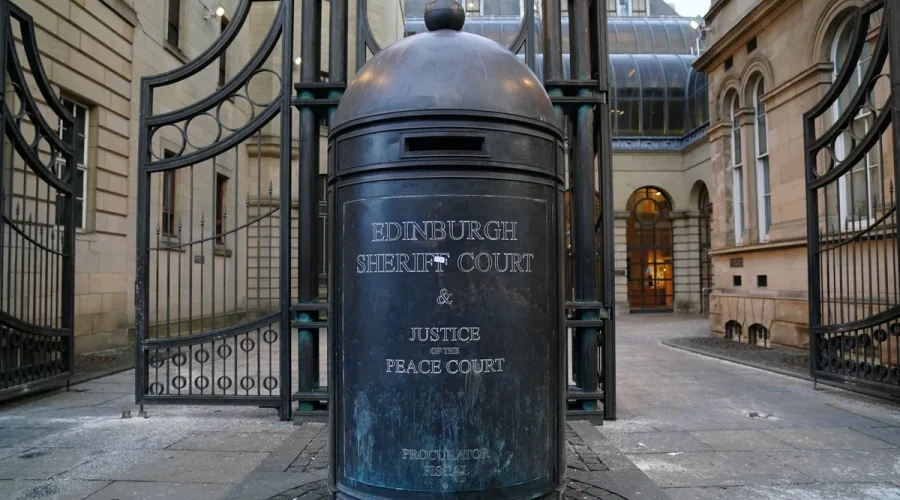
Simon subsequently brought a claim alleging unlawful belief-based discrimination under Scotland’s equality legislation. The matter reached Edinburgh Sheriff Court, where his solicitor, David Welsh, addressed the bench on Monday. Welsh informed the court that, on the day before the hearing was due to take place, the venue’s representatives had conceded that they had discriminated against their client in breach of the Equality Act.
“The defender conceded that the defender discriminated against the pursuer, contrary to the provisions of the Equalities Act.”
Welsh emphasised that the concession resolved the entire liability question in Simon’s favour. He described the outcome as meaning the pursuer had been “entirely successful on the question of liability.”
Dispute Over Costs and Conduct
While liability was settled, the question of expenses remained contested. Welsh was sharply critical of the venue’s behaviour throughout the proceedings. He told the court that the defender had “dragged out proceedings” despite being aware that any substantive defence was “untenable,” and that this conduct forced his client to incur “avoidable expenses at every stage” of the case.
Welsh argued that, because all costs incurred to date had been incurred in pursuit of the liability question now conceded, Simon was entitled to recover them in full. He further observed that the litigation need never have reached the courtroom at all had the venue acted reasonably from the outset.
The venue’s representative, Darren Cox, pushed back on both points. He questioned whether a pre-litigation settlement was realistically achievable and argued that not every cost item to date related solely to the liability issue. He asked the court to defer any decision on expenses until the conclusion of the remaining proceedings.
Sheriff Roderick Flinn indicated he would retire to consider the expenses question and would deliver his ruling later on the same day.
Broader Context
The case sits within a wider pattern of tension between artistic venues and performers over political expression, particularly during the Edinburgh Fringe, where thousands of shows compete for audiences in a compressed August window. A booking withdrawal at that stage can effectively end a performer’s annual income cycle, making the financial and reputational stakes of such decisions substantial.
Scotland’s equality framework, aligned with the UK Equality Act 2010, protects individuals from discrimination on grounds including religion or belief. A claim framed as “belief-based discrimination” requires the claimant to demonstrate that the adverse treatment was connected to a protected characteristic rather than to a purely commercial or editorial judgment. The venue’s concession effectively accepted that Simon’s Jewish identity and associated beliefs were the operative factor behind the cancellation, rather than a neutral programming decision.
The outcome also raises questions about how venues manage the interface between their own institutional positions on international conflicts and the right of individual performers to hold and express differing views. For a comedian whose material may touch on current events, the expectation that personal opinions must conform to a venue’s stated values before a booking is honoured represents a significant constraint on creative and political speech.
The expenses ruling, once delivered, will determine whether Simon recovers the costs of pursuing his claim or whether the court apportions them differently. Either way, the admission of unlawful discrimination marks a rare public acknowledgment that a Fringe venue’s programming decision crossed a legal line protecting individual performers from belief-based exclusion.
Related Reading
Frequently Asked Questions
What is Venue accepts it discriminated against Jewish?
Venue accepts it discriminated against Jewish is the main topic of this guide. The article explains the context, practical details, and next steps readers should understand.
Why does Venue accepts it discriminated against Jewish matter?
Venue accepts it discriminated against Jewish matters because readers are looking for a useful answer, not just a short summary. Good content should match search intent and help them decide what to do next.