Dishoom’s South Bank Expansion: A £2m Bet on London’s Riverside Dining Scene
Traveloasisspot.com – The South Bank’s already dense cluster of restaurants, galleries, and performance venues is about to absorb another major food-and-drink operator. Dishoom, the Indian restaurant chain that has become a fixture of London’s dining map since its Covent Garden debut, has lodged planning applications with Lambeth Council to convert a former Las Iguanas unit into its newest London outpost. The site sits immediately adjacent to the Royal Festival Hall, placing the future restaurant squarely within the cultural heart of the South Bank promenade.
Planning Details and Design Ambitions
The submission to Lambeth Council goes beyond a simple change-of-use request. It encompasses rendered elevations showing the proposed exterior treatment, detailed floor plans for the interior layout, a design and access statement addressing how patrons will move through and around the building, and a flood-risk assessment — a practical necessity given the site’s proximity to the Thames. Among the more eye-catching elements of the proposal is an outdoor veranda fitted with a retractable roof and openable side panels, a feature that would allow the dining area to extend into the riverside air during warmer months while remaining weatherproofed when conditions turn.
The projected capital outlay for the refurbishment tops out at £2 million. If Lambeth Council grants approval on schedule, construction could be finished by October 10, 2026, meaning the restaurant would likely open its doors in late autumn or early winter of that year.
A Southward Shift in the Chain’s London Footprint
For more than a decade, Dishoom’s London presence was anchored almost entirely north of the river. The brand’s original Covent Garden location, opened in 2010 by cousins Shamil and Kavi Thakrar, set the template for a chain that grew through Soho, Mayfair, and other central-city addresses. That changed in 2023, when the chain crossed the Thames for the first time with a restaurant inside the Battersea Power Station complex — a landmark redevelopment that brought high-profile dining into a formerly industrial riverside zone.
Since that Battersea opening, the pattern has been unmistakable. The three most recent London projects in the pipeline — Battersea, the Borough market location, and now the South Bank site — all fall south of the river. Earlier in 2025, the company confirmed plans for a branch inside the Grade II-listed Hop Exchange, a historic warehouse building near Borough Market that has been undergoing its own long restoration. The South Bank application represents the latest chapter in what amounts to a deliberate geographic reorientation of the brand’s capital-city strategy.
What the South Bank Site Means for the Area
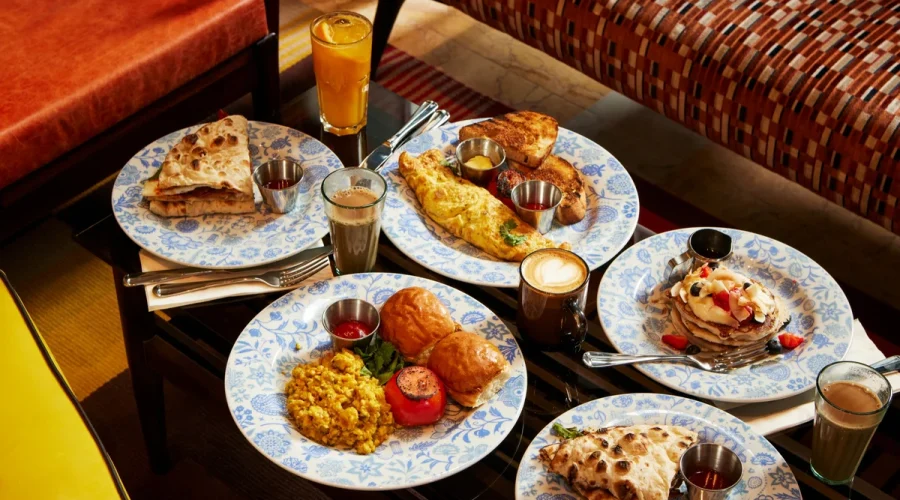
The Royal Festival Hall neighbourhood already hosts a concentration of mid-to-upper-range restaurants, several of which cater to the thousands of visitors who stream through the South Bank daily to attend concerts at the Hall, the Queen Elizabeth Hall, or the Purcell Room. Adding a Dishoom — a brand known for its high-volume, fast-turnover model and its emphasis on tandoori, biryani, and chai served in a deliberately nostalgic, mid-century Indian café aesthetic — introduces a different operational tempo to the streetscape. The chain’s format typically seats large numbers of diners quickly, a model that contrasts with the slower, reservation-driven dining that dominates the immediate vicinity.
The outdoor veranda element, if approved as proposed, would also add a new layer of street-level activity to a stretch of the South Bank that already sees heavy pedestrian traffic. Retractable-roof structures of this kind are increasingly common in London’s riverside hospitality developments, but their placement next to a Grade I-listed concert hall raises questions about visual impact and acoustic sensitivity that the design and access statement will need to address in any public consultation.
Brand Context: From Covent Garden to Twelve Locations
Shamil and Kavi Thakrar launched Dishoom in 2010 with a single Covent Garden restaurant that drew immediate attention for its bold interior design — a recreation of a 1960s Indian railway dining car — and for its approachable pricing on dishes that might otherwise sit in a more formal Indian restaurant. Over the following years the concept proved commercially resilient, and the chain expanded across London before moving into other UK cities and international markets.
The South Bank location, once operational, will be the brand’s eighth restaurant within London and its twelfth outlet worldwide. That scale of operation, combined with the £2m investment in a prime riverside address, signals that the founders view the South Bank not as a speculative experiment but as a core part of the long-term London portfolio.
What Happens Next
The application now enters the standard Lambeth Council planning cycle: initial validation, potential neighbour notification, any required environmental or heritage consultations, and ultimately a determination. The flood-risk assessment attached to the submission suggests the council will scrutinise drainage and resilience measures given the site’s low-lying position relative to the river. No decision date has been published in the documents referenced here, but the stated completion target of October 2026 implies the operators are anticipating approval within the current parliamentary year.
For South Bank residents and workers, the practical question is whether a high-volume Indian restaurant with an extendable outdoor seating area will complement or compete with the existing dining offer along the promenade. For the chain, the answer is already written into its expansion timetable: south of the river is where the next decade of growth will happen.
Related Reading
Frequently Asked Questions
What is Dishoom to open new London restaurant?
Dishoom to open new London restaurant is the main topic of this guide. The article explains the context, practical details, and next steps readers should understand.
Why does Dishoom to open new London restaurant matter?
Dishoom to open new London restaurant matters because readers are looking for a useful answer, not just a short summary. Good content should match search intent and help them decide what to do next.