
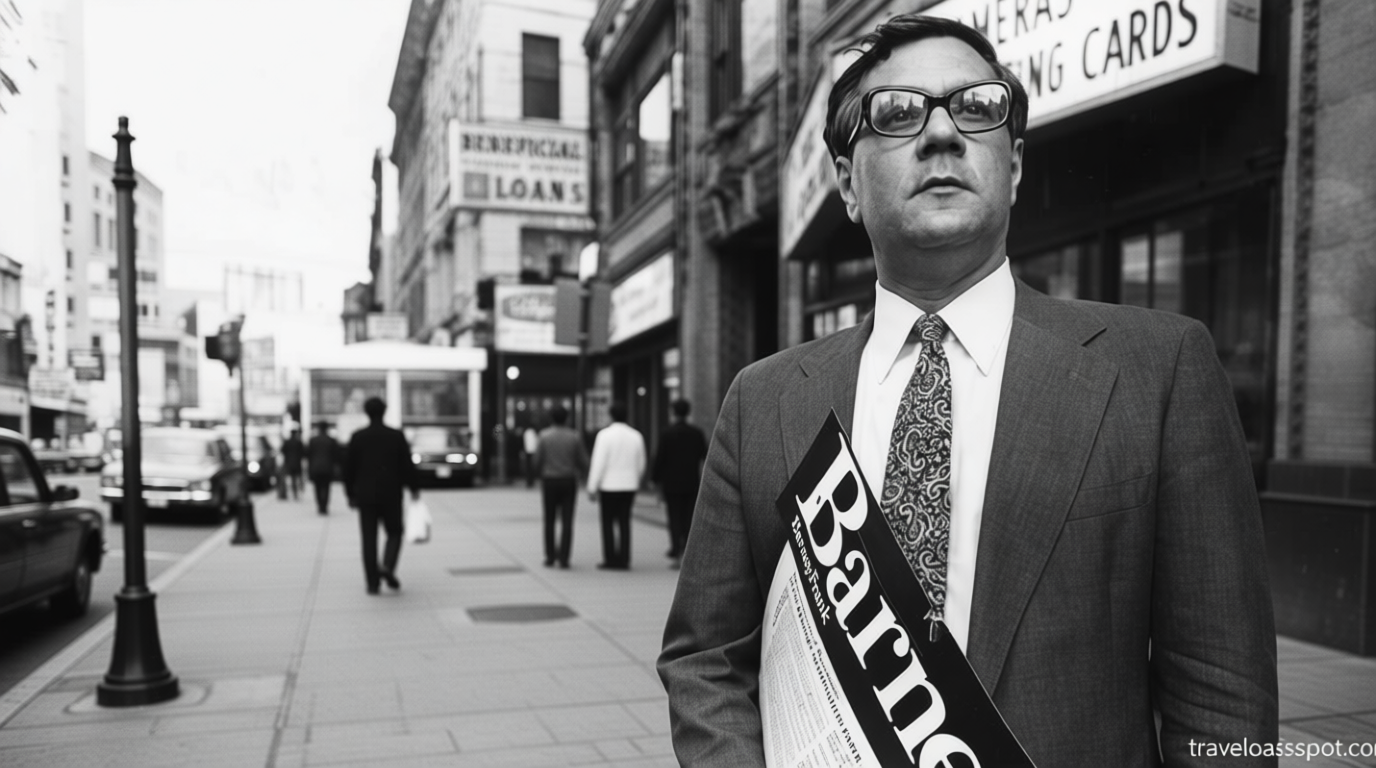
Barney Frank, Progressive Trailblazer and Financial Reform Architect, Dies at 86
Barney Frank liberal icon who regulated – Barney Frank, the trailblazing former U.S. Representative known for his role in shaping post-2008 financial regulations, has passed away at the age of 86. His sister, Doris Breay, confirmed his death to CNN, expressing deep sorrow: “He was a wonderful brother. I was lucky to be his sister. I will miss him.” Frank’s final months were spent in hospice care, where he received treatment for congestive heart failure, as reported by media outlets.
A Legacy of Unapologetic Progressivism
Throughout his career, Frank earned a reputation as a steadfast advocate for progressive causes, often challenging the status quo with his bold rhetoric. His decision to publicly disclose his sexuality in 1987 marked a pivotal moment in congressional history, making him the first openly gay member of Congress. At a time when LGBTQ rights were still emerging in the political sphere, his courage helped elevate visibility for the community during the AIDS crisis.
“I am a much better openly gay man than I was a closeted one,” Frank told Men’s Journal in a 2017 interview, reflecting on the impact of his decision. His advocacy for LGBTQ issues spanned decades, culminating in his pivotal role in repealing the “Don’t Ask, Don’t Tell” policy, which barred openly gay servicemembers from serving in the military. In 2012, he became the first sitting member of Congress to marry a same-sex partner while in office, a milestone that underscored his commitment to equality.
Reforming Financial Oversight
Frank’s legislative influence extended beyond social issues to the realm of financial regulation, where he left an indelible mark. He served as the ranking member of the House Financial Services Committee from 2003 to 2007, eventually becoming its chairman. This position placed him at the forefront of congressional efforts to address the subprime mortgage crisis, a crisis that triggered the most severe economic downturn since the Great Depression.
His advocacy for stricter bank oversight and consumer protections aimed to prevent future financial collapses. Frank supported the federal bailout of Fannie Mae and Freddie Mac, emphasizing that the measures were not just reactive but proactive. “We are putting the money there … saying we know that we’re taking steps so that they’re not going to face this problem in the future,” he explained to CNN in mid-2008. “Fannie and Freddie suffered not from their own decisions, but from the bad mortgage decisions that have been made throughout the economy. We’re not going to have those in the future.”
The Dodd-Frank Act: A Blueprint for Financial Stability
Frank’s most enduring contribution to U.S. policy was the Dodd-Frank Wall Street Reform and Consumer Protection Act, which President Barack Obama signed into law in 2010. This landmark legislation redefined banking regulation, targeting institutions deemed “too big to fail” with unprecedented oversight. It introduced stringent liquidity requirements and stress tests for banks, ensuring they could withstand economic shocks. Additionally, the Volcker Rule was established to restrict banks from using customer funds for speculative investments.
One of the law’s most significant provisions was the creation of the Consumer Financial Protection Bureau (CFPB), tasked with safeguarding consumers from predatory practices. Despite its transformative impact, Dodd-Frank faced relentless scrutiny from Republicans, who sought to weaken its provisions over time. Critics argued that its complexity and cost could stifle growth, yet Frank believed it was essential for long-term economic resilience.
Continuing to Challenge and Inspire
Even after retiring from Congress in 2013, Frank remained a prominent figure in public discourse. His sharp wit and distinctive voice made him a favorite among journalists and a frequent guest on political talk shows. In 2015, he released his autobiography, offering insights into his life and career. A second book, “The Hard Path to Unity: Why We Must Reform the Left to Rescue Democracy,” was set for release later in 2026, signaling his continued intellectual engagement with American politics.
Frank’s influence extended into his later years, as he remained vocal about issues he deemed critical. In a recent CNN interview, he criticized the Democratic Party for its messaging on social issues, arguing that progressives often prioritized ideological purity over pragmatic strategies. “Progressives make a mistake by taking the most controversial parts of the agenda and turning them into litmus tests,” he told CNN’s Jake Tapper, highlighting his belief in balancing bold principles with centrist appeal.
A Voice That Echoed Through the Years
Frank’s career was defined by a willingness to take risks and speak truth to power. His advocacy for LGBTQ rights and financial reform demonstrated a dual commitment to social justice and economic stability. As a member of Congress, he often used his platform to push for policies that aligned with his values, even when they faced opposition. His work on the Dodd-Frank Act, for instance, was part of a broader effort to hold corporations accountable and protect ordinary Americans from financial exploitation.
His post-retirement activities reflected this same drive. Despite his advancing age, Frank continued to appear on television and engage with audiences, maintaining his relevance in a rapidly changing political landscape. His ability to connect with voters, even in his 80s, underscored the lasting appeal of his vision. “We’re not just hoping for change—we’re taking action to make it happen,” he often asserted, a philosophy that guided his career from the start.
Reflections on a Life of Service
Frank’s death marks the end of an era for American politics. A man of unshakable convictions and a flair for drama, he navigated the challenges of both social and economic reform with characteristic tenacity. While his policies were sometimes contentious, they laid the groundwork for future debates on financial regulation and equality. His legacy is one of defiance, innovation, and a refusal to compromise on core values.
As the nation reflects on his contributions, the themes of his work—equality, accountability, and bold action—remain as relevant as ever. From breaking barriers in Congress to shaping the financial system’s future, Frank’s career was a testament to the power of individual resolve. His passing leaves a void in the political landscape, but his ideas and influence will endure in the policies he championed and the lives he touched.
CNN’s Kaanita Iyer and Lauren Chadwick contributed to this report. This story has been updated with additional information to honor Frank’s multifaceted legacy.





