
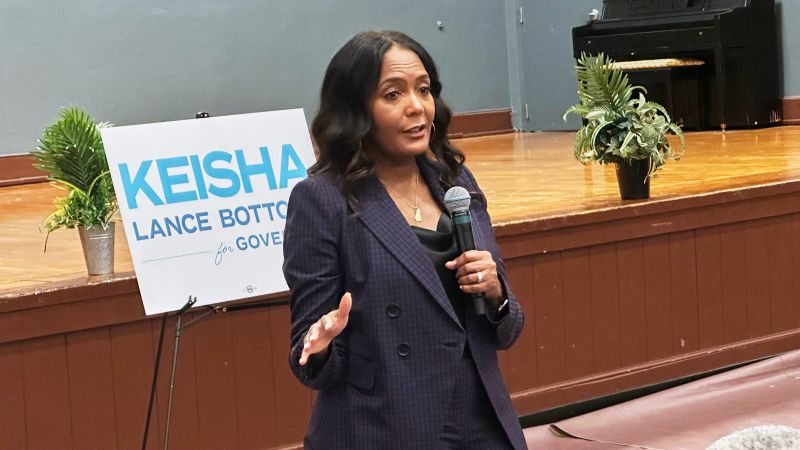
Georgia Democrat Keisha Lance Bottoms Eyes Historic Role as First Black Woman Governor
Georgia Democrat Keisha Lance Bottoms will – Keisha Lance Bottoms, a prominent Georgia Democrat, has made history by securing the Democratic gubernatorial nomination, aiming to become the first Black woman to lead a U.S. state. The former mayor of Atlanta is now positioned to challenge the state’s current Republican governor, Brian Kemp, in the November general election. Her nomination represents a major breakthrough in a political landscape that has seen shifts in representation and power over the past decade. If successful, Bottoms would not only redefine Georgia’s political identity but also serve as a symbol of progress for underrepresented groups in national leadership.
“This moment is a testament to the resilience and vision of Keisha Lance Bottoms and the Democratic Party’s commitment to inclusive governance,” said a political analyst familiar with the race.
From City Hall to State Capitol
Bottoms’ journey to the governor’s race began in Atlanta, where she served as mayor from 2018 to 2022. Her tenure was defined by tackling pressing urban issues, including pandemic recovery efforts, public safety reforms, and equitable economic policies. These experiences have informed her statewide campaign, which emphasizes revitalizing infrastructure, expanding healthcare access, and promoting education equity. Her ability to address multifaceted challenges in a diverse city like Atlanta has built a strong foundation for her gubernatorial ambitions, aligning her goals with the priorities of Georgia’s broader population.
As a key figure in the Democratic Party, Bottoms’ candidacy reflects a growing trend of Black women asserting leadership in state politics. She follows in the footsteps of Stacey Abrams, who nearly secured the 2018 governor’s race and ran again in 2022. While Abrams faced setbacks in her bids, Bottoms’ victory in the primary has sparked renewed optimism about the party’s prospects in Georgia. Her campaign has focused on bridging gaps between urban and rural communities, a strategy that resonates with voters across the state’s varied regions.
Competitive Primary and GOP Runoff
The Democratic primary race was a close contest, with Bottoms ultimately edging out her opponents to claim the nomination. Her win underscores the strength of her grassroots support and the party’s strategic focus on mobilizing marginalized voters. Meanwhile, the Republican primary remains tightly contested, with Lieutenant Governor Burt Jones and healthcare executive Rick Jackson set to face off in a June runoff. Jones, known for his political acumen, and Jackson, a former CEO, will vie to represent the GOP in the general election, adding to the anticipation of a high-stakes matchup.
Georgia’s political landscape has long been a focal point for national campaigns, with its balance of urban and rural interests making it a pivotal swing state. Bottoms’ candidacy has injected new energy into the Democratic base, which has historically struggled to maintain dominance in the state. Her focus on policy issues like Medicaid expansion and education funding appeals to a wide coalition, including working-class families and minority communities. These initiatives are seen as critical to addressing the state’s growing economic and social disparities, positioning Bottoms as a candidate with both a clear vision and practical solutions.
Bottoms’ campaign also highlights her deep ties to the Democratic Party’s progressive agenda, particularly in her advocacy for voting rights and social equity. Her 2018 bid for governor, though unsuccessful, laid the groundwork for her current pursuit. The state’s recent political pendulum—swinging from Biden’s narrow 2020 victory to Trump’s 2022 win—has intensified the stakes of this race. For Bottoms, the opportunity to lead as Georgia’s first Black woman governor is not just a personal milestone but a chance to reshape the state’s future.





