
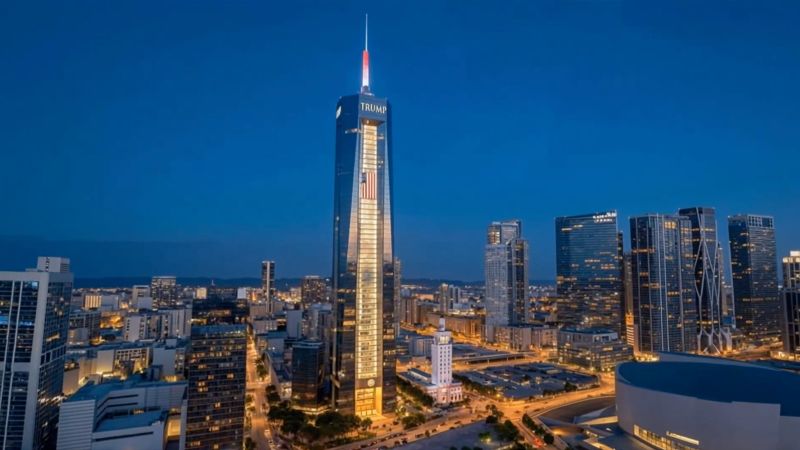
Locals sue to block prime Miami land from becoming Trump presidential library
Locals sue to block prime Miami – A group of South Florida residents initiated legal action this week to prevent the state from transferring a high-profile piece of Miami’s waterfront to the Donald J. Trump Presidential Library Foundation. The lawsuit, filed on Wednesday, challenges the move by alleging that it violates the Domestic Emoluments Clause of the U.S. Constitution. This clause prohibits federal officials from receiving financial benefits from states while in office, and the plaintiffs argue that the land donation constitutes such a violation.
Land Donation and Legal Context
The dispute centers around a 2.63-acre parcel in downtown Miami, which was recently donated by Florida officials to the Trump foundation. This land, assessed by the local property appraiser at approximately $63 million, was previously owned by Miami Dade College. In a vote last year, the college board transferred the property to the state, setting the stage for its eventual handover to the presidential library foundation. The state’s decision to gift the land to the foundation comes amid ongoing efforts to establish Trump’s post-presidency project in Florida.
Republican legislators in the state quickly passed a law last year to facilitate the project. The measure, signed into effect by Governor Ron DeSantis, barred local governments from regulating presidential libraries, anticipating that Trump would establish one in his adopted home state. This legal maneuver aimed to streamline the process of allocating land and resources for the library, which is seen as a key component of Trump’s legacy initiatives.
Trump’s Vision for the Site
President Donald Trump has described the Miami location as the “best block in Miami,” emphasizing its strategic value. According to his comments, the library will feature a hotel or office space, aligning with his other real estate ventures. The foundation’s plans include a towering structure bearing the Trump name and a grand lobby that houses a 747 Air Force One. These elements suggest a commercial approach to the site, which the plaintiffs argue will prioritize profit over public benefit.
“I don’t believe in building libraries or museums,” Trump stated last year. His remarks highlight a divergence from the traditional purpose of presidential libraries, which are typically designed to preserve historical records and serve educational functions. The lawsuit claims these statements reveal a clear intent to monetize the skyscraper, generating substantial returns for Trump and his family.
Legal documents filed in the case assert that the proposed development will transform the land into a high-value real estate asset. The plaintiffs argue that the site could be worth hundreds of millions of dollars, potentially doubling Miami Dade College’s endowment if sold to private buyers. They contend that the funds would have been better used to support the college’s academic and research programs, such as expanding bachelor’s degree offerings, securing modern facilities, or lowering student costs.
Plaintiffs and Their Arguments
The lawsuit, brought by a coalition of groups, includes a Miami Dade College student, a nonprofit led by local activist Marvin Dunn, and two residents who claim the Trump skyscraper will obstruct their views. Marvin Dunn’s organization had hoped to use the land for community projects, but the college’s decision to transfer it to the state disrupted those plans. The plaintiffs argue that the transfer undermines the public’s interest in the land’s use and prioritizes private gain.
The legal action was spearheaded by the Constitutional Accountability Center, a Washington, D.C.-based liberal think tank, in partnership with the Florida law firm Gelber Schachter & Greenberg. They filed the case in the U.S. District Court for the Southern District of Florida, highlighting concerns about the state’s compliance with constitutional safeguards. The lawsuit also points to the lack of transparency during the college board’s initial meeting, which did not specify the purpose of the land transfer until a later vote.
Legal Proceedings and Previous Injunction
Earlier this year, a judge granted a temporary injunction to halt the transfer of the land, citing procedural flaws in the college’s decision-making process. The injunction was lifted a month later after the board held a second vote that included detailed explanations for the land handover and allowed public input. This development allowed the state to proceed with the official transfer, which was completed in January, according to local records.
Now, the case moves forward as the plaintiffs seek to challenge the legality of the donation. They argue that the state’s actions bypassed necessary checks, allowing Trump to secure a financial advantage. The lawsuit also underscores the broader implications of the donation, suggesting that it could set a precedent for future projects involving presidential influence over state resources.
Reactions and Next Steps
As the legal battle unfolds, CNN has requested comments from the White House, the library foundation, Miami Dade College, and the state of Florida. These responses will be critical in shaping the narrative around the project. The dispute reflects a growing tension between the Trump administration’s efforts to expand its influence and the residents’ push for accountability and transparency in public resource allocation.
The case also highlights the strategic timing of the donation, which followed Trump’s return to the White House. With the state’s legal framework now in place, the foundation aims to complete the project swiftly, leveraging the favorable conditions created by the new law. However, the lawsuit challenges this timeline, arguing that the process was rushed and lacked sufficient public scrutiny.
As the trial progresses, the outcome could determine whether the land remains a public asset or becomes a private enterprise under the Trump name. The residents’ concerns about the library’s commercialization and the potential loss of educational value are at the heart of the legal battle, which may reshape the future of Miami’s waterfront and the legacy of Trump’s presidential projects.





