
Trump’s Arch Project Advances, Yet Height and Features Adjusted
Design Revised Following Commission Approval
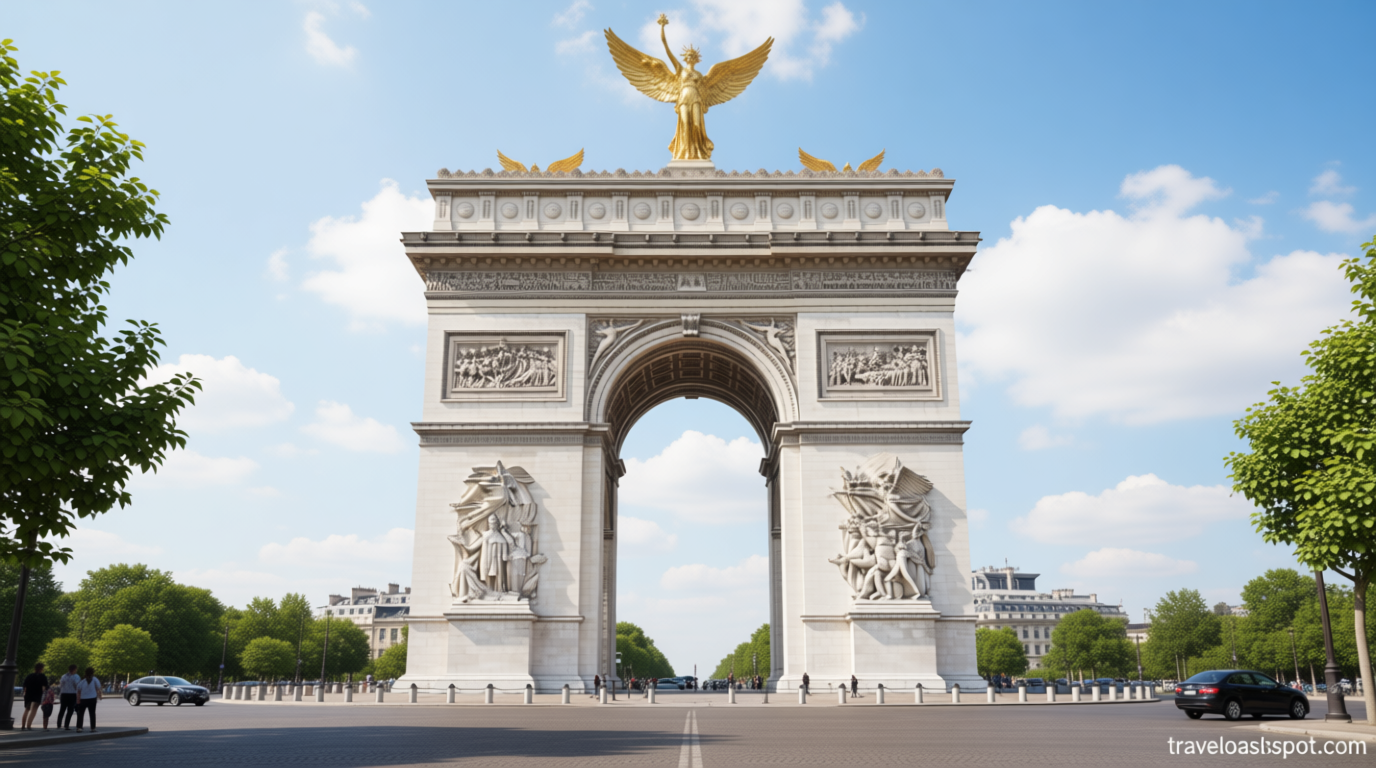
Trump arch moves ahead – President Donald Trump’s initiative to erect the tallest arch in the world has received a significant endorsement after a pivotal federal agency greenlit a modified blueprint for the structure. However, the final design diverges from earlier proposals, with the monument’s total height reduced by a notable eight feet. Initially envisioned to reach over 280 feet when accounting for its base, the revised version now stands at more than 270 feet. This change stems from the removal of an eight-foot-tall foundation that was part of the original submission to the Commission of Fine Arts (CFA). The CFA, which provides expert counsel to the president and Congress on monument design and federal architecture, has also revised the sculptural elements of the arch. Four gold lions, once featured prominently on the base, have been eliminated from the design. This decision aligns with the commission’s push to streamline the structure, as the lions were deemed “not native to the United States.” The adjustment aims to harmonize the arch’s appearance with the somber tone of Arlington National Cemetery, which lies on the opposite side of the proposed site.
Public Dissent and Expedited Process
Despite the project’s approval, the public reaction has been largely unfavorable. Critics, including preservationists and civic groups, have voiced strong opposition during recent hearings. The CFA’s approval process, however, proceeded at an accelerated pace, according to a source familiar with the internal workings. This speed was attributed to the administration’s influence, with the White House ballroom serving as a notable exception to the rushed timeline. Trump expressed satisfaction with the commission’s decision, calling the approved design “beautiful” in a statement to reporters. The president’s close allies have played a central role in shaping the CFA’s recommendations, ensuring that the final plan reflects his vision for Washington’s landscape. While the initial proposal included a marble exterior, the revised version opts for granite due to its superior strength and resilience. This material choice underscores the practical considerations now prioritized in the design.
Aesthetic and Structural Changes
The new design incorporates broader adjustments to the arch’s proportions. Notably, the structure’s depth has expanded, creating a more substantial presence at the traffic circle between Arlington National Cemetery and the Lincoln Memorial. This location was intended to commemorate the nation’s 250th anniversary, with the arch serving as a symbolic landmark. Mary Anne Carter, a member of the CFA, highlighted the aesthetic improvements made in the revised design. She praised the removal of the lions, stating that it better aligns the monument with the surrounding memorials. Carter also noted the arch’s integration into the broader urban design, emphasizing its role in bridging the visual connection between the cemetery and the memorial.
Concerns and Legal Challenges
The arch has sparked debate over its impact on air traffic. Situated less than two miles from Ronald Reagan Washington National Airport, a major hub for domestic and international flights, the structure raises safety concerns. The crowded airspace around the airport is already fraught with obstacles, and the arch’s height could complicate navigation. The Department of Interior has requested a formal aeronautical study from the Federal Aviation Administration (FAA) to assess potential risks. James McCrery, the architect Trump initially hired to design a White House ballroom and now a CFA panelist, voiced concerns about the arch’s central figure: a tall, winged Lady Liberty. McCrery’s reservations were brushed aside by the administration, which acknowledged the differences in aesthetic preferences but chose not to contest the design.
Part of a Larger Urban Vision
The arch is part of a wider effort by Trump to transform Washington’s skyline and cultural landscape. Alongside the arch, other projects include a redesigned East Wing ballroom, a sculpture garden honoring American heroes along the Potomac River, the rebranding of the Kennedy Center with his name, and a proposed golf course near the Lincoln Memorial. Additionally, the color of the Lincoln Memorial Reflecting Pool is set to be altered, a change that will face its own legal challenge later this week. The CFA’s role in this initiative has been central, with its members influencing decisions on both the arch and other monuments. Since the last round of public feedback, the commission has received 600 additional comments, of which 99.5% were critical. Public speakers at the hearings, including historians and preservationists, highlighted multiple issues, from the arch’s height to its lack of public input.
Next Steps and Ongoing Debates
The revised design must now clear another hurdle: approval from the National Capital Planning Commission (NCPC). Like the CFA, the NCPC has been populated with Trump appointees, ensuring a favorable outlook for the project. Nonetheless, the legal challenge from a Vietnam War veterans’ group looms, targeting the arch’s height and its potential interference with air traffic. The controversy over the arch reflects broader tensions in Washington’s planning process. Critics argue that the rapid approvals and material choices favor political alignment over artistic or historical integrity. Meanwhile, supporters see the project as a bold statement of American identity, mirroring the grandeur of Paris’ Arc de Triomphe. The arch’s journey from concept to approval highlights the interplay between executive influence and bureaucratic oversight. As the monument moves closer to reality, its final form will be a testament to the compromises made in the name of progress. Whether it stands as a triumph or a symbol of controversy remains to be seen.
“While the elevation off the ground is included, the previous plan would have brought the total height of the monument to over 280 feet. Now it’s more than 270 feet.”
The project’s evolution underscores the dynamic nature of urban planning and the impact of political agendas on public spaces. As the arch prepares for its next phase of review, it continues to divide opinions, with its design and location remaining focal points of debate.





