
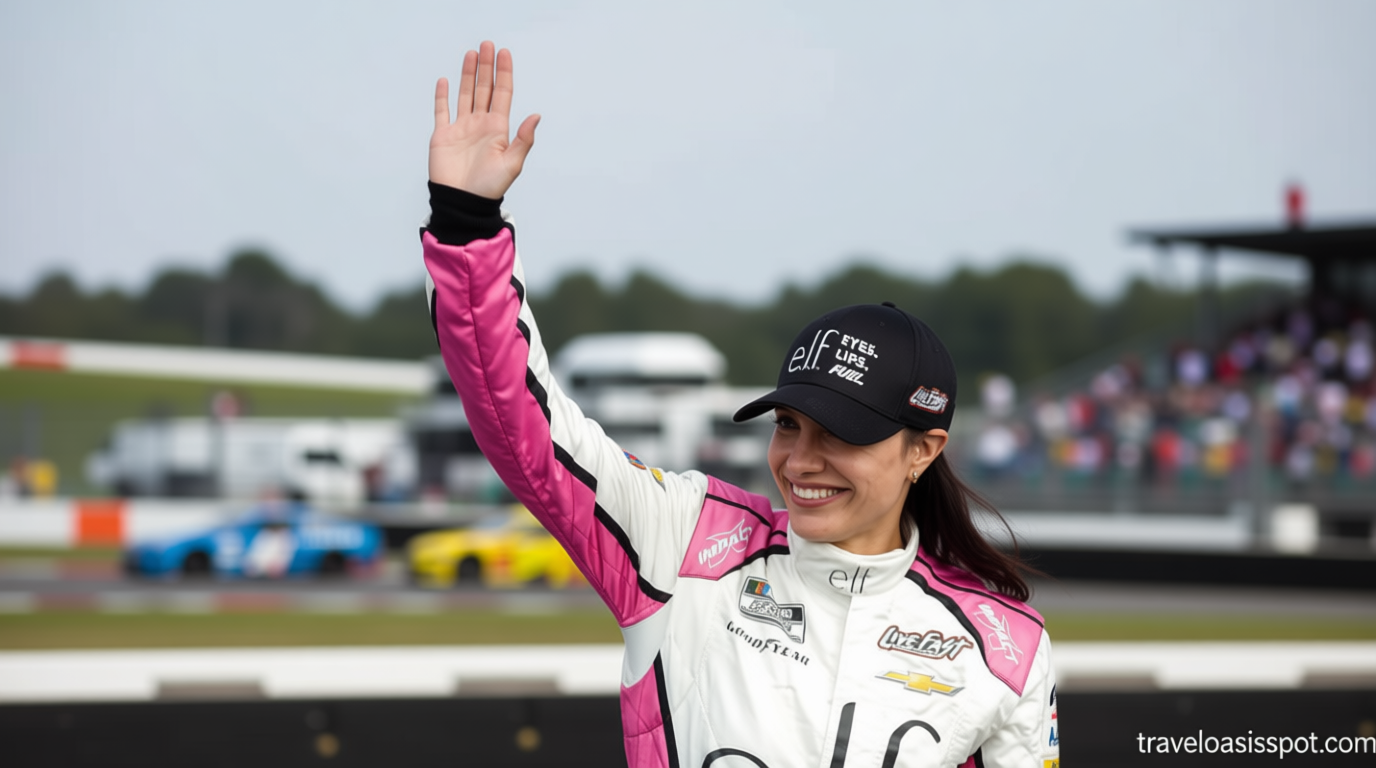
Katherine Legge Aims to Make Motorsport History with Memorial Day Double
Katherine Legge aims to make history – Katherine Legge is set to attempt a rare and historic milestone: racing the Indianapolis 500 and the Coca-Cola 600 on the same day. This challenge, known as the Memorial Day “double,” involves consecutive races over an eight-hour span, with the Indy 500 lasting three to four hours and the Coca-Cola 600 stretching to five. As the first woman to take on this dual event, Legge acknowledges the immense mental and physical demands of the task. “It’s like driving from New York to Daytona Beach at roughly 200 miles per hour,” she said, emphasizing the need for unwavering focus. “There’s no room for error in either race.”
A High-Stakes Logistical Feat
Legge’s plan requires precise timing and seamless transitions. After finishing the Indy 500, she will board a helicopter from the Brickyard to a nearby airstrip, then fly to North Carolina via private jet. A second helicopter will transport her to the Charlotte Motor Speedway, followed by a shuttle to the pit lane. Any delay in Indianapolis could compromise the entire schedule. “If the weather turns bad or something goes wrong, there’s not much time to recover,” she noted, highlighting the razor-thin margins for success.
The challenge of the double lies in its dual nature: shifting between two distinct racing formats. The Indy 500 demands high-speed precision in a light, aerodynamic IndyCar, while the Coca-Cola 600 involves enduring a grueling five-hour NASCAR race in a heavier stock car. “It’s like switching from a sleek sports car to a lumbering tank,” Legge explained, underscoring the physical and mental adjustments required. Her preparation includes IV drips during travel to combat dehydration and a carefully planned diet of gels, gummies, and bananas to offset the extreme caloric burn.
Legacy and Breaking Barriers
Legge’s attempt builds on a legacy of pioneers who have tackled the Memorial Day double. Drivers like Tony Stewart and Kyle Larson have completed the feat, with Stewart notably finishing both races in 1999 and 2001. “After all that, you’re very, very content to lay your head on a pillow,” Stewart once said, reflecting on the intensity of the challenge. Legge, however, is focused not on the novelty of her participation but on the performance itself. “I don’t like the female driver label because it should just be a race car driver,” she stated, reinforcing her determination to be judged on skill alone.
Historically, the Memorial Day double has been a test of endurance and adaptability. Stewart’s 2001 run exemplifies the extreme coordination required: he finished the Indy 500 at 2:30 p.m., then boarded a helicopter within 15 minutes to reach Charlotte, where he lined up for the Coca-Cola 600 just 25 minutes later. “Even when you do that, it still feels like it’s not stopped moving yet,” he remarked, a sentiment Legge now echoes as she prepares for her own historic endeavor. The race’s demands are not just physical but also psychological, requiring sustained concentration across multiple events.
“You can’t afford a single lapse in concentration during the double—this is as intense as anything I’ve ever faced,” Legge said. “It’s like driving from New York to Daytona Beach at an average of 200 miles an hour. That’s the same as staying focused through both races without a break.”
Preparing for the Impossible
Legge’s strategy for the double includes unconventional methods to maintain energy. During her flight to Charlotte, she plans to use an IV drip to combat dehydration, a nod to the body’s need for quick replenishment. “What am I going to eat when I get out of the Indy car?” she quipped, humorously acknowledging the logistical hurdles. Her diet for the Coca-Cola 600 is designed to offset five to six thousand calories, a feat that requires both discipline and creativity.
Despite the physical toll, Legge remains undeterred. She sees the double as a chance to redefine what’s possible in motorsport. “This is about pushing limits and showing that women can compete at the highest level,” she said. With her eyes on the finish line, Legge’s journey is as much about personal growth as it is about breaking records. “I’m just looking forward to bedtime,” she added, a simple statement that belies the magnitude of her achievement.





