
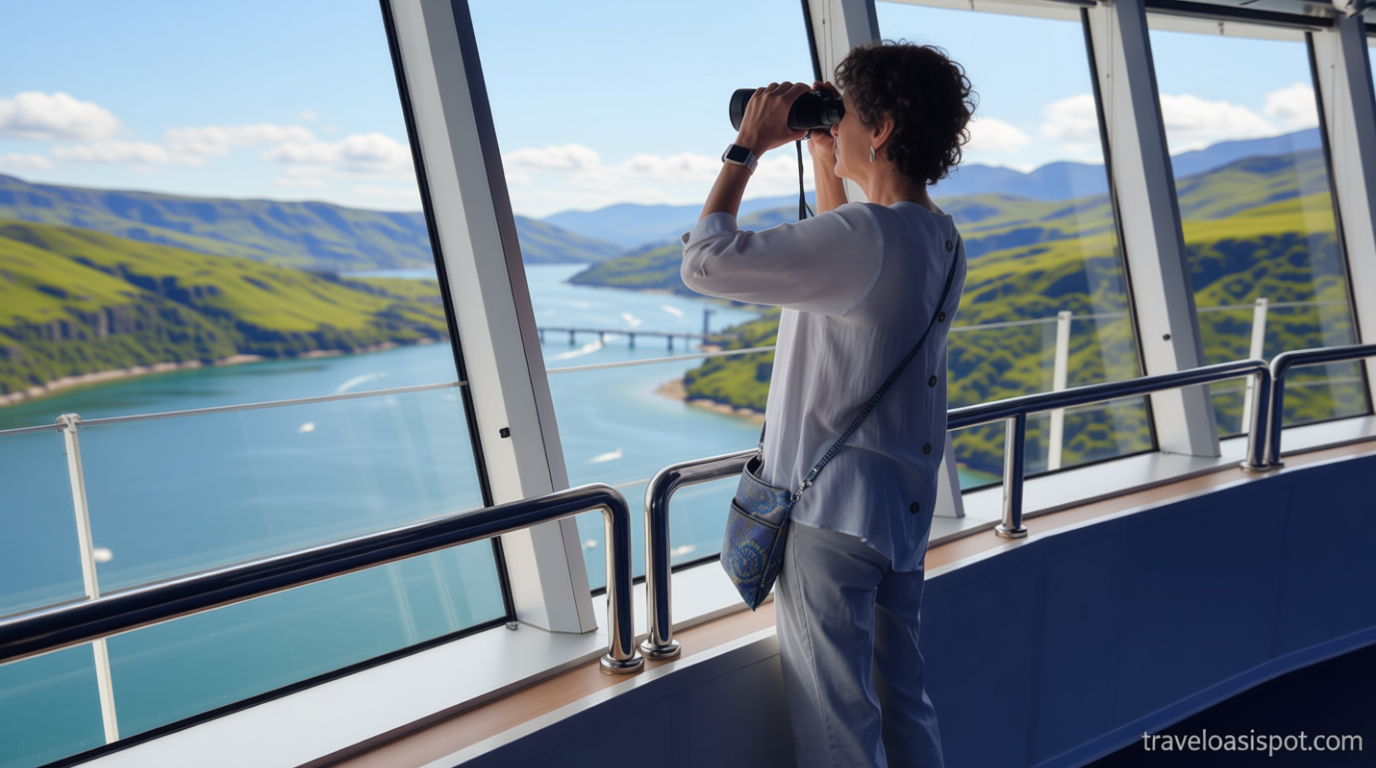
Why Cruise Ships Are Sailing to a Phantom Destination That Doesn’t Appear on Any Map
Why cruise ships are sailing – On an April morning in 2024, Russell and Gail Lee found themselves aboard a Viking World Cruise, navigating the vast Atlantic Ocean some 380 miles west of the Ivory Coast. As the ship approached the coordinates 0 degrees latitude and 0 degrees longitude, the couple and their fellow passengers gathered on the bow, phones raised and anticipation in the air. This was no ordinary stop—it was a rendezvous with Null Island, a place that exists only in the realm of digital mapping and has no physical presence on Earth.
A Mystery at the Crossroads of the World
Null Island is not a real location, but rather a curious intersection of the equator and prime meridian. For years, it has been a running gag within the geospatial community, a placeholder where data errors converge. Yet, its appeal has grown beyond technical circles, drawing travelers and even cruise lines into its virtual orbit. The Lees, who serve as enrichment lecturers on board, took the opportunity to share their insights, though the landscape they described was not one of mountains or forests, but of endless blue.
“Everyone had their geolocators out, counting down… 0.01… 0.005… 0.0001,” Gail Lee recalls. “We were all comparing phones. Whoever took a selfie closest to 0, 0 got bragging rights.”
Despite the lack of tangible landmarks, the experience was oddly memorable. The couple’s journey to Null Island, while brief, highlighted a phenomenon that has quietly gained traction: the idea of visiting a destination that doesn’t exist in the traditional sense. It’s a testament to how digital coordinates can shape our perceptions of geography, even when they point to nothing but open water.
The Birth of a Digital Enigma
Null Island’s existence is a byproduct of a technical oversight that dates back over a decade. As geospatial data became more integrated into everyday life, thanks to platforms like Twitter and Flickr, errors in location tagging began to surface. One common mistake was leaving coordinates blank, which default to “null”—a point at 0 degrees latitude and 0 degrees longitude. This spot, located in the Gulf of Guinea, became an unintended gathering place for misplaced data.
Mike Migurski, a geospatial data specialist, first noticed this anomaly while working at Stamen Design, a company known for its work in data visualization. “The data was floating around the Bight of Benin, where it shouldn’t be,” he says. “It started as a technical issue, but soon became a playful challenge.” At the time, the coordinates were just a placeholder, a silent error in the system. However, by 2008, the phenomenon had taken on a life of its own, transforming from a bug into a cultural curiosity.
A Virtual Identity Takes Shape
By 2010, the idea of Null Island had evolved beyond mere data quirks. Migurski, working on a project for GeoIQ, a location intelligence platform, decided to give the coordinates a visual identity. Inspired by the immersive world of the video game *Myst*, he added a small island shape at 0,0 as an Easter egg for fellow geospatial enthusiasts. “It helped crystallize for people that it was something you could picture,” he explains. “We didn’t do any kind of explicit reference—it was just an ‘If you know, you know’ thing.”
This creative gesture sparked a wave of interest, with the concept spreading through mapping communities and even appearing on company swag. Eventually, it made its way into the Natural Earth dataset, one of the most widely used open-source mapping tools. The island’s digital presence grew, becoming a symbol of the internet’s ability to invent new realities from technical flaws.
From Niche Joke to Global Phenomenon
What began as a humorous fix for a data glitch soon morphed into a broader cultural movement. Developers and designers began crafting fictional narratives around Null Island, imagining it as a place with its own flag, history, and economy. Steve Pellegrin, a developer, even created a tongue-in-cheek website that detailed the island’s population, which he claimed was 4,000, and its unique local language, *Nullish*. “The highest per-capita Segway ownership in the world” was one of the absurd claims that captured the imagination of many.
Curious travelers, fascinated by the idea of a place that exists only in software, have begun to seek it out. While cruise ships don’t anchor there, they pass through the coordinates, creating a kind of pilgrimage for those who want to claim the experience. In 2024, Viking’s ships ventured to Null Island, and the following year, Holland America announced plans to include it as a stop on its 2028 round-the-world voyage. This growing recognition has turned the once-ignored point into a celebrated spot, even as its physical reality remains elusive.
The appeal of Null Island lies in its paradox. It’s a destination that exists only because of errors, yet people travel great distances to visit it. The Lees, who have experienced it twice, describe the moment as “really special.” “There’s really nothing,” Russell Lee says. “Just open sea. But you’re some of the only people on Earth ever to visit, and that is really special.” The idea of being the first to reach a place that wasn’t there at all has become a point of pride for many, blending the thrill of exploration with the satisfaction of a clever digital trick.
A Growing Movement of Digital Tourism
The trend of visiting Null Island reflects a broader shift in how we engage with geography. In an age where digital data shapes our understanding of the world, places like this remind us that the line between reality and representation is often blurred. The coordinates serve as a metaphor for the internet’s power to create meaning from nothing, transforming a technical flaw into a symbol of human creativity.
As more cruise lines adopt Null Island into their itineraries, the phenomenon continues to evolve. While it may not be a place to stay or explore deeply, its inclusion in travel schedules has given it a new layer of significance. It’s not just a mapping error anymore—it’s a destination that people actively seek out, even if it only lasts for a few minutes.
The island’s popularity also underscores the role of geospatial professionals in shaping cultural trends. These individuals, who work with data and coordinates, have inadvertently created a shared joke that has taken on a life of its own. From Strava runs to Airbnb listings, the coordinates have become a canvas for collective imagination. As technology continues to advance, it’s likely that Null Island will remain a point of fascination, proving that even the most invisible markers can leave a lasting impression.
For some, the journey to Null Island is a whimsical adventure, while for others, it’s a reflection on how data defines our experiences. The Lees, who have turned their passion for geography into a career, see it as a reminder of the joy in discovering something unexpected. “There’s a sense of accomplishment when you reach a place that’s supposed to be imaginary,” Gail Lee says. “It’s like you’ve uncovered a secret.”
As the cruise industry continues to embrace this digital enigma, Null Island stands as a testament to the power of human curiosity. It’s a place that doesn’t exist, yet it feels real. It’s a point of convergence, not of land, but of ideas. And for now, it remains one of the most unique destinations in the world—one that exists only in the minds of those who dare to imagine it.





