
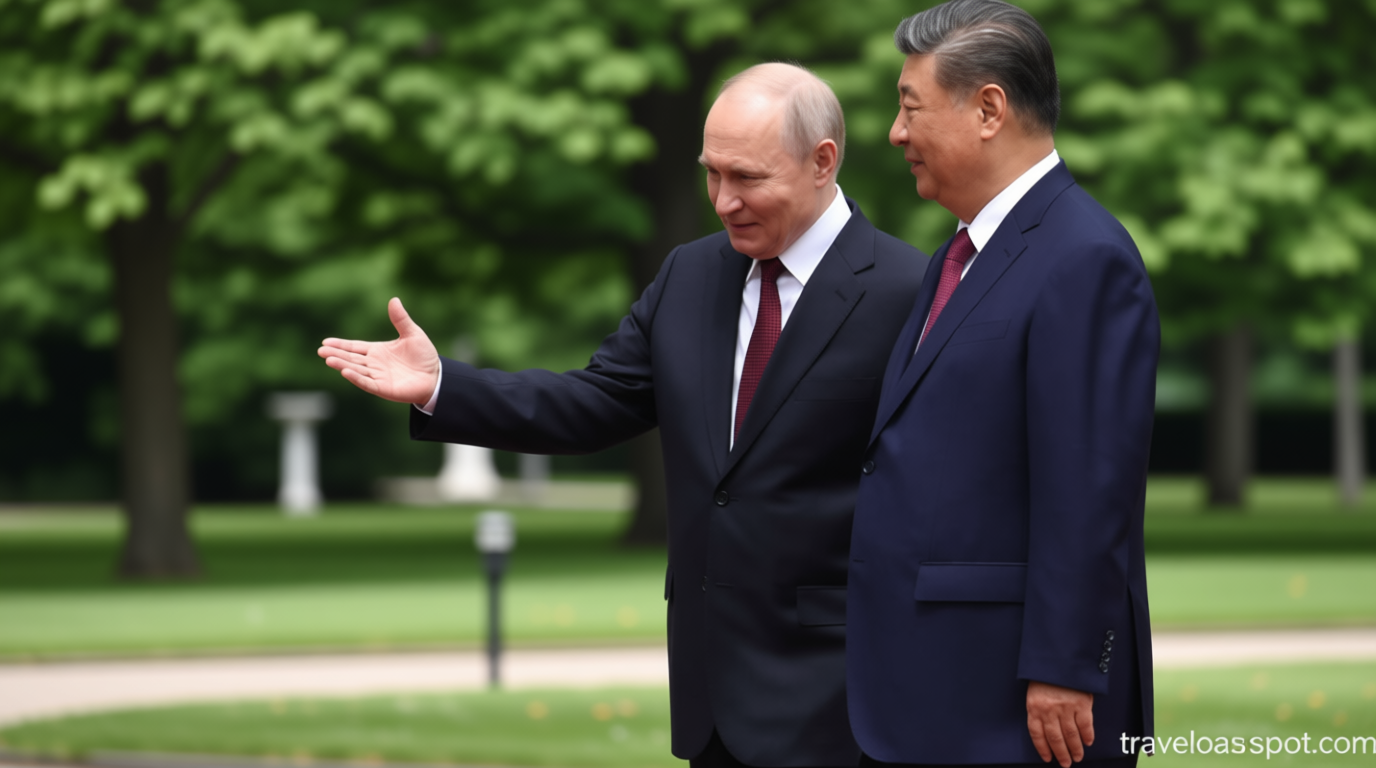
China’s Xi Gives Putin a Red-Carpet Welcome and Makes a Veiled Jab at the US
A Strategic Meeting Amid Global Uncertainty
China s Xi gives Putin a red – On Wednesday, Chinese President Xi Jinping extended a ceremonial welcome to Russian leader Vladimir Putin during a high-profile summit in Beijing, marking the beginning of Putin’s 24-hour state visit to the country. The meeting, which took place in the iconic Great Hall of the People, was framed as a reaffirmation of the enduring partnership between the two nations, a relationship that has deepened in recent years despite growing tensions with the United States. Xi described the international landscape as one of “interwoven turbulence and transformation,” a phrase that subtly critiques the perceived instability caused by Western policies, particularly those of the U.S. in its global interventions.
“The international situation is marked by intertwined turbulence and transformation, while unilateral hegemonic currents are running rampant,” Xi stated, echoing China’s long-standing criticism of American dominance in global affairs. This remark, made during the meeting, positioned Russia and China as counterbalances to the U.S. influence, emphasizing their shared commitment to a more equitable world order.
Xi’s comments underscored a strategic shift in China’s foreign policy, where it increasingly aligns with Russia to challenge the status quo. The two leaders, having met over 40 times since Putin’s tenure began, are now seen as pivotal figures in a broader movement to reshape international relations. Their collaboration, driven by mutual frustrations with U.S. policies, has led to significant coordination in trade, diplomacy, and security, creating a formidable alliance in the global arena.
The Joint Statement and a Multipolar Vision
As part of their discussions, Xi and Putin issued a joint statement reaffirming their partnership and outlining a vision for a multipolar world. This document, which was released after their talks, highlighted the growing importance of their bilateral relationship, particularly in the wake of the U.S.-led sanctions against Russia over its invasion of Ukraine. The statement also addressed the U.S. “Golden Dome” missile defense system, which Xi and Putin criticized as a threat to strategic stability.
“The parties believe that the US ‘Golden Dome’ project … poses a clear threat to strategic stability. These plans completely negate the key principle of maintaining strategic stability, which requires the inseparable interconnection of strategic offensive and strategic defensive weapons,” the leaders said, according to the Kremlin.
Their critique of the U.S. initiative was not merely symbolic. It reflected a broader geopolitical strategy to undermine American military superiority and promote a system where multiple powers, rather than a single hegemon, dictate global outcomes. Xi also touched on the U.S.-Israel conflict with Iran, suggesting that ending the war swiftly would help stabilize energy markets and global supply chains. “A comprehensive cessation of war brooks no delay, restarting hostilities is even less desirable, and persisting with negotiations is particularly important,” he noted, framing the situation as a critical juncture for international cooperation.
A Deepening Alliance and Economic Synergy
Pu’s visit to Beijing was his 25th official trip since assuming the Russian presidency, highlighting the depth of his relationship with China. This partnership has become a cornerstone of Russia’s economic strategy, especially after Western sanctions crippled its access to global markets. China, in turn, has emerged as a crucial trade partner, providing Moscow with the financial and industrial support needed to sustain its geopolitical ambitions.
During the visit, the two leaders signed a series of agreements, though specifics remained undisclosed. These deals, spanning sectors like energy, technology, and agriculture, were presented as a testament to their “no limits” partnership—a term often used to describe their close collaboration. Putin, in opening remarks, emphasized the personal bond between him and Xi, noting that their frequent meetings have solidified a partnership rooted in mutual trust and shared goals.
Putin’s arrival was accompanied by the traditional symbols of state visits, including a military parade and a formal gun salute. While these gestures were familiar, the warmth of the reception underscored the significance of the visit, contrasting sharply with the more formal welcome extended to U.S. President Donald Trump just days prior. The difference in tone highlighted the evolving dynamics between the two nations, with China positioning itself as a mediator in global conflicts and a counterweight to U.S. influence.
From Summit to Strategy: Expanding the Partnership
The meeting also served as a platform for discussing broader regional and global issues, including the war in Ukraine and the escalating tensions in the Middle East. Xi and Putin reaffirmed their commitment to strengthening ties in all aspects, from economic collaboration to joint military exercises. They also agreed to extend visa-free travel for each other’s citizens until the end of 2027, a move aimed at fostering closer people-to-people connections.
Artificial intelligence emerged as a key area of focus, with both leaders pledging deeper cooperation in this rapidly growing field. This decision reflects a strategic effort to position China and Russia as leaders in emerging technologies, countering U.S. dominance in innovation. The pair also emphasized the importance of maintaining a stable supply of resources, with Putin noting that Russia continues to supply energy and raw materials to China, which remains a responsible consumer in a world increasingly disrupted by conflict.
While Trump’s visit to China had been a historic event in itself, Xi’s meetings with Putin were seen as equally significant for their long-term implications. The two leaders’ ability to move swiftly on agreements and statements, in contrast to the more drawn-out process during Trump’s visit, suggested a more coordinated approach to advancing their shared agenda. This synergy is expected to continue as both nations seek to solidify their roles in a multipolar world, where power is more evenly distributed among global actors.
Historical Context and Geopolitical Implications
The renewed emphasis on China-Russia cooperation comes after years of strategic alignment, driven by common interests and mutual challenges. The U.S. has long been a rival to both countries, with its policies in trade, security, and global governance often seen as a threat to their sovereignty and economic independence. By working together, China and Russia aim to create a more balanced international system, one where the West’s dominance is challenged by rising powers.
Xi’s decision to host both Trump and Putin within a short span of days was deliberate, underscoring China’s role as a key player in global diplomacy. The contrast between the two visits—marked by different levels of engagement and shared objectives—highlighted the adaptability of China’s foreign policy. While the U.S. summit focused on trade and technology, the Russian visit emphasized security, energy, and geopolitical strategy, reinforcing the idea that China is now a central figure in shaping international relations.
As the world grapples with the consequences of the U.S.-led interventions in the Middle East and Ukraine, the China-Russia alliance is growing in strength. Their joint efforts to promote a multipolar world not only challenge the existing order but also offer an alternative vision of global stability. With 20 agreements inked during Putin’s visit and a continued emphasis on strategic coordination, the partnership between the two leaders appears to be expanding, with far-reaching implications for the future of international politics and economics.





