
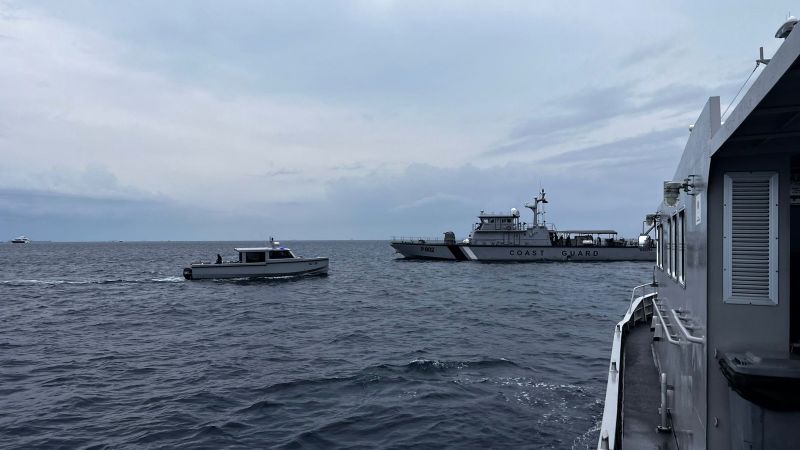
Bodies of Two Italian Divers Recovered from Sea Cave in Maldives
Bodies of two Italian divers recovered – Two of the four Italian divers who perished in the Vaavu Atoll caves of the Maldives were successfully retrieved by underwater teams on Tuesday, according to local authorities. The operation, which has been ongoing since the incident last week, marks progress in the search for the remaining two bodies. The recovery effort, involving both Maldivian and international divers, faced setbacks when a military diver also succumbed to decompression sickness during a previous mission. This event highlights the perilous nature of deep-sea exploration and the challenges faced by rescuers in such environments.
Tragedy and Multinational Response
The accident occurred when five Italian divers disappeared while investigating the submerged caverns of Vaavu Atoll. The incident sparked a coordinated search involving multiple countries, including the Italian government, which dispatched experienced Finnish divers to assist in the recovery. These specialists, affiliated with the Divers Alert Network (DAN), are known for their expertise in deep-sea operations and have participated in similar missions globally. The Maldivian National Defense Force described the divers as highly trained professionals, capable of navigating the extreme conditions of the underwater cave system.
“The two bodies—identified as a male and female—were located in the third chamber of the cave and are being transported to the mortuary in Malé by police,” stated Mohamed Hussain Shareef, the Maldives’ chief government spokesperson. Shareef emphasized the difficulty of the operation, noting that the cave’s depth and structure posed significant challenges for the rescuers.
Efforts to locate the remaining two bodies were temporarily halted over the weekend following the death of Sgt. Mohamed Mahudhee, 43, during a second dive into the cave. Mahudhee’s fate added to the somber tone of the operation, as his passing underscored the risks of diving in depths exceeding recreational limits. The Maldivian authorities have since resumed the search, with plans to retrieve the final two remains on the following days.
Cave Conditions and Decompression Risks
The sea cave where the tragedy unfolded is described as one of the most challenging underwater environments in the region. At its deepest point, the cave reaches 70 meters (approximately 230 feet) below the surface, equivalent to the height of a 20-story building. This depth, which far surpasses the standard recreational limit of 30 meters (100 feet), increases the likelihood of decompression sickness—a condition caused by the body’s inability to expel excess nitrogen gas when ascending rapidly from deep waters.
The cave’s length, spanning 200 meters, further complicates recovery operations. Divers must navigate tight passages and uneven terrain while maintaining precise control of their breathing and buoyancy. The risk of equipment failure or sudden environmental changes, such as strong currents or limited visibility, adds to the danger. Shareef noted that these conditions have made the task of locating the missing bodies both critical and hazardous.
Identified Victims and Ongoing Challenges
Italian media later confirmed that the two bodies recovered on Tuesday belong to Monica Montefalcone, an associate professor of ecology at the University of Genoa, and Federico Gualtieri, a marine biologist. Their identities were shared by the Maldivian state media, which highlighted the emotional toll of the tragedy on their families and colleagues. The other two victims, Giorgia Sommacal (Montefalcone’s daughter) and Muriel Oddenino, a researcher, are still being searched for.
Earlier in the week, the body of Gianluca Benedetti, a diving instructor, was found at the mouth of the cave. This discovery provided a crucial breakthrough in the search, as it allowed rescuers to focus on the deeper sections of the cave where the remaining victims were believed to be located. The loss of Benedetti, however, served as a reminder of the risks involved in such missions, even for those with extensive training and experience.
Authorities reported that a sixth diver had opted to remain on the surface during the initial search, citing concerns about the cave’s extreme conditions. This decision, made by one of the rescue team members, reflects the cautious approach required when dealing with such perilous environments. The Italian government’s involvement, combined with the support of international divers, has been instrumental in the ongoing operation, though the process has been slow and fraught with obstacles.
The cave’s depths and complexity have tested the limits of even the most skilled divers. Despite their training, the loss of life underscores the unpredictable nature of underwater exploration. Shareef described the operation as a “testament to the dedication and courage of the rescuers,” while acknowledging the immense pressure they face. The Maldives, a popular tourist destination, has seen a surge in diving activities in recent years, but this incident has raised questions about safety protocols in deeper waters.
As the search continues, officials are working to ensure that the remaining bodies are recovered as soon as possible. The emotional impact on the families of the victims has been profound, with loved ones now grappling with the loss of their relatives in an environment where even the most experienced divers can face life-threatening situations. The Maldivian government has committed to providing support to the Italian team and their families, emphasizing the collaborative nature of the operation.
The incident has also sparked discussions about the need for enhanced safety measures in deep-sea diving. Decompression sickness, a common cause of fatalities in such environments, is often preventable with proper equipment and adherence to protocols. However, the rapid pace of the rescue efforts and the depth of the cave may have contributed to the risk. The Maldives’ coastal regions, while beautiful, are home to caves that extend far beyond the reach of recreational divers, requiring specialized training and equipment for exploration.
With the bodies of Montefalcone and Gualtieri now in the hands of authorities, the focus shifts to the final phase of the operation. The recovery of the remaining two divers will be crucial in bringing closure to their families and understanding the full extent of the incident. As the divers prepare for the next phase, the story of their bravery and the challenges they faced in the depths of the Maldivian sea cave will remain a poignant reminder of the dangers of underwater exploration.
CNN’s Laura Sharman contributed to this report, providing updates on the search and recovery efforts. The collaboration between the Maldivian government and international teams highlights the global nature of underwater rescue operations and the shared commitment to retrieving those lost in the depths of the ocean.





