
Drug Counselor Who Delivered ‘Friends’ Star Matthew Perry Ketamine That Killed Him Gets 2 Years
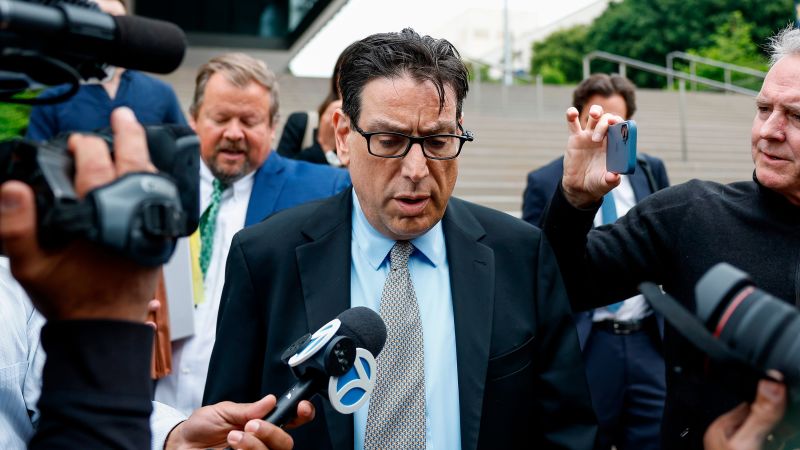
Drug counselor who delivered Friends star – On Wednesday, Erik Fleming, a licensed drug addiction counselor, received a two-year prison sentence for providing the ketamine doses that led to the death of Matthew Perry, the iconic actor known for his role in the television series ‘Friends.’ The ruling was delivered by Judge Sherilyn Peace Garnett in a federal courtroom in Los Angeles. Fleming, 56, had been on bond for approximately two years prior to the sentencing. The judge directed him to surrender himself within 45 days to begin his incarceration, while also imposing a three-year probation term.
Fleming’s Testimony and Cooperation
Before the sentence was announced, Fleming addressed the court with a somber tone, expressing his regret over the tragic events. “It’s truly a nightmare I can’t wake up from,” he said, adding that he was “haunted by the mistakes I made.” He wore a black suit and delivered his remarks from a podium, his voice steady yet heavy with emotion. His cooperation with investigators, which began shortly after they reached out to him, played a significant role in the prosecution’s case.
“I handed over the Ketamine Queen on a silver platter,” Fleming’s attorney, Robert Dugdale, stated. “They didn’t have a clue who she was before that day.”
Dugdale argued that Fleming’s early admission of guilt and information about Jasveen Sangha, the convicted drug dealer dubbed “The Ketamine Queen” by prosecutors, should mitigate his punishment. According to federal sentencing guidelines, Fleming’s collaboration could have reduced his sentence by about four years. However, prosecutors maintained that his cooperation was driven by self-preservation rather than a genuine desire for justice.
“Mr. Fleming didn’t cooperate because he had a benevolent motive, or because he wanted justice for Mr. Perry,” Assistant US Attorney Ian Yanniello noted. “He wanted to save himself.”
Despite this, the judge acknowledged Fleming’s contributions to the investigation. She highlighted that his testimony, along with the information he provided about Sangha, expedited the case. However, she also noted that Fleming had not disclosed key details in the months following Perry’s death, nor had he generated new evidence by contacting co-conspirators. The prosecution’s sentencing memo suggested that the information Fleming shared could have been uncovered through the seizure of his phone, but his willingness to assist still warranted a lighter penalty.
The Ketamine Connection
Fleming’s role in Perry’s death began when he was introduced to the actor by Sangha, who had been a regular supplier of the drug. Perry, who had been undergoing ketamine treatments for depression, sought more of the substance than his doctors could provide. He turned to a friend, who connected him with Sangha, who then enlisted Fleming to deliver the doses. Fleming’s deliveries included 25 vials of ketamine for $6,000 just four days before Perry’s death on October 28, 2023.
Fleming, a former film and television producer, had transformed his life after battling addiction. He had achieved sobriety and become a drug counselor, but his relapse after the 2023 death of his beloved stepmother, who had helped him overcome a traumatic childhood, led to his involvement in the case. His lawyers emphasized that his criminal conduct was limited to a brief period, lasting only 11 days, and was directed at a single customer.
Prosecution and Defense Arguments
Prosecutors acknowledged Fleming’s cooperation but stressed that his role as a drug counselor who intentionally provided illegal drugs to someone with a documented history of addiction should be considered in sentencing. “Even though Perry wasn’t one of his regular clients, his deliberate actions contributed to the actor’s fatal overdose,” the prosecution stated in their memo.
Fleming’s defense team argued for a lesser sentence, requesting three months in prison and nine months in a residential drug treatment facility. They highlighted his efforts toward rehabilitation, including 20 months of sobriety and his involvement in establishing a sober living home. “He has gone to extreme lengths to atone for his criminal conduct,” the defense said, underscoring his remorse and commitment to recovery.
After the sentencing, Fleming hugged several friends in the courtroom, showing his emotional connection to the people who supported him. While the case remains a significant moment in the legal proceedings surrounding Perry’s death, it marks the fourth defendant to be sentenced among the five who have pleaded guilty. The other defendants, including Sangha, have also faced consequences for their roles in the tragedy. Sangha, who was sentenced to 15 years in prison last month, was the key supplier of ketamine to Fleming.
Off-Label Use and Final Moments
Perry’s use of ketamine was part of its growing off-label application for treating depression. His death occurred in the Jacuzzi of his Los Angeles home, where he had been receiving the drug as part of his mental health regimen. The final dose administered to Perry was part of a batch he purchased from Fleming’s vials. Kenneth Iwamasa, Perry’s live-in personal assistant, injected the actor from that batch, and hours later, Perry was found unconscious. The circumstances surrounding his death have since sparked broader discussions about the risks of ketamine therapy and the role of illicit drug distribution in cases of medical overdoses.
Fleming’s case underscores the intersection of professional responsibility and personal choices. His journey from addiction to counselor, and then back to drug dealing, has become a focal point in understanding the events leading to Perry’s demise. While his sentence may serve as a cautionary tale, it also reflects the balance between accountability and the efforts to rehabilitate. The courtroom proceedings revealed both the gravity of his actions and the complexity of his motivations, with the judge ultimately determining that his contributions to the investigation outweighed his role in the fatal overdose.
As the case concludes, the legacy of Matthew Perry’s death continues to influence legal and medical discourse. Fleming’s two-year term is a tangible outcome of the events that unfolded, but it also highlights the ongoing debate about the accountability of individuals in the drug distribution chain, even when their intentions are framed as therapeutic. The sentencing marks a pivotal moment in a case that has brought attention to the personal and professional consequences of addiction, and the lengths to which individuals might go to reconcile their past with their present.





