
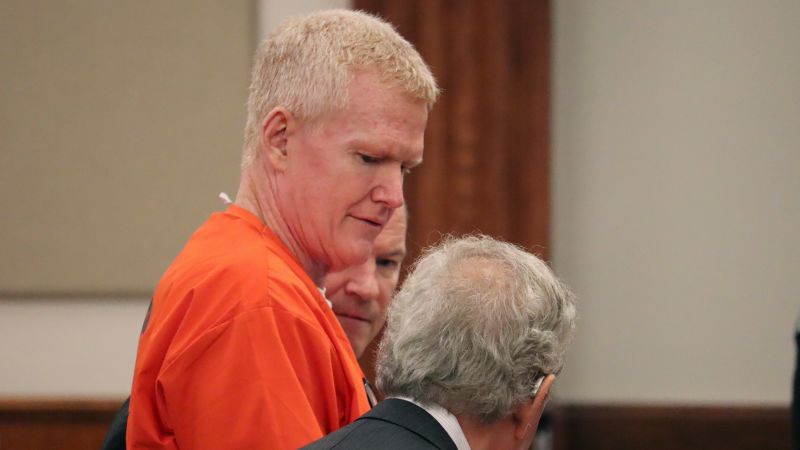
Court overturns Alex Murdaugh’s murder convictions and orders new trial
Court overturns Alex Murdaugh s murder – On Wednesday, the South Carolina Supreme Court ruled to overturn the murder convictions of Alex Murdaugh, a prominent attorney from a storied Lowcountry legal family. The justices ordered a retrial for the killing of his wife, Maggie, and son, Paul, which occurred in June 2021. The court cited the “improper” influence of county clerk Becky Hill, who allegedly biased the jury during the trial. In a unanimous 5-0 decision, the justices emphasized that Hill’s actions undermined Murdaugh’s right to a fair and impartial trial.
The ruling reversed the jury’s earlier verdict, which had sentenced Murdaugh to two life terms for the murders. The court stated that Hill “placed her fingers on the scales of justice,” effectively tilting the trial’s outcome. “We have no choice but to reverse the denial of Murdaugh’s motion for a new trial due to Hill’s external interference,” the justices wrote, adding that the case would now be remanded for a fresh proceeding.
Separate guilty plea to financial crimes
Despite the overturned murder convictions, Murdaugh has already pleaded guilty to numerous financial offenses. These include embezzling millions from clients and his own law firm, which led to his disbarment and concurrent state and federal prison sentences of 27 and 40 years. The court’s decision to vacate the murder sentences does not affect these existing charges, meaning Murdaugh will remain incarcerated while awaiting a retrial on the homicide counts.
Attorney General Alan Wilson expressed disappointment with the ruling but confirmed his office would pursue a new trial. “While we respectfully disagree with the Court’s decision, my Office will aggressively seek to retry Alex Murdaugh for the murders of Maggie and Paul as soon as possible,” he said. Murdaugh’s legal team, Dick Harpootlian and Jim Griffin, welcomed the ruling, calling it a vindication of the rule of law. “The Supreme Court’s decision today affirms that the rule of law remains strong in South Carolina,” they stated. “We look forward to a new trial conducted consistent with the Constitution and the guidance this Court has provided.”
Public fascination and legal legacy
The overturning of Murdaugh’s convictions marks another chapter in the unfolding story of the once-esteemed family, whose legal legacy spanned generations. The case has captivated the public, sparking a wave of true crime documentaries, podcasts, and books that explore the dramatic downfall of the Murdaughs. The family’s prominence as local prosecutors from 1920 to 2006 adds historical weight to the current legal drama, highlighting the irony of their own son facing similar charges.
At the heart of the appeal was the argument that Becky Hill’s conduct during the trial compromised its fairness. Murdaugh’s attorneys claimed her comments to jurors created a prejudicial environment, influencing their deliberations. Hill, who served as the county clerk during the original trial, later pleaded guilty to criminal charges tied to the case, including alleged misconduct in her role as a juror’s advisor. Her actions, however, did not fully satisfy the defense’s claims of systemic bias.
Testimony and defense strategy
The six-week murder trial revealed a complex narrative of financial misconduct and personal tragedy. Testimony highlighted Murdaugh’s alleged theft of millions from vulnerable clients, raising questions about his ethical conduct as a personal injury lawyer. Yet, the trial also exposed his ability to defend himself, as he took the stand and denied killing his wife and son. Though he admitted to lying about his whereabouts before the murders, he maintained his innocence, a stance that has persisted throughout the legal process.
Prosecutors had argued that the evidence against Murdaugh was overwhelming, citing his “obvious guilt” in the killings. They acknowledged Hill’s remarks were inappropriate but insisted they were minor in comparison to the strength of the case. During a February hearing, the five-member panel of justices appeared unconvinced by the prosecution’s defense, signaling a shift in the legal landscape. The appeal focused on Hill’s interactions with jurors, including statements that allegedly swayed their opinions.
Juror accounts and impact
“Those comments made it seem like he was already guilty.”
Juror Z, one of those who testified during the appeal, described how Hill’s remarks during the trial affected their perception of the case. She claimed Hill told jurors to “watch his actions” and “watch him closely” as Murdaugh presented his defense. These words, according to the juror, created an impression of preordained guilt. Another juror, referred to as Juror P, reported that Hill assured the panel the deliberations would be “quick,” reinforcing a sense of pressure to reach a verdict swiftly.
“This shouldn’t take us long.”
Additionally, Juror X described Hill’s emphasis on the day of Murdaugh’s testimony as “important” or “epic,” suggesting her words carried significant weight. These accounts underscore the claim that Hill’s influence extended beyond her official duties, potentially altering the jury’s decision-making process. The South Carolina Supreme Court’s decision to reverse the verdict highlights the importance of impartiality in jury selection and the potential for even minor comments to sway a trial’s outcome.
Broader implications and future steps
The case has become a symbol of the fragility of justice, especially in high-profile trials. Murdaugh’s conviction was the culmination of a series of events that began with the deaths of his wife and son, followed by accusations of misappropriated funds and a bizarre insurance scam. His downfall also included a stint in drug rehab, a resignation from his law firm, and the revelation of a potential suicide-for-hire plot, all of which added layers of intrigue to the case.
With the murder convictions overturned, the focus now shifts to retrial. Murdaugh’s legal team will likely argue that the original trial was marred by Hill’s biased comments, while prosecutors may emphasize the volume of evidence and the clarity of his guilt. The outcome of the retrial could redefine the family’s legacy, either restoring their reputation or deepening the stain of their legal missteps. As the case moves forward, the public remains eager to see whether justice will prevail in this remarkable saga of crime, corruption, and courtroom drama.
A timeline of events
In March 2023, a jury convicted Alex Murdaugh of murdering his wife and son. The trial featured testimony from multiple witnesses, including his own admissions of financial deceit. However, the convictions were later challenged, leading to the current appeal. The timeline of the Murdaugh family’s unraveling includes:
– June 2021: The murders of Maggie and Paul occur, setting off a chain of events that would shake the legal community. – March 2023: Murdaugh is found guilty of the murders, marking the first major conviction in the case. – January 2024: Retired South Carolina Chief Justice Jean Toal questioned jurors about Hill’s influence, highlighting the controversy. – February 2024: A hearing on the appeal revealed the justices’ skepticism of the prosecution’s arguments. – May 2024: The Supreme Court’s unanimous decision overturns the murder convictions, paving the way for a new trial.
As the legal proceedings continue, the Murdaugh case remains a focal point of public interest, reflecting both the power of the law and the human elements of doubt, deception, and redemption. The new trial will be a critical test of whether the court can ensure fairness in a case that has already become a cultural phenomenon.





