
Dr. Stephen Kornfeld’s Journey from Dream Voyage to Biocontainment
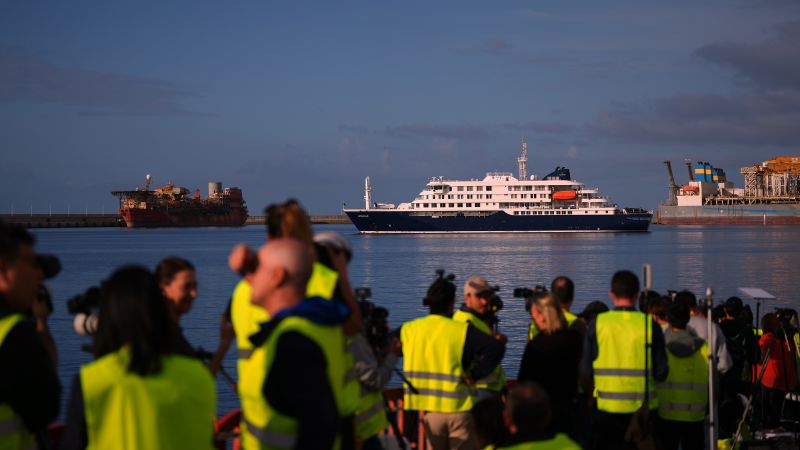
He was on the trip – Dr. Stephen Kornfeld, an oncologist, found himself in an unexpected situation after embarking on what was meant to be an unforgettable journey aboard the MV Hondius. The cruise, which sailed across the Atlantic, was initially a celebration of a once-in-a-lifetime opportunity for the passengers and crew. Yet, as the trip progressed, several individuals began exhibiting symptoms that would soon redefine the experience. Now, Kornfeld is the sole passenger in a biocontainment unit at the University of Nebraska Medical Center, following an initial positive test for Andes hantavirus. His ordeal highlights the growing concern over the virus as cases continue to mount.
A Cruise Turned Quarantine Experience
Kornfeld’s illness began with flu-like symptoms, including persistent fatigue, night sweats, and chills. These signs, which he described as mild at first, escalated over two weeks, leaving him in a state of severe exhaustion. When the first passengers fell ill in early April, the medical team on board assumed it was a common virus. However, the evolving situation has cast doubt on that initial diagnosis, with Kornfeld now reflecting on whether the outbreak might have been hantavirus all along.
“At the time, it was felt like this is just some virus. And now, in retrospect, there is a question, could it have been hantavirus? But it’s just speculation. There’s no way to really know,” he told CNN’s Erin Burnett OutFront on Tuesday.
Kornfeld’s role as a healthcare provider on the ship added to his exposure risk. He had treated several passengers who later contracted the virus, and his close interaction with one who ultimately succumbed to hantavirus further raised concerns. Despite his current isolation, Kornfeld expressed gratitude for the support he’s receiving, describing the biocontainment unit as a place where “the nurses come in, the doctors come in. I’m on WhatsApp all the time. It’s really amazing how quickly time flies.”
Global Response to the Outbreak
As the world grappled with the rare hantavirus outbreak on the MV Hondius, a coordinated global repatriation effort was launched to bring affected individuals back to their home countries. More than a week after the World Health Organization (WHO) confirmed the presence of the virus, 122 people—including 87 passengers and 35 crew members—had been evacuated from the ship. Most of these individuals are now in quarantine at the National Quarantine Unit in Omaha, Nebraska, where they remain in isolated rooms equipped with basic amenities.
The remaining 27 crew members and two medical professionals are still aboard the vessel, en route to Rotterdam, Netherlands, where the ship will undergo a thorough disinfection process. Oceanwide Expeditions, the cruise operator, anticipates the vessel’s arrival in the port on Monday. The WHO reported that three passengers have since died from hantavirus, with additional confirmed or probable cases among the crew. As of Tuesday, the organization stated that 11 cases have been documented, including the three fatalities. Nine of these cases are attributed to the Andes strain, the other two are classified as “probable.”
Uncertainty and Monitoring Efforts
The next several weeks will likely be marked by uncertainty for those who were onboard the ship. While human-to-human transmission of the Andes strain is believed to have occurred, the exact spread remains under investigation. Federal health agencies in the U.S. are closely monitoring 17 Americans and one British dual-national in medical facilities. These individuals range in age from late 20s to early 80s, with older passengers and those suffering from preexisting conditions facing a higher risk of severe complications.
Currently, Kornfeld is in the biocontainment unit at the University of Nebraska Medical Center, while the remaining 15 people under observation are in the quarantine unit. All are asymptomatic, according to a recent update from the U.S. Department of Health and Human Services (HHS). However, two other passengers were transferred to Atlanta’s Emory University for additional care due to limited capacity at UNMC. One of these individuals, who was described as “mildly syptomatic,” has since tested negative for the Andes virus.
The Centers for Disease Control and Prevention (CDC) is awaiting confirmatory test results to determine the extent of the outbreak. Kornfeld noted that the interpretation of lab findings could be complex, leaving open the possibility that the illness experienced by others might have been caused by a different virus. “What I hear from the experts who I’m seeing daily is that the lab tests may not be that straightforward to interpret, so it may never be known if that illness— which others also had—was hantavirus or the typical virus that circulates on a cruise boat,” he explained.
Global Implications and Ongoing Investigations
While the risk to the general public is considered low, the outbreak has sparked a broader conversation about the potential for hantavirus to spread in enclosed environments like cruise ships. The WHO has reiterated that the Andes strain, which is typically found in South America, is rare but capable of causing severe illness. The recent cases on the MV Hondius have led to increased scrutiny of the virus’s transmission patterns and the effectiveness of current containment measures.
Among the evacuated passengers, five Australians and one New Zealander are currently in the Netherlands, awaiting repatriation later this week. The CDC’s involvement in the investigation underscores the urgency of understanding how the virus spread on board. As the team in Nebraska continues to assess passengers for symptoms, they are also conducting in-depth interviews to trace interactions with individuals confirmed to have hantavirus. This process aims to identify potential clusters of infection and determine the ship’s role in the outbreak.
For Kornfeld, the experience has been both physically and emotionally taxing. While he initially viewed the cruise as a joyous adventure, the sudden shift to isolation has left him contemplating the virus’s impact. “It’s a little weird being in here by myself,” he said, but added that the medical staff’s vigilance and the ease of communication through WhatsApp have eased his anxiety. His journey serves as a reminder of the unpredictable nature of infectious diseases and the challenges they pose even in the most unexpected settings.
As the MV Hondius moves closer to its final destination, the focus remains on containing the virus and ensuring the safety of those who were on board. The situation continues to evolve, with the CDC and WHO working together to provide clarity on the outbreak’s origins and its broader public health implications. For now, Kornfeld and his fellow passengers are confined to their respective units, awaiting further updates as the world watches the story unfold.





