
On the Road to Tehran: A Nation on Edge
On the road to Tehran Iranians – As the long, winding path to Tehran cuts through snow-draped mountains and lush valleys, the atmosphere is thick with unease. The journey, which passes by serene landscapes of Tabrizi poplars and fields where wheat sprouts in spring, offers a stark contrast to the geopolitical tensions brewing beneath the surface. The Qotur River, its waters darkened by thawing snow, meanders through the terrain, a quiet witness to the turmoil that has gripped Iran. Yet, despite the natural beauty, the sense of foreboding is palpable. The US and Israeli strikes that ravaged parts of the country earlier this year have left scars, but the most recent threats to reignite conflict are now casting a longer shadow.
Amid stalled peace talks and rising concerns over the blockade of the strategic Strait of Hormuz, Iranians are increasingly wary of a possible resurgence of hostilities. During a CNN expedition across the nation, ordinary citizens — many of whom were once inspired by Trump’s call to “take back your country” — shared their experiences of life under military pressure. One young woman, traveling from the United States to Tehran, expressed her caution as she learned of the team’s route through northwestern Iran. “Don’t go there, it’s far too dangerous now,” she warned, her voice steady yet laced with urgency. “I have family there, that is why I am taking the risk,” she added, requesting anonymity. Her words underscore a deeper fear: the possibility of war disrupting daily life and family ties.
“Don’t go there, it’s far too dangerous now. I have family there, that is why I am taking the risk.”
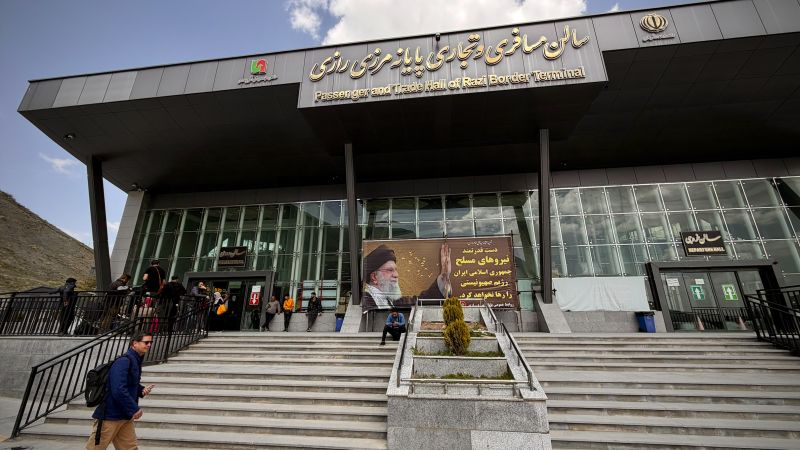
On the roadside, between stalls offering pistachios and steaming cups of tea, black billboards stand as memorials to Ayatollah Ali Khamenei, the supreme leader who perished in a February airstrike. His death marked the beginning of a new chapter in Iran’s history, and the banners reflect this shift. One reads in Farsi, “His shadow has passed over our heads,” echoing a traditional Persian lament. Another declares Mojtaba Khamenei, the younger leader, as the “standard bearer” of the nation, though his injury in the same attack has left him largely unseen in public since assuming power. This absence hints at the uncertainty that now defines Iran’s political landscape.
As the US President Donald Trump prepares for a state visit to China, both nations appear to be eyeing Beijing as a potential mediator. The White House hopes China will leverage its influence to coax Iran into a more favorable agreement, while Tehran’s ambassador to China has hinted at the communist state’s capacity to act as a neutral arbiter between the two powers. This dynamic is driven by shared economic interests, particularly in ensuring the uninterrupted flow of oil and gas through the Persian Gulf. For China, supporting Iran’s stability could enhance its global standing, offering a contrast to Washington’s disruptions of international trade.
“Trump could decide to start the bombing again today. Maybe not when he is in China, but who knows. Trump likes to be at the center of attention.”
Iranians, however, remain the ultimate arbiters of their nation’s fate. Even under a regime often characterized by rigid control, they have demonstrated resilience in the face of adversity. During the long drive toward the capital, glimpses of this vitality emerged. In a border town near Turkey, crowds of day-trippers — a mix of young and old — carried large drums of cooking oil by hand, a stark symbol of the economic strain gripping the country. One elderly Iranian pensioner, breathless from the effort, recounted how cooking oil has become six times more expensive in Iran than in Turkey, a consequence of the ongoing cost-of-living crisis. “The price of everything has gone up, but our income has not,” he said, his frustration evident.
Though the recent US naval blockade has intensified the crisis, the root of the problem lies in the broader economic challenges. These issues sparked nationwide anti-government protests late last year, a movement that challenged the regime’s authority. The demonstrations, initially fueled by demands for lower prices and better living conditions, were met with a brutal crackdown. Iranian authorities have admitted to the deaths of thousands during the state’s response, a grim reminder of the stakes involved in the conflict. Yet, the protests also highlight the people’s determination to resist, even at great personal cost.
The Legacy of Defiance
At a restaurant en route to Tehran, nestled in an ancient caravanserai, the atmosphere was warm and convivial. Families gathered around tables, sharing rice, spiced kebabs, and thick, dark coffee. What stood out, however, was the absence of the traditional hijab among most of the women present. This defiance is a direct echo of the 2022 “Woman, Life, Freedom” protests, which forced authorities to loosen their grip on dress codes. The visible shift in norms reflects a broader cultural awakening, even as the government maintains its grip on power.
“His shadow has passed over our heads.”
Despite the military strain and economic hardship, Iranians continue to assert their agency. The war with the US, which Trump once described as his “little excursion,” is no longer a distant event but a daily reality. For many, the burden of survival has become more than a struggle for resources — it is a fight to preserve dignity and hope. As the country braces for the possibility of renewed strikes, the people’s resilience remains a defining feature of the nation.
A Diplomatic Crossroads
The international context further complicates Iran’s situation. Trump’s visit to China underscores the growing reliance on the communist state as a diplomatic bridge. While the US seeks to pressure Iran into concessions, China’s role as a mediator is both strategic and symbolic. By supporting Iran’s economic stability, Beijing could position itself as a stabilizing force in the region, contrasting its actions with Washington’s unpredictable interventions. This alignment, however, is not without its risks. Iran’s government must balance its need for international support with its commitment to domestic control, a delicate act in a climate of uncertainty.
The current standoff also highlights the global implications of the conflict. The closure of the Strait of Hormuz, a critical artery for global oil supplies, has raised alarms about the potential for economic disruption. With tensions escalating between the US and Iran, the world watches closely for any sign of a breakthrough or a new escalation. For Iranians, the stakes are personal — their lives are intertwined with the outcomes of these high-level negotiations.
The Weight of Expectations
As the journey toward Tehran continues, the people’s stories reveal a nation at a crossroads. Their fears are not just of war but of its consequences — the loss of livelihood, the strain on families, and the erosion of freedoms. Yet, amid these challenges, there is a flicker of hope. The protests, the defiance in dress, and the quiet determination of everyday citizens suggest that Iran’s future is not predetermined. Whether it will lead to a ceasefire or a new chapter of conflict depends on the choices made by its people and their leaders alike.
Trump’s Iran plan, unveiled during discussions with Chinese President Xi Jinping, signals a potential pivot in the US’s approach. But for Iranians, the question remains: will this diplomacy bring relief, or will it merely delay the inevitable? As they navigate the complexities of war and peace, the people of Iran continue to endure, their resilience a testament to the enduring spirit of a nation that refuses to be silenced.
The road to Tehran, once a symbol of natural beauty, now carries the weight of history and the burden of uncertainty. Each turn of the path reflects a different facet of the country’s struggle — from the scars of war to the quiet strength of its people. As the world looks to Beijing for resolution, Iranians remain the heart of this unfolding drama, their lives a blend of hope, hardship, and unyielding perseverance.





