
Germany’s Merz Says He Would Not Advise Children to Live in the U.S.
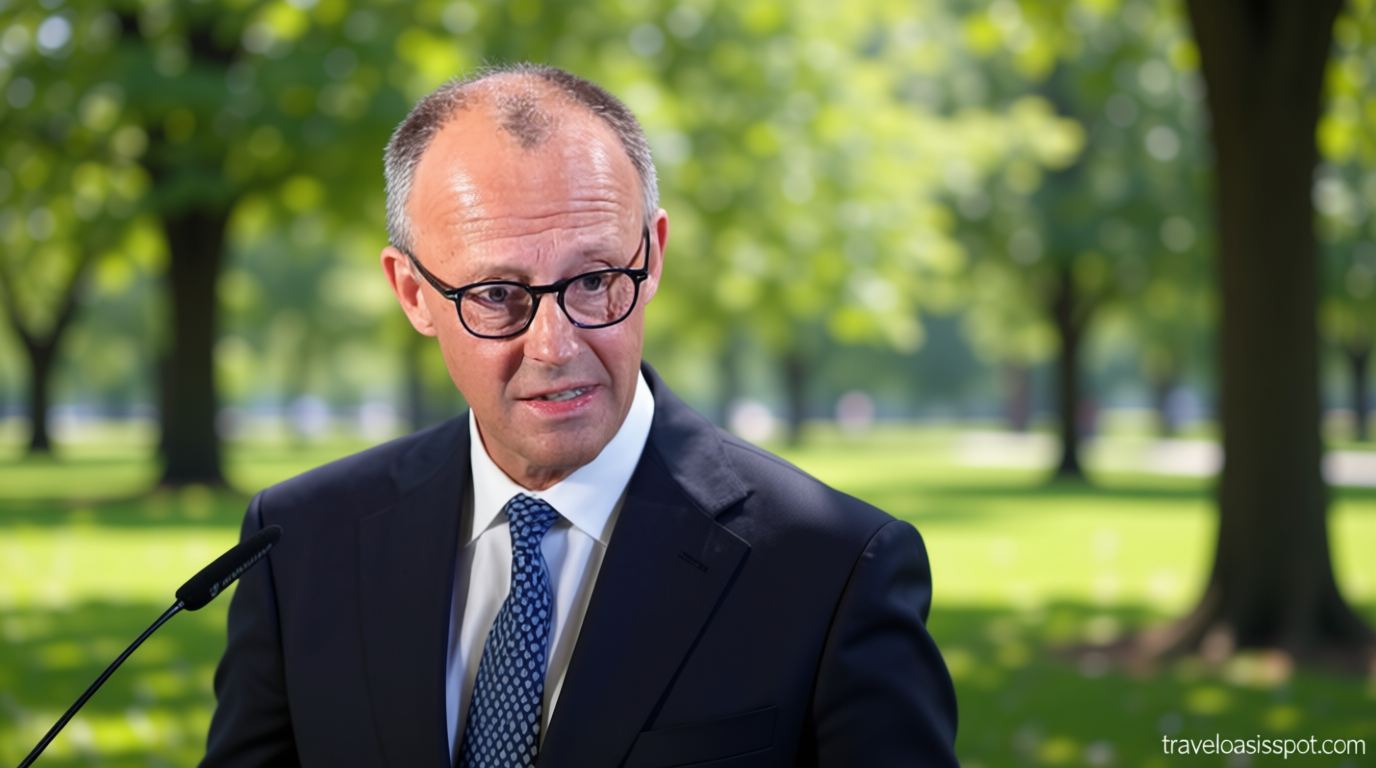
Germany s Merz says he wouldn – German Chancellor Friedrich Merz, a seasoned leader with decades of political experience, has sparked debate by recently stating he would not recommend his children to live or study in the United States. His remarks, delivered during a speech to a young audience at a Catholic convention in Würzburg, reflect a growing skepticism about America’s current trajectory and its impact on global opportunities. Merz emphasized concerns over the shifting social landscape and the challenges faced by even the most accomplished professionals in the U.S. today.
US-Europe Tensions Under Trump
The chancellor’s comments come amid escalating friction between the United States and its European allies, particularly under President Donald Trump’s leadership. Recent disputes over trade policies, military engagements in Ukraine, and the ongoing conflict in Iran have placed significant pressure on the NATO alliance. Merz’s critique of the U.S. in the context of the Iran war, which he described as a “humiliation” for America, has intensified these tensions. His remarks have not only drawn attention to Germany’s position but also highlighted a rift between the two longstanding partners.
“I firmly believe that few countries worldwide provide such robust prospects for young people as Germany,” Merz asserted. “At this time, I would not send my children to the United States for their education or employment, given the social climate that has emerged there.”
Merz, now 70 and the father of three, underscored the difficulty of securing jobs for the highly educated in America. “Even those with the most advanced qualifications struggle to find meaningful work,” he noted, adding that the U.S. has become a place where “opportunity is increasingly overshadowed by uncertainty.” His statement has been interpreted as a reflection of broader anxieties about the direction of American society and its economic policies.
Historical Context and Strategic Shifts
While Merz has long been a proponent of transatlantic cooperation, his recent criticisms mark a notable departure from his earlier stance. Last month, he publicly challenged the U.S. approach in the Iran conflict, arguing that American involvement had been reckless and undermined its global credibility. This line of reasoning appears to have influenced Washington’s response, with the Trump administration subsequently announcing a partial troop withdrawal from Germany and increasing tariffs on European Union automobiles—a move that has struck at the heart of Germany’s economic strength.
The German economy, heavily reliant on the automotive sector, has felt the brunt of these policies. With the EU’s cars now facing higher costs in the U.S. market, German leaders have voiced concerns over the potential long-term effects on trade and employment. Merz’s remarks about the U.S. social climate tie into these economic worries, suggesting that the country’s current challenges may extend beyond political or military domains and into the realm of opportunities for future generations.
A Call for Optimism in Germany
During his speech, Merz also urged Germans to adopt a more positive outlook on their nation’s potential. He criticized a tendency among some to view the world through a lens of pessimism, advocating instead for a focus on Germany’s strengths. “People are too quick to assume the worst about the global situation,” he said. “We should take pride in the opportunities our country offers, especially to its youth.”
Merz’s emphasis on optimism contrasts with his critiques of the U.S. He framed his comments as a plea for national confidence, stressing that Germany remains a beacon for those seeking stability and growth. “Germany provides a solid foundation for personal and professional development,” he added, citing the nation’s robust education system and strong labor market. His words resonated with the young audience, who were drawn to his message of self-reliance in an era of international uncertainty.
Trump’s Response and the Symbiotic Relationship
In response to Merz’s criticisms, Trump took a pointed jab, suggesting that the chancellor should focus on improving Germany’s own “broken country.” The president’s retort underscores the reciprocal nature of their relationship, where each leader has periodically questioned the other’s vision. While Trump’s remarks were laced with sarcasm, they also reflect the deepening divergence in priorities between the two allies.
Merz, in turn, acknowledged his admiration for America but noted that it has wavered in recent months. “I am a great admirer of America,” he said, “but my admiration isn’t growing at the moment.” His statement, met with laughter and applause from the crowd, signaled a shift in public perception and political strategy. The chancellor’s words hint at a broader realignment in Germany’s approach to U.S. leadership, as the country seeks to assert its own interests in an increasingly fragmented international order.
The implications of Merz’s comments extend beyond immediate policy debates. They signal a growing sentiment among German policymakers that the U.S. may no longer be the unchallenged leader in providing global opportunities. While the transatlantic partnership has weathered storms before, Merz’s stance raises questions about its future resilience. His advice to his children is not just a personal choice but a political statement, suggesting that Germany’s model of social cohesion and economic stability is more appealing to the next generation.
Broader Impacts on Transatlantic Relations
Merz’s critique of the U.S. social climate aligns with concerns raised by other European leaders about American economic and social policies. The withdrawal of troops and tariff hikes on European goods have been seen as strategic moves to bolster domestic industries, but they also risk alienating allies. Germany’s strong automotive sector, in particular, faces a precarious future as these measures could disrupt supply chains and reduce market access for its exports.
Meanwhile, the chancellor’s focus on Germany’s strengths has bolstered domestic morale, offering a counterpoint to the U.S. narrative of global dominance. His remarks, however, do not entirely dismiss the value of American institutions. Instead, they highlight a nuanced perspective—one that recognizes the U.S. as a nation of opportunity but also acknowledges the challenges it now faces. This balance between critique and admiration underscores the complexity of transatlantic relations in an era of shifting alliances and competing priorities.
As Merz continues to navigate his role as Germany’s leader, his comments on the U.S. serve as a reminder of the evolving dynamics between Europe and America. The chancellor’s decision to prioritize Germany’s future over the U.S. reflects a broader trend of European nations re-evaluating their dependence on American influence. Whether this shift signifies a long-term realignment or a temporary adjustment remains to be seen, but Merz’s words have certainly sparked renewed discussion about the direction of transatlantic ties.
Merz’s family, including his three children, may now find themselves at the center of a political debate about education and opportunity. His personal advice to his offspring, based on his assessment of the U.S. social and economic landscape, could influence broader policy decisions in Germany. The chancellor’s voice carries weight, and his call for a more optimistic view of Germany’s potential is likely to resonate with both domestic and international audiences.
Looking Ahead: A Transatlantic Reassessment
The future of Germany’s relationship with the United States hinges on how these tensions are managed. While Merz’s critique highlights Germany’s strategic self-reliance, it also underscores the importance of maintaining a strong partnership with its Western allies. The challenge for both nations lies in addressing these concerns without compromising the foundation of their alliance. As the world continues to change, leaders like Merz will play a crucial role in shaping the next chapter of transatlantic cooperation.
In conclusion, Merz’s statement about his children’s future in the U.S. encapsulates a larger conversation about the evolving role of Europe in the global economy and political landscape. His words, though personal, reflect a strategic shift that may signal a new era in German-American relations. As tensions persist, the chancellor’s emphasis on Germany’s strengths offers a vision of resilience and independence, setting the stage for a potential redefinition of transatlantic ties in the years to come.





