
Meet ‘the Crab’: Why the US keeps talking with Raul Castro’s bodyguard grandson
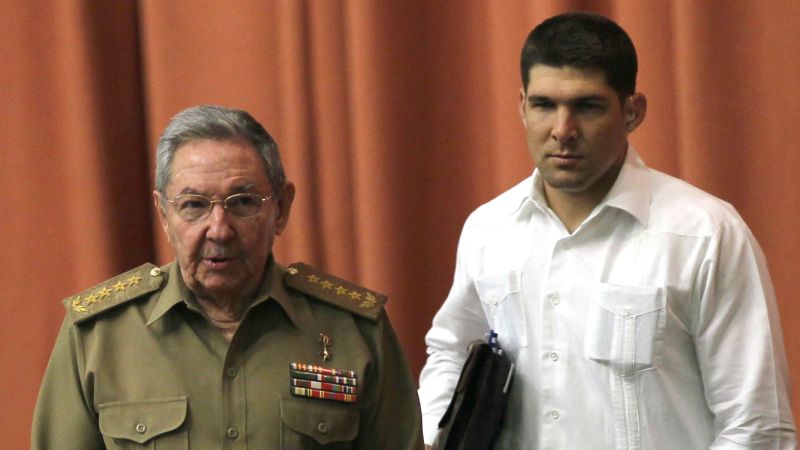
Meet the Crab – When Raúl Castro, the former Cuban leader, arrived in Paris for a state visit in 2016, the scene was one of orchestrated pomp. French officials greeted him with red-carpet ceremonies, but the moment was derailed by a group of photographers who grew restless. Yelling toward the Cuban delegation, they demanded, “Please! Bodyguard!” This impromptu call for the man following Castro caught the attention of the world, elevating him from a faceless security officer to a figure of cultural intrigue. The individual in question was not just any bodyguard—his surname was Castro, the same as the president he trailed. This familial coincidence would soon become a point of discussion as the Cuban official, Raúl Guillermo Rodríguez Castro, stepped into a role far removed from the traditional image of a state worker.
A Shadow in the Spotlight
Known as “El Cangrejo” or “the Crab,” Rodríguez Castro’s name is as much a product of his appearance as it is of his heritage. The nickname stems from his unique physical trait: an extra finger on one hand, a characteristic that has become a symbol of his identity in a nation where family ties often define political influence. For over a decade, he has served as Raúl Castro’s personal protector, moving seamlessly between the roles of gatekeeper and bodyguard. While the elder Castro, now 94 and officially retired, engages with diplomats and citizens in public appearances, Rodríguez Castro ensures the flow of information and security, often unnoticed yet indispensable.
His connection to the Castro family is both a privilege and a burden. Unlike the state-run media, which rarely mentions his name, Rodríguez Castro’s presence is felt in Havana’s high-profile settings. He is frequently seen in upscale restaurants, a detail that underscores the lifestyle typically reserved for elite figures. In one instance, he was spotted driving a new SUV, accompanied by his own entourage, a sight that contrasts sharply with the everyday struggles of most Cubans. Social media leaks have further revealed glimpses of his leisurely side, showing him enjoying private yachts and vibrant nightlife, luxuries that seem out of reach for many on the island.
From Gaffe to Ambassador
The 2016 incident in Paris was a turning point for Rodríguez Castro. When French President François Hollande waved the Cuban bodyguard away during a photo opportunity, the moment sparked international commentary. Yet, for this particular officer, the mishap was not a setback but a catalyst for greater visibility. As tensions between the United States and Cuba escalated, he began to play a role that defied expectations: a bridge between the Trump administration and the Castro regime. This transition from security detail to diplomatic envoy has surprised analysts, who had long viewed the Castro family as a monolithic force.
Rodríguez Castro’s position as an emissary suggests a shift in Cuba’s approach to foreign relations. While he operates in the background, his influence is undeniable. His grandfather’s confidence in him has led to opportunities that blur the lines between private and public life. In meetings with world leaders, from Vladimir Putin to Barack Obama, he has remained a constant presence, a reminder of the Castro family’s enduring grip on power. Yet, his actions now hint at a broader strategy: to engage with the United States in ways that could reshape the island’s future.
A Family Legacy and Personal Ambition
Rodríguez Castro is the son of Deborah Castro, the former president’s daughter, and Luis Alberto López-Calleja, a late general who once oversaw GAESA, the military consortium central to Cuba’s economic framework. His upbringing in this powerful lineage has provided him with a unique perspective on governance and privilege. However, his cousin Sandro Castro, who runs a nightclub and advocates for economic reform, offers a contrasting view. “Raulito has his life and I have mine,” Sandro said during an interview in March, emphasizing the distinct paths his relatives have taken.
“He wants positive changes for Cubans,” Sandro Castro noted, highlighting his cousin’s desire for a more open society. While both men trace their roots to the Castro family’s revolutionary legacy, their ambitions diverge. Sandro sees Rodríguez Castro as a potential ally in negotiations with the Trump administration, which has sought to dismantle the Castro family’s control over Cuba’s socialist economy. “He’s cool,” Sandro added, “He is not a communist, either. He wants things to open up, too.”
Rodríguez Castro’s role as a mediator may reflect a generational divide within the Castro family. While his grandfather remains a steadfast figurehead, the younger Castro appears more willing to embrace economic modernization. This duality is evident in their lifestyles: Raúl Guillermo’s access to luxury and his political maneuvering stand in stark contrast to the challenges faced by ordinary Cubans. As negotiations with the US progress, the potential for Rodríguez Castro to benefit from renewed economic ties looms large.
Opportunities in a Changing Landscape
The Castro family’s influence over Cuba’s economy is vast, with GAESA controlling critical sectors like hotels and marinas. Rodríguez Castro’s involvement in these operations could position him to leverage US investments in a country struggling with economic stagnation. If the Trump administration’s efforts to revitalize Cuba’s economy succeed, the younger Castro may find himself at the forefront of these reforms. His ability to move between the shadows of power and the spotlight of diplomacy makes him a compelling figure in this evolving narrative.
Despite the differences in their approaches, Rodríguez Castro and his cousin share a mutual respect for the island’s cultural and economic opportunities. Sandro Castro’s admiration for his cousin’s lifestyle—a blend of military discipline and lavish indulgence—suggests a level of understanding that transcends generational divides. “He has risked his life for me,” Sandro said, “That’s why they have given so much trust.” This sentiment underscores the complex dynamics within the Castro family, where loyalty and ambition coexist.
As the United States continues to engage with Cuba, Rodríguez Castro’s role as an intermediary could redefine the relationship between the two nations. His presence in discussions with US officials, including CIA chief John Ratcliffe, signals a shift toward pragmatic diplomacy. While the Castro family remains a central pillar of Cuban politics, the younger generation’s willingness to embrace change may pave the way for a new era of economic collaboration. For now, “the Crab” moves quietly through the corridors of power, his influence both subtle and significant.





