
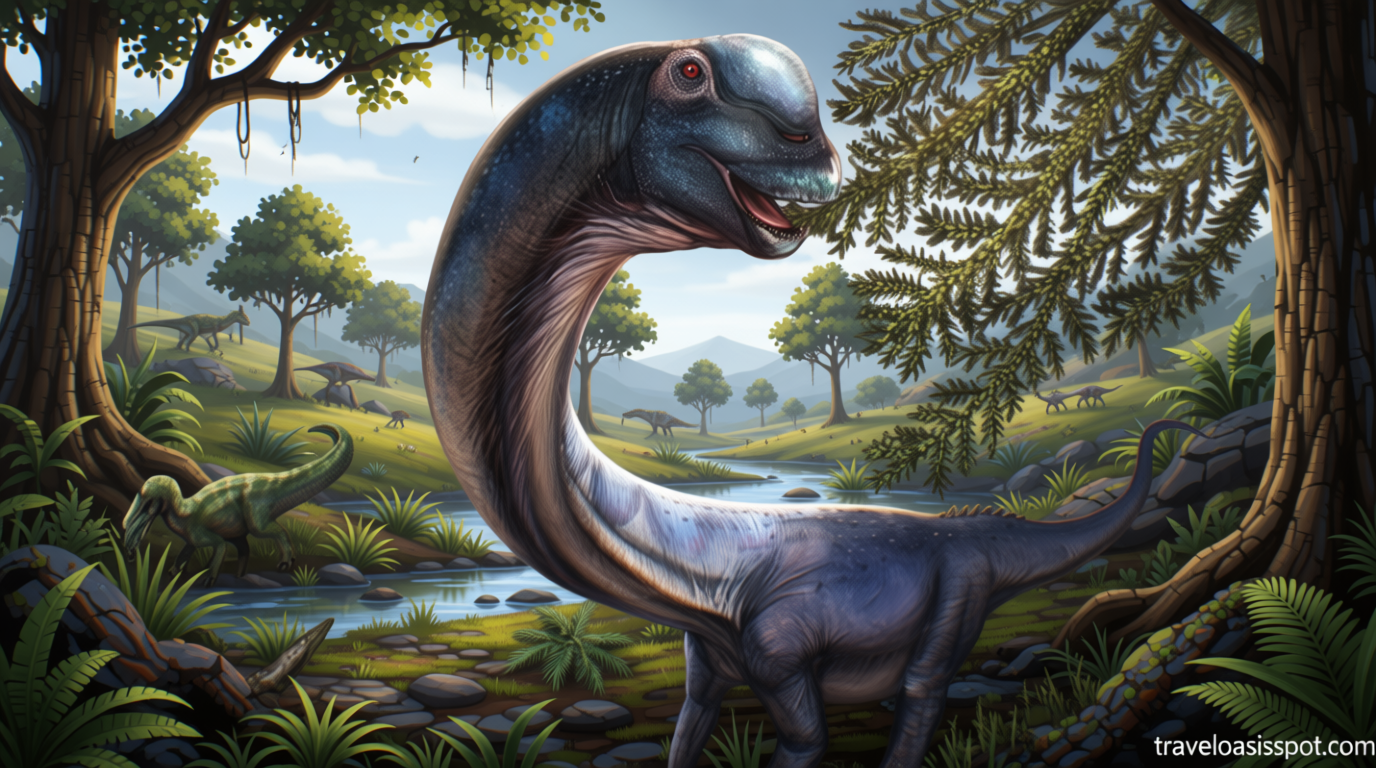
Colossal Dinosaur Unearthed in Thailand Rewrites Paleontological Understanding
New species of giant dinosaur identified – A groundbreaking paleontological revelation has emerged from the sedimentary layers of northeastern Thailand, where a team of scientists has identified a new species of massive herbivorous dinosaur. Dubbed *Nagatitan chaiyaphumensis*, the creature’s remains, unearthed over a span of several years, indicate it was one of the largest dinosaurs ever documented in Southeast Asia. This discovery, detailed in a study published in the journal *Scientific Reports*, challenges existing assumptions about the diversity and size of prehistoric life in the region.
Unveiling a Giant of the Cretaceous
The dinosaur’s colossal dimensions—approximately 27 meters in length and weighing an estimated 27 metric tons—place it among the titanic sauropods that dominated ancient ecosystems. For reference, a full-grown *Tyrannosaurus rex* typically reached lengths of 12 meters and weights of up to 15,000 pounds, making *Nagatitan* nearly double the size of its more familiar relative. Its anatomy suggests it was a long-necked, thick-legged plant-eater, akin to species like *Diplodocus* and *Brontosaurus*, which were prevalent during the Mesozoic Era.
“We don’t have many specimens of this scale in Thailand,” said Thitiwoot Sethapanichsakul, the lead author of the study and a paleontologist at University College London. “When I first saw the humerus, it was taller than me, and that was a surprise.” The bone, measuring 1.78 meters in length, is a critical piece of evidence in confirming the dinosaur’s extraordinary size.
Fossil Excavation and Collaborative Research
The journey to uncover *Nagatitan* began a decade ago when a local resident stumbled upon some bones near a communal pond in Thailand. The dry season of 2016, which exposed the pond’s bed, provided the perfect opportunity for the discovery. Over the following years, fieldwork from 2016 to 2019 revealed additional skeletal remains, including the leg bones, spine, ribs, and pelvis. Further excavation in 2024 allowed researchers to piece together a comprehensive picture of the creature.
The team, comprising experts from the University of London, Thailand’s Department of Mineral Resources, and universities such as Mahasarakham and Suranaree, employed advanced 3D scanning technology to analyze the fossils. This method enabled precise measurements and comparisons with known sauropod species, ultimately confirming that *Nagatitan* was a distinct evolutionary branch. The meticulous process of cataloging and studying these remains has shed light on the ecological role of such giants in the prehistoric world.
The Name: Myth and Science Intersect
The name *Nagatitan* blends cultural and scientific significance. The term “naga” draws from South and Southeast Asian folklore, where these serpentine beings are often depicted as powerful, water-associated creatures. Sethapanichsakul explained that the choice was deliberate, given the dinosaur’s discovery location by a pond. “It felt like the perfect name,” he said. “The Naga is linked to water, and the dinosaur was found in an environment that once teemed with aquatic life.”
“‘Titan’ refers to its sheer size, while ‘chaiyaphumensis’ honors the Thai province where the fossils were uncovered,” Sethapanichsakul added. “It fulfills a childhood dream of mine—naming a dinosaur from my home country.” The province’s name, Chaiyaphum, is embedded in the scientific classification, reflecting both the discovery’s geographic origin and its mythological resonance.
Ecological Context and Time Period
According to the study, *Nagatitan* roamed the Earth during the late Early Cretaceous period, roughly 120 to 100 million years ago. This era was marked by a warm, arid climate, with environments that included sprawling river systems and freshwater habitats. The dinosaur’s habitat, as reconstructed from the site, likely supported a mix of flora and fauna, including fish, sharks, crocodiles, and turtles, as well as smaller herbivores like *Iguanodons* and early *Ceratopsians*.
Sethapanichsakul emphasized that the region’s geological features played a crucial role in preserving these fossils. The Mesozoic Era’s sedimentary rock layers, exposed to minimal erosion due to the area’s dry conditions, have acted as a natural archive for prehistoric remains. This explains why Thailand is considered a hotspot for dinosaur fossils, with its high diversity of species contributing to ongoing research efforts.
Significance for Southeast Asian Paleontology
The discovery of *Nagatitan* highlights Thailand’s growing importance in the field of paleontology. Sethapanichsakul, who has dedicated years to studying sauropods in Southeast Asia, noted that the country’s sedimentary deposits are “one of the richest sources of dinosaur remains in Asia.” The combination of favorable preservation conditions and a wealth of specimens has allowed for more detailed insights into the region’s ancient ecosystems.
Moreover, the existence of *Nagatitan* adds to the debate about the evolution of sauropods in Asia. While earlier studies focused on smaller, more common species, this find suggests that the continent once hosted a variety of large herbivores. The presence of such a titanic creature alongside medium-sized dinosaurs indicates a complex ecological hierarchy, with different niches occupied by varying sizes and dietary preferences.
Future Research and Public Display
A dedicated research center has been established at the site of the discovery, where ongoing excavations aim to uncover more about *Nagatitan*’s lifestyle and environment. Sethapanichsakul continues to lead efforts to analyze the fossils, with the goal of refining the species’ classification and understanding its place in the broader sauropod family.
The findings have also been showcased to the public, with a life-sized reconstruction of *Nagatitan chaiyaphumensis* now on display at the Thainosaur Museum in Bangkok. This exhibit serves as both an educational tool and a testament to the region’s paleontological potential. The museum’s presence underscores the public’s growing interest in Thailand’s prehistoric past, bridging scientific discovery with cultural appreciation.
The identification of *Nagatitan* not only expands the known dinosaur diversity of Southeast Asia but also reinforces the idea that the region was once a thriving hub for large, land-dwelling creatures. As researchers continue to study the fossils, the story of this giant dinosaur will undoubtedly deepen our understanding of ancient ecosystems and the evolutionary history of sauropods. The discovery marks a pivotal moment in paleontology, offering a glimpse into a world where colossal reptiles coexisted with a variety of other life forms in a dynamic, prehistoric landscape.





