
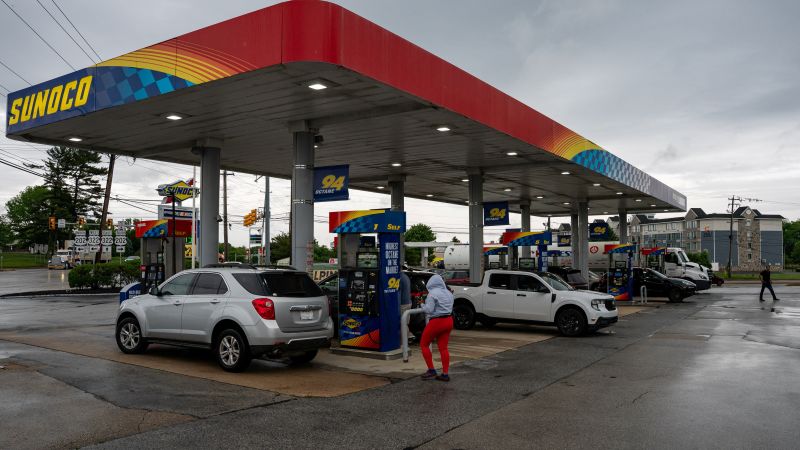
High Gas Prices and Cost of Living Drive US Consumer Sentiment to Record Low
High gas prices cost of living – The latest data from the University of Michigan reveals a grim outlook for American consumers, with the May consumer sentiment index hitting a new all-time low. This index, which has tracked public perception of economic conditions since 1952, now stands at 44.2—its lowest reading in history. The decline marks the third consecutive month of falling confidence, surpassing the previous record of 49.8 set in April. The survey highlights a deepening dissatisfaction among households, fueled by persistent inflation, affordability challenges, and recent geopolitical tensions.
Geopolitical Factors Intensify Economic Anxiety
Americans are increasingly concerned about the global impact of the US-Israeli conflict in Iran. The ongoing war has disrupted oil supplies, causing price spikes that compound existing economic stressors. For months, the Strait of Hormuz—a vital corridor for transporting oil and other goods—has remained a bottleneck, contributing to the current fuel price surge. This has left consumers grappling with higher costs, with the Bureau of Labor Statistics reporting that personal finances contracted by 13% in May alone.
“The cost of living remains the top priority for consumers, with 57% spontaneously referencing high prices as a threat to their financial stability,” Joanne Hsu, director of the University of Michigan’s Surveys of Consumers, stated. “This marks a significant rise from the 50% who mentioned the issue in April.”
Hsu noted that the war’s toll on oil markets has intensified fears about prolonged price increases. Consumers are now worried that supply disruptions will not resolve quickly, leading to sustained economic strain. This sentiment has been further amplified by broader inflationary pressures, which have eroded purchasing power for years. The combination of these factors has created a perfect storm of discontent, with many households feeling trapped in a cycle of rising expenses.
A Decade of Economic Struggles
The University of Michigan’s survey, which has been a barometer of economic health since 1952, shows that consumers are experiencing worse conditions than during major historical crises. These include wars, the 1970s oil crisis, the 9/11 attacks, the Great Recession, the pandemic, and the subsequent inflationary surge. The current reading of 44.2 is not only the lowest in the survey’s history but also reflects a level of pessimism that surpasses these pivotal events.
Hsu emphasized that the sharpest declines in consumer confidence are coming from lower-income groups and individuals without college degrees. These demographics face the brunt of essential cost increases, particularly in fuel and groceries. “The impact of rising prices is most severe among those with limited financial resources,” she added. “This group has been disproportionately affected by the combination of fuel surges and broader inflationary trends.”
Inflation Expectations Rise Amid Uncertainty
As the economy grapples with these challenges, inflation expectations have climbed to a concerning level. Year-ahead inflation forecasts increased slightly to 4.8% in May, up from 4.7% in April. Meanwhile, the five-year inflation expectation rose to 3.9%, compared to 3.5% the previous month. These figures align with the inflationary pressures seen in late 2023, when tariffs and supply chain bottlenecks drove prices upward.
“Among the most notable shifts in expectations are seen in independent and Republican voters, whose long-term inflation projections have doubled since February 2025,” Hsu pointed out. “This suggests a growing belief that price increases will persist for years, rather than being a temporary phenomenon.”
These expectations are critical for the Federal Reserve, which uses them to gauge consumer behavior. If households anticipate continued price hikes, they may accelerate spending or demand higher wages, pushing businesses to raise prices in response. This creates a self-reinforcing cycle that could sustain inflationary pressures.
Contrasting Economic Data
Despite the bleak consumer sentiment, a wave of economic indicators suggests the US economy remains resilient. Stock markets have hit record highs, and other metrics, such as employment and industrial production, show steady growth. However, this data appears to have little effect on the everyday struggles of many Americans. “Consumers are essentially treading water,” said Christopher Rupkey, chief economist at FwdBonds, in a statement to investors. “The income tax refunds have already been spent, and the money locked in retirement accounts can’t be accessed to ease current financial burdens.”
Rupkey’s analysis underscores a disconnect between market performance and household experiences. While the stock market thrives, the average American is still dealing with the fallout of high prices. This situation has led to a scenario where financial optimism is confined to asset markets, leaving consumers to bear the brunt of inflation in their daily lives. “The record highs in the stock market are doing little to lift consumer morale,” he added. “It’s clear that most people are still focused on immediate costs rather than long-term investments.”
Long-Term Implications for the Economy
The persistent low in consumer sentiment raises questions about the economy’s long-term trajectory. With inflation expectations rising and household budgets under strain, there is a risk of further economic slowdown. If consumers continue to prioritize saving over spending, it could dampen demand and slow economic growth. This scenario would challenge the Federal Reserve’s ability to balance inflation control with employment support.
Meanwhile, the energy sector is at the forefront of these challenges. Gas prices are nearing historic highs, driven by the prolonged blockage of the Strait of Hormuz. This has not only impacted transportation costs but also influenced the prices of other goods, as energy is a key input for many industries. “Consumers are worried that high fuel costs will ripple through the economy,” Hsu explained. “This could lead to broader price increases, making everyday purchases more expensive.”
Historical data provides context for the current crisis. The 1970s oil crisis, which saw similar price shocks, eventually led to economic adjustments. However, the scale and duration of today’s challenges may demand more sustained intervention. The survey’s record low in May signals that the economic challenges faced by Americans are more severe than in the past, creating a new benchmark for consumer hardship.
As the months unfold, the interplay between geopolitical tensions, inflationary pressures, and consumer behavior will shape the economy’s future. The University of Michigan’s findings serve as a stark reminder that economic resilience is not always reflected in market trends, and that the real impact is felt by households at the margin. This divide between macroeconomic strength and individual hardship is likely to persist unless policies address the affordability crisis head-on.





