
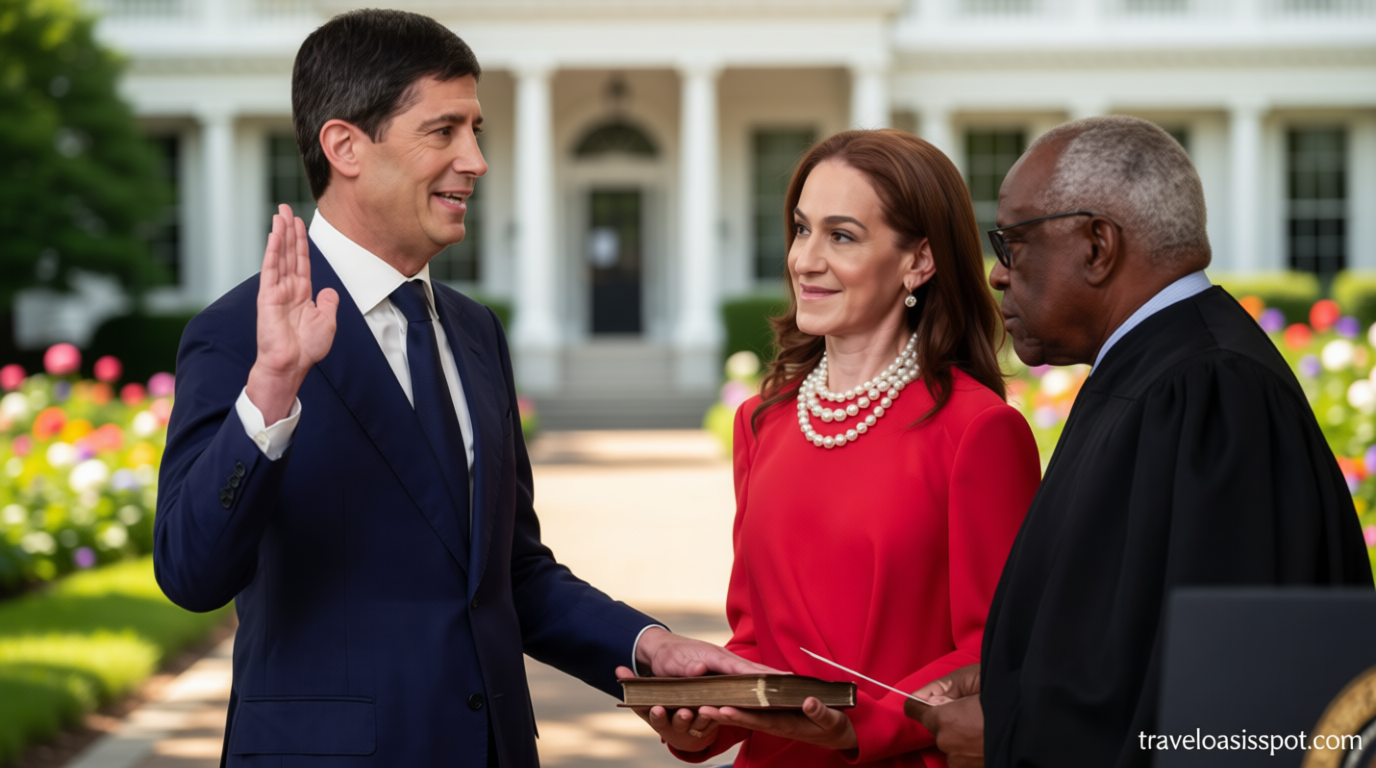
Kevin Warsh Sworn In as Fed Chair Amid Economic Uncertainty
Kevin Warsh sworn in as Fed chair – On Friday, Kevin Warsh was officially inducted as the new Chairman of the Board of Governors of the Federal Reserve System at the White House. The ceremony marked his formal assumption of one of the most influential economic roles globally, succeeding Jerome Powell after a transition period fraught with challenges. At 56, Warsh now faces a complex landscape shaped by inflationary pressures, geopolitical tensions, and a volatile financial market. His appointment comes at a critical juncture, as the U.S. economy grapples with shifting dynamics and mounting political scrutiny of the central bank’s autonomy.
Trump’s Support and Expectations
President Donald Trump, who nominated Warsh in January, praised the new chair during his remarks in the East Room. “I expect he will go down as one of the truly great chairmen of the Federal Reserve that we’ve ever had,” Trump said, highlighting Warsh’s potential to reshape the institution. The president emphasized Warsh’s broad expertise and credibility, stating, “He’s got abilities that very few people have, covers a lot of territory, and he’s respected by everybody.” These comments underscored Trump’s belief in Warsh’s capacity to navigate the current economic turbulence while maintaining the Fed’s independence.
Despite his strong advocacy for rate cuts during his campaign, Trump stressed that Warsh must operate without direct presidential influence. “Don’t look at me, don’t look at anybody, just do your own thing and do a great job,” he added, encouraging the new chair to prioritize stability in prices and employment. This aligns with Trump’s broader vision for the Fed, which he described as having “the temperament and leadership abilities to foster collaboration among the entire board” and “welcome robust debate” in his mission to steer the economy. However, the president’s past criticism of Powell—calling him a “numbskull” and an “average mentally person”—suggests a desire for more aggressive monetary policy.
Warsh’s Vision for a Reform-Oriented Fed
Warsh, who took the oath of office amid significant economic challenges, outlined his priorities in a brief address. “I will lead a reform-oriented Federal Reserve, learning from past successes and mistakes,” he said, emphasizing the need to move beyond rigid frameworks and focus on maintaining integrity and performance. His remarks signaled a commitment to modernizing the central bank’s approach while addressing the root causes of inflation and fostering sustainable growth.
One of Warsh’s key proposals centers on limiting public communications from Fed officials regarding rate decisions. This move aims to reduce speculation and ensure policy clarity. Additionally, he has advocated for the Fed to concentrate on core responsibilities, distancing itself from broader economic debates. Such a strategy mirrors Trump’s criticism of the central bank’s recent focus on issues like climate change and social programs, which he argued distracted from its primary mission.
Economic Challenges and the Path Forward
The U.S. economy is currently navigating a perfect storm of pressures. The ongoing conflict between the U.S. and Iran has driven up oil prices, contributing to a sharp increase in gasoline costs. Meanwhile, mortgage rates have reached their highest level in nine months, and overall inflation has surged to its peak in three years. Despite these hurdles, consumer spending has shown remarkable resilience, with households continuing to purchase goods and services even as prices climb. This durability has shielded the economy from a more severe downturn, but affordability concerns remain a source of widespread dissatisfaction.
Consumer sentiment, as measured by recent surveys, has plummeted to an all-time low. Americans now express greater pessimism than during major crises such as the Iraq War, 9/11, the Great Recession, and the aftermath of the Covid-19 pandemic. This sentiment reflects growing frustration with the high cost of living, which could influence voting behavior in the upcoming midterm elections. As the Fed chair, Warsh must now balance the need to control inflation with the pressure to stimulate growth, a task that requires careful navigation of conflicting priorities.
Policy Dilemmas and the Role of the FOMC
Warsh’s first major challenge lies in determining the Fed’s next course of action. While the president has pushed for lower interest rates, the central bank’s monetary policy decisions rest with the Federal Open Market Committee (FOMC), not the White House. Policymakers, who previously anticipated a rate cut later this year, have since revised their outlook due to rising energy prices and geopolitical instability. The majority now favor holding rates steady, with some contemplating a rate hike to counter inflationary trends.
“The Fed lost its way in recent years,” Trump remarked during the swearing-in event, critiquing the central bank’s expansion of its role beyond traditional mandates. The president’s call for rate cuts has created a tension between his public statements and the FOMC’s independent judgment. Warsh, who has been vocal about his desire to maintain autonomy, faces the delicate task of aligning with Trump’s goals without compromising the Fed’s credibility. His success will depend on how effectively he can mediate between political expectations and economic realities.
The Road Ahead
Warsh’s first meeting as Fed chair is scheduled for June 16–17, where he will deliberate with his colleagues on the next steps for monetary policy. This session will be pivotal in shaping the Fed’s response to the current economic climate. The central bank’s upcoming decisions will determine whether it continues its cautious approach or adopts a more aggressive stance to address inflation.
As the Fed enters this new phase under Warsh’s leadership, the stakes are high. The U.S. economy is at a crossroads, with inflation, geopolitical risks, and consumer sentiment all playing critical roles. Warsh’s ability to implement reforms while maintaining the Fed’s independence will be closely watched by economists, policymakers, and the public. His success could redefine the central bank’s role in the coming years, offering a fresh perspective on how to balance growth and price stability in an increasingly uncertain world.
“I will lead a reform-oriented Federal Reserve,” Warsh stated, reiterating his goal to “escape static frameworks” and “uphold clear standards of integrity and performance.” His vision may yet face obstacles, but the support of the Trump administration provides a buffer against external pressures. With the economy shifting under the weight of global conflicts and energy shocks, Warsh’s leadership will be tested as he seeks to stabilize the financial system and restore public confidence in the Fed’s ability to manage economic challenges.
In the end, the new chair’s ability to navigate these complexities will determine the Fed’s legacy. As he embarks on this role, Warsh must signal a clear strategy for addressing inflation while preserving the central bank’s autonomy. The nation’s economic health—and the political fortunes of the administration—now hinge on his decisions, which will be scrutinized by markets and policymakers alike.





