
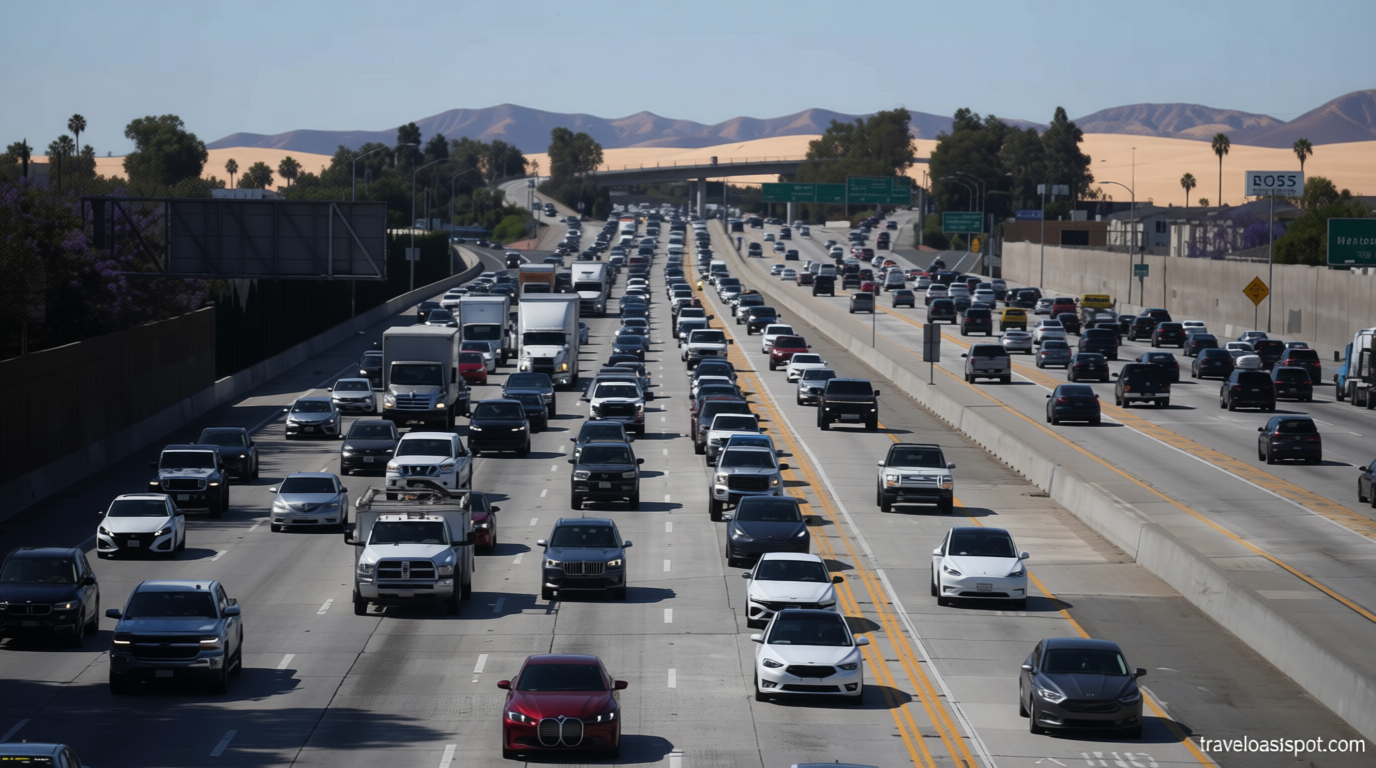
‘It’s literally going to break me.’ Commuting is now unaffordable for some American workers
The Rising Cost of Fuel and Career Decisions
It s literally going to break – Stephen Kaledecker, a 46-year-old from Gahanna, Ohio, once celebrated his December promotion to regional manager at a hotel chain. The new role, however, has introduced a financial burden he hadn’t anticipated. With responsibilities spanning multiple states, including Ohio, Indiana, and Illinois, his monthly travel requirements have surged to thousands of miles. This has pushed his fuel expenses beyond $1,000, a cost that exceeds his recent raise. The situation has left him in a precarious position, as his employer will no longer cover mileage reimbursements once he fully transitions into the role next month.
“It’s going to literally break me,” Kaledecker said, reflecting on the stress of balancing his career goals with rising costs. “I look at my bank account and I’m like, ‘Okay, if I go here and do what they ask me to do, I’m not going to be able to get my prescriptions, or I’m not going to be able to pay that electric bill.’”
Kaledecker’s dilemma mirrors a growing trend among American workers. Gas prices have climbed sharply, reaching an average of $4.52 per gallon nationwide as of Sunday, according to AAA. This marks a significant jump from $2.98 per gallon in late February, when the US-Israeli conflict with Iran began. For employees reliant on long commutes, the financial strain is becoming unbearable. Some are reconsidering their jobs, while others are exploring alternatives to reduce travel time.
Shifts in Commuting Habits and Job Searches
Priya Rathod, a workplace trends editor at Indeed, noted a small but meaningful shift in job seeker behavior. In April, 59.2% of applicants focused their search within a 30-mile radius, up from 57.8% in February. This trend suggests that workers are prioritizing proximity to home to ease the pressure of high fuel costs. Despite the cooling job market, many are not making major relocations, but they are increasingly advocating for shorter commutes.
Meanwhile, Nick Bloom, an economics professor at Stanford University and researcher of work-from-home trends, observed a rise in remote work arrangements. His monthly survey found that the percentage of employees working from home increased to 26.2% in March and April, compared to 24.6% in the previous two months. This shift means that workers with the flexibility to telecommute are saving roughly one extra day of travel every other week. For those unable to work remotely, the impact of gas prices is especially harsh, forcing difficult choices between career advancement and financial stability.
Employers and the Push for Flexibility
Despite the demand for remote work, companies are hesitant to overhaul their policies in response to the gas price surge. However, some managers are showing willingness to accommodate. Bloom explained that employees are now more vocal about their need for flexibility, citing concerns over affordability. “Employees are telling them, ‘If you make me come in every day, I’m going to start looking for another job because I really can’t afford this,’” he said.
This flexibility is evident in the story of Paul Banze, a shift manager at a retail pharmacy. In January, Banze agreed to relocate to a store 44 miles from his home in Signal Mountain, Tennessee, despite doubling his commute. The move was driven by his enjoyment of the job and a positive relationship with his supervisor. However, as gas prices climbed, Banze began reevaluating his decision. Last Monday, he shared a photo of his local gas station, where prices had hit $4.29 a gallon, along with an unhappy face emoji. “I knew retirement was coming, but I wanted it on my own terms,” Banze said, adding that he plans to retire soon.
The Broader Implications of High Fuel Costs
The economic ripple effects of soaring gas prices extend beyond individual hardships. For many workers, the cost of fuel is no longer a minor expense but a critical factor in their career decisions. Employees with long commutes are now weighing the benefits of promotion against the financial toll. Some are opting for roles closer to home, even if they mean sacrificing opportunities for growth. Others are negotiating for part-time remote work or adjusting their schedules to minimize travel days.
Experts suggest that the trend toward remote work could accelerate if gas prices remain high into the fall. While remote and hybrid positions currently make up a small fraction of job postings, their appeal is growing. Rathod noted that the job market’s cooling may slow large-scale transitions, but the financial pressure could push more workers toward flexible arrangements. “If the cost of fuel stays elevated, people might start thinking differently about where they want to live and work,” she said.
A Test of Resilience and Adaptability
For Kaledecker, the situation has reached a breaking point. His 2018 Chevy Silverado, used to transport equipment and supplies, has already logged over 20,000 miles this year. The vehicle, now a symbol of his financial strain, highlights the challenge of maintaining a demanding job without adequate support. “I’m not just driving for work anymore; it’s a daily battle to keep up with the expenses,” he remarked.
As the cost of living continues to rise, workers are forced to adapt. The question remains: how long can the average person sustain the financial impact of high gas prices? For Kaledecker, the answer is unclear. “I love this job, but I’m not sure I can keep doing it if the numbers don’t add up,” he said. His story underscores a broader struggle—how rising fuel costs are reshaping the balance between career aspirations and personal finances.
Employers are now facing a dilemma. While some are open to adjusting work-from-home policies, others are cautious about making sweeping changes. The data suggests that the demand for remote work is on the rise, but it may not yet be enough to shift the current landscape. As the summer months approach, the pressure on workers is expected to mount, with the potential for widespread reevaluations of job choices and work-life balance.
Ultimately, the situation reflects a deeper tension in the American workforce. Long commutes, once a routine part of employment, are now a source of anxiety. For workers like Kaledecker and Banze, the decision to stay in their roles or seek alternatives is increasingly tied to economic realities. As gas prices remain a key concern, the question is no longer just about affordability—it’s about whether the modern work model can withstand the strain of a changing economic environment.
Can Your Wallet Withstand the Surge?
With fuel expenses climbing, the financial impact on workers is becoming undeniable. For those dependent on driving for their jobs, the cost of commuting has turned into a significant challenge. The average American worker spends a substantial portion of their income on transportation, and the current spike in gas prices is pushing many to the brink. As companies grapple with this shift, the next few months will likely reveal how adaptable the workforce—and the economy—can be in the face of rising costs.
“The economics don’t work out,” Banze said, encapsulating the sentiment of many affected by the situation. His experience, combined with Kaledecker’s, paints a picture of a workforce navigating uncharted waters. The affordability of commuting is no longer a given, and the pressure to make choices is intensifying. Whether this leads to widespread changes in work habits or further economic strain remains to be seen.





