
Putin’s Strategic Shift Signals Possible End to Ukraine Conflict
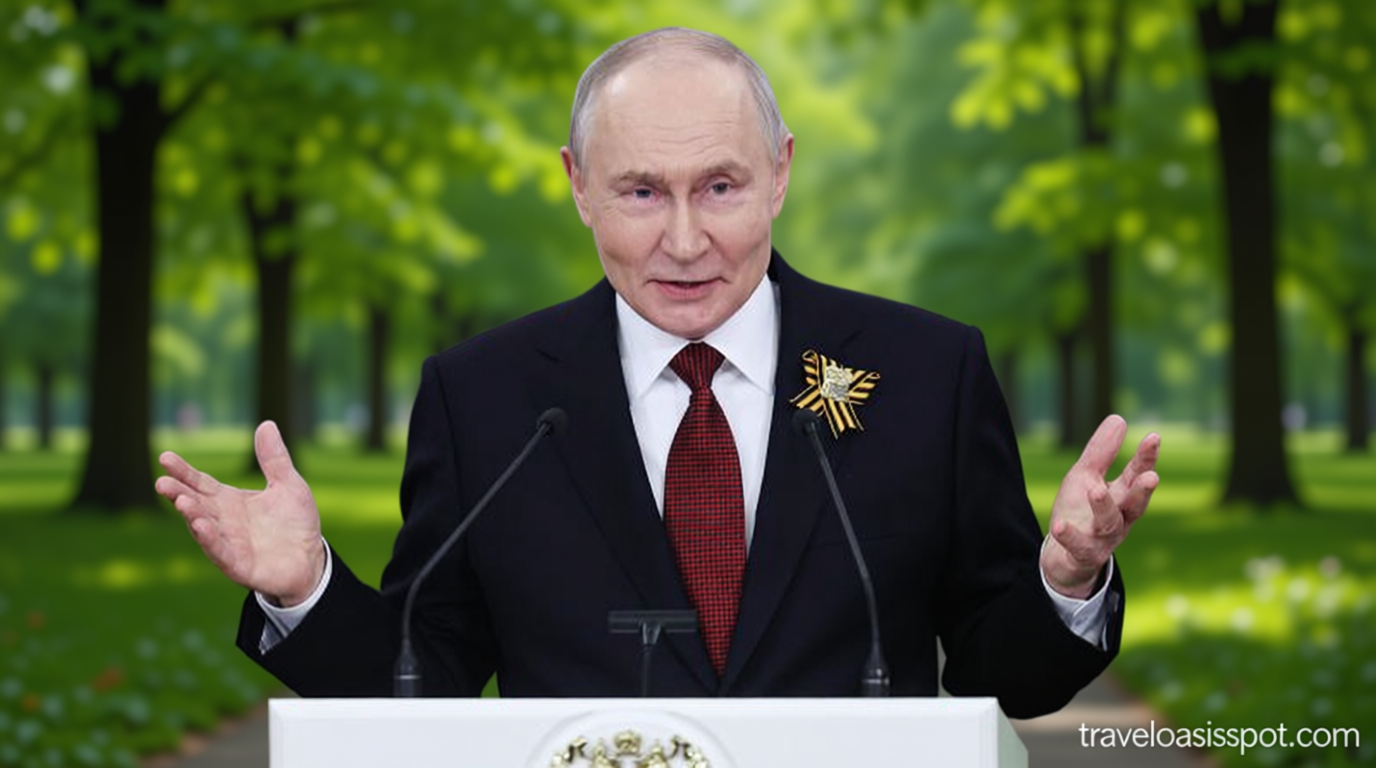
Putin hints he might end Russia – On May 9, during the grandeur of Victory Day parades in Moscow, Russian President Vladimir Putin delivered a surprising message that hinted at a potential pivot in the war against Ukraine. The event, traditionally a celebration of the Soviet Union’s triumph over Nazi Germany, became an unexpected platform for a remark that signaled a departure from the relentless rhetoric of war. Putin suggested that the Ukrainian conflict “was coming to an end,” a statement that marks his first explicit indication that the war might be nearing its conclusion. This came after a series of critiques about the stalled negotiations at the onset of the 2022 invasion, which had left Russia’s strategic gains in doubt. The brevity of the remark, however, contrasted sharply with Putin’s usual intensity, raising questions about the motivations behind his new tone.
A Deliberate Diplomatic Move Amidst Domestic Dissent
Putin’s speech was notable for its measured approach, unlike the maximalist declarations that have characterized his earlier statements. While the Kremlin’s military displays typically emphasize unyielding resolve, the choice to frame the conflict as “coming to an end” aligns with a growing sentiment in Russia that the war must be concluded sooner rather than later. Recent opinion polls have shown a rise in public frustration over the war’s toll, with citizens increasingly questioning its prolonged duration and economic consequences. This shift may reflect a calculated effort to project an image of political flexibility, even as the war’s objectives—such as demilitarizing Ukraine and securing the Donbas region—remain unfulfilled.
The mention of Gerhard Schröder as a potential mediator for future talks with Europe added another layer to Putin’s strategy. Schröder, former German chancellor from 1998 to 2005, had long been a symbol of Western collaboration with Russia during its early post-Soviet era. However, his association with the Nord Stream gas pipeline project and his subsequent resignation in 2022 following the invasion have cast him in a critical light. Despite this, Putin’s suggestion may aim to leverage Schröder’s historical credibility to ease tensions with Europe. The response from European leaders, described as “weak” in initial reports, could indicate skepticism toward the idea, but the proposal might gain traction in Washington, where Schröder’s presence could complicate efforts to achieve a lasting peace.
“The matter of the Ukrainian conflict was coming to an end,” Putin stated, a sentiment that diverges from his usual assertions of perpetual struggle.
This quote, delivered amid the backdrop of a scaled-down Victory Day parade, underscores a subtle but significant change in the Kremlin’s messaging. While the parade itself was a smaller affair compared to previous years, it still symbolized a balance between military pride and the acknowledgment of resource constraints. The absence of elaborate displays of Western arms, which had once drawn admiration from Moscow, highlighted a shift in the war’s trajectory. Soldiers and tanks, though present, were outnumbered by the growing sense of weariness among the Russian populace.
Europe’s Fractured Hopes and the Role of Trump’s Return
The European Union has long held the belief that Russia would eventually succumb to pressure in Ukraine, a strategy that relied on the hope of prolonged conflict and economic strain. This approach, however, has been complicated by the return of Donald Trump to the White House, which provided Moscow with a diplomatic ally and a potential shield against Western sanctions. The war’s four-year duration has seen a mix of successes and setbacks for both sides, with Russia initially securing territorial gains before facing attritional losses. Kyiv’s struggles, particularly in 2023, were seen as a sign that the war might be tipping in Moscow’s favor, but this new development suggests a different calculus is at play.
Analysts argue that Putin’s diplomatic overtures are not mere gestures but a reflection of the internal dynamics within the Kremlin. The perceived wisdom that Putin’s rule depends on an almost total victory in Ukraine has been challenged by widespread criticism of the war’s management. With the conflict now spanning four years, the toll on Russia’s military and economic systems has become undeniable. The recent mobilization of soldiers, described as “increasingly in short supply,” signals a growing recognition that the war cannot continue indefinitely without significant domestic unrest. The whispers among Moscow’s elite that Putin might not survive the conflict are gaining momentum, suggesting a potential political reckoning.
“The war’s progress has been one of successes and failures for both sides over its four years,” noted an observer, capturing the complexity of the situation.
This observation highlights the dual nature of Russia’s campaign: while early victories in Donbas and the capture of cities like Kherson were celebrated, the ongoing stalemate and rising casualties have led to a reevaluation of the war’s viability. The economic strain, evidenced by the deserted mall in Moscow, has further eroded public support. As the Russian people grapple with inflation, energy shortages, and a shrinking military, the pressure on Putin to find a resolution has intensified. His recent remarks, though brief, may be an attempt to align with this shifting sentiment and secure a path to peace before the situation becomes untenable.
Despite the signs of fatigue, the Kremlin remains committed to maintaining the illusion of a strategic advantage. The Victory Day parade, with its focus on military readiness, was designed to reinforce this narrative. Yet, the contrast between the display and the underlying uncertainty reveals a deeper strategic reassessment. Putin’s suggestion to involve Schröder in talks with Europe could be a way to soften the image of Russian inflexibility, while also positioning himself as a pragmatic leader. This move may also serve to shift blame away from his own administration, attributing the need for diplomacy to external factors rather than internal miscalculations.
As the conflict enters a new phase, the question of whether Putin’s hint at an end to the war signals genuine diplomacy or a calculated tactic remains open. The Kremlin’s history of enduring criticism, such as during the early stages of the invasion, suggests that this shift may be part of a broader strategy to manage expectations and consolidate support. However, the growing discontent within Russia and the international community’s response to Schröder’s proposed role will determine whether this moment marks a turning point or a temporary adjustment in a war that shows no signs of slowing down. The coming months will be critical in revealing whether Putin’s words are a prelude to peace or a new front in the battle for dominance in Europe.





