
Rebels Jeered Putin’s Troops Out of a Key African Town. Now His Regional Grip Is Slipping Away
Russian Forces Retreat from Kidal, Marking a Shift in Africa’s Power Dynamics
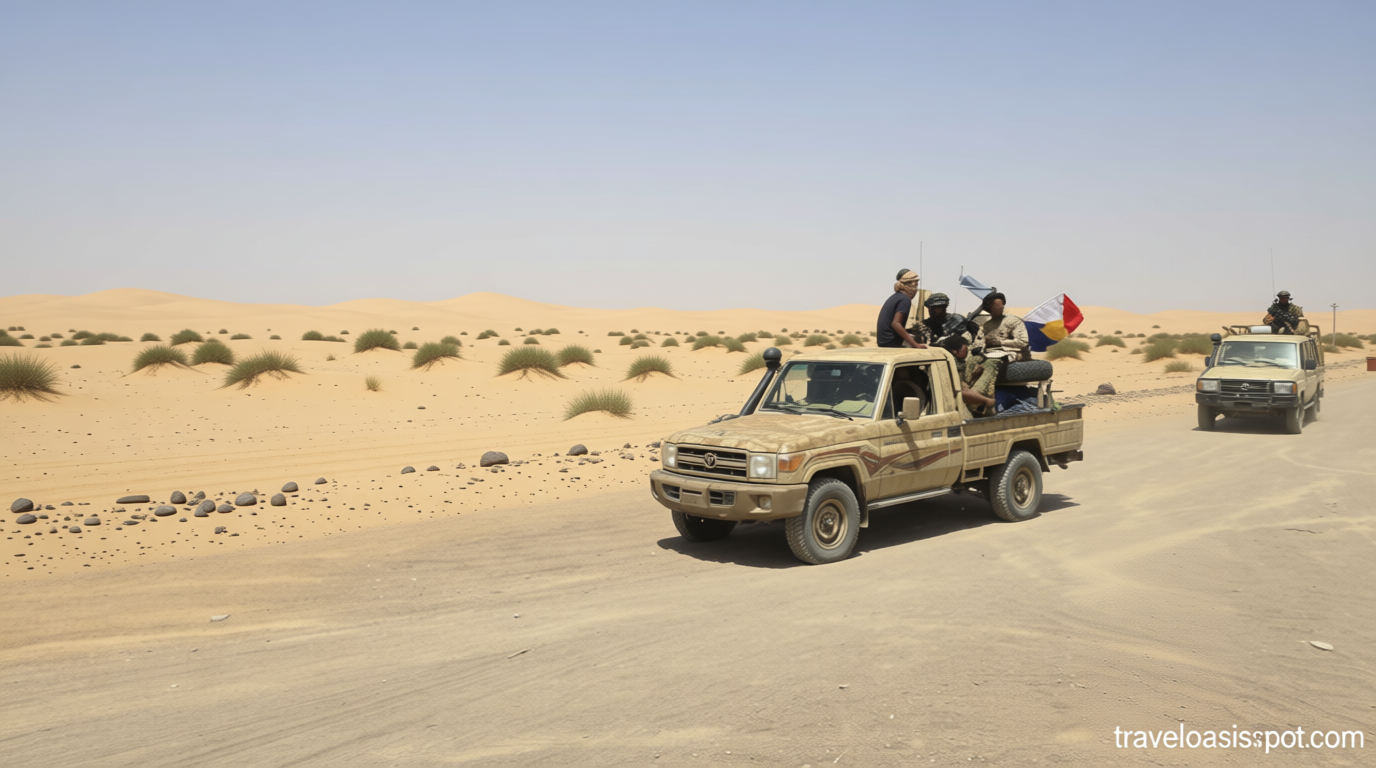
Rebels jeered Putin s troops out – Last month, Russian troops pulled out of Kidal, a crucial town in northern Mali, under the scorn of the very rebels they were deployed to combat. This withdrawal signaled more than a tactical loss; it represented a symbolic defeat for Moscow’s ambitions in the Sahel region. Analysts note that the retreat has shaken the Kremlin’s reputation as a reliable security partner in Africa, a role it has increasingly sought to fill since Western nations withdrew from the continent’s conflict zones. The loss of Kidal, once a strategic stronghold, has exposed vulnerabilities in Russia’s military strategy and raised questions about its long-term influence in the area.
The Rise of a Unified Rebel Front
The pullout followed a coordinated assault by militants tied to al Qaeda and Tuareg separatists on April 25, the most significant offensive in over a decade. These simultaneous attacks overwhelmed several military bases in northern Mali, accelerating the collapse of state control in the region. The alliance between these groups, which had previously operated separately, created a formidable challenge for Moscow’s Africa Corps. As a result, Mali’s government found itself in a precarious position, with its forces unable to halt the rapid advance of insurgents.
“The town is now free,” declared the Azawad Liberation Front (FLA) on social media on April 26, signaling their victory over Russian-backed security forces.
The FLA, a primarily Tuareg separatist group, capitalized on this momentum to negotiate the Africa Corps’ evacuation. Video footage of Tuareg fighters jeering at retreating Russian vehicles circulated online, capturing the moment of symbolic triumph. This event marked a turning point in the region’s conflict, as it demonstrated the growing strength of local insurgent movements and the diminishing effectiveness of Russian military interventions.
Historical Context and the Africa Corps’ Role
Kidal, located approximately 1,000 miles northeast of Mali’s capital, Bamako, had been under the control of the Malian army and Russian mercenaries since 2023. This capture ended nearly a decade of rebel rule and was seen as a testament to Moscow’s growing dominance in the Sahel. However, the town’s strategic value has now been overshadowed by its symbolic role in the current crisis. The Africa Corps, now directly managed by Russia’s Defense Ministry, has struggled to maintain control as the rebels regroup.
The Sahel region, spanning over 3,000 miles across Africa just south of the Sahara, has become a focal point for global terrorism. Countries like Senegal, Mauritania, Burkina Faso, Niger, Nigeria, Chad, Sudan, Cameroon, and The Gambia face persistent threats from extremist groups and separatist movements. Russia’s presence in this volatile area has grown since 2022, when Western forces, including France and the United Nations, began to withdraw from operations in the region.
Mali’s Military Junta and Russian Support
Mali, a former French colony long plagued by insurgency, is currently governed by a military junta that came to power after a series of coups in 2020 and 2021. After cutting ties with French forces and UN peacekeepers, the regime turned to Moscow for security assistance. The Africa Corps was deployed to bolster the junta’s efforts, but the recent setbacks have undermined this partnership. The fall of Kidal has revealed the fragility of Russia’s support, as local forces continue to resist control.
The assassination of Malian Defense Minister Sadio Camara further complicated the situation. A Russian-trained officer and key architect of the country’s pivot to Moscow, Camara was killed in a suicide vehicle bombing near Bamako. The al Qaeda-linked group Jama’at Nusrat al-Islam al-Muslimin (JNIM) claimed responsibility, highlighting the deepening threat to the junta’s stability. With JNIM now mobilizing to block Bamako and call for a Sharia law-based revolt, the regime’s reliance on Russian forces appears increasingly precarious.
Russia’s Transactional Approach in Africa
Russia’s strategy in the Sahel has been characterized as a balance of power: security for resources. This model has been evident in the country’s partnerships with African nations, where military cooperation is often tied to economic agreements. The 2023 Russia–Africa Summit in St. Petersburg underscored this approach, with Putin announcing defense pacts with over 40 countries. Yet, the groundwork for this influence was laid by the Wagner Group, which operated in regions like Libya, Mozambique, and the Central African Republic (CAR) long before the Africa Corps took over.
In CAR, one of the world’s poorest nations, Wagner’s legacy persists despite the group’s leader, Yevgeny Prigozhin, having died in 2023. CNN investigations revealed that companies linked to Wagner had secured mining rights for gold and diamonds, enriching Moscow’s economic ties with the region. While the CAR government credits Russian instructors for stabilizing its military, these achievements remain tenuous as armed rebels continue to challenge state authority.
The Fragility of Russian Influence
The transition from the Wagner Group to the Africa Corps has not stemmed the tide of rising insecurity in Africa. Despite Moscow’s efforts to project strength, the recent events in Mali and CAR illustrate the limits of its involvement. The Africa Corps’ withdrawal from Kidal, coupled with the loss of key allies like Camara, has weakened its position in the region. Analysts suggest that Russia’s influence, while growing, is still dependent on the cooperation of local regimes and the effectiveness of its military operations.
As Western influence in Africa wanes, Russia has emerged as a preferred partner for nations seeking security without the constraints of human rights oversight. However, this shift has not been without challenges. The Africa Corps’ ability to maintain control is now in doubt, and the region’s instability continues to test Moscow’s resolve. The events in Kidal serve as a reminder that even the most ambitious military ventures can falter in the face of determined local resistance.
Broader Implications for Global Security
The situation in Mali reflects a broader pattern of Russia’s rise as a global security provider. From Syria to Venezuela, Moscow has demonstrated its capacity to support regimes in times of crisis, but its success in Africa is now being questioned. The Africa Corps’ retreat from Kidal marks a critical moment, as it signals that Moscow’s grip on the region may not be as unshakable as once believed. With the Sahel remaining a hotbed of conflict, the future of Russian influence in Africa will depend on its ability to adapt to evolving challenges and local dynamics.
As the region’s instability continues, the question remains: can Russia sustain its role as a security leader in Africa, or will its presence be reduced to a temporary intervention? The withdrawal from Kidal has set a precedent, and the next steps in the Sahel could redefine the balance of power between Moscow and its African allies.





