
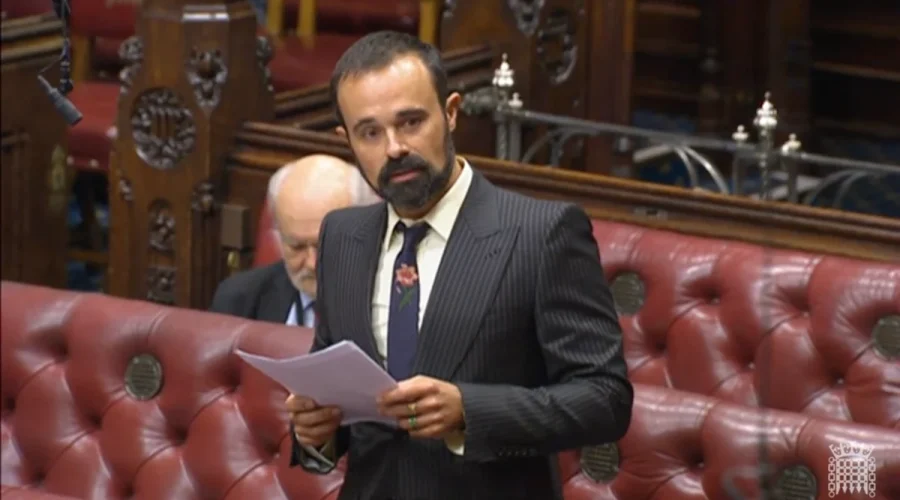
Lord Lebedev Advocates for Legal Rights for Nature in House of Lords Debate
Lord Lebedev backs landmark Nature s Rights – During a recent House of Lords session, Lord Lebedev emphasized the urgent need to redefine humanity’s relationship with the environment, calling for a legal framework that grants nature its own rights. Speaking in support of Baroness Bennett of Manor Castle’s proposed Nature’s Rights Bill, he highlighted how human activities have pushed the planet to the brink, urging lawmakers to take decisive action to safeguard ecological integrity.
A New Legal Paradigm for the Environment
The Private Member’s Bill, which received its Second Reading on Friday, aims to transform how nature is treated under UK law. By recognizing ecosystems as legal entities, the legislation would impose new responsibilities on public institutions, corporations, and individuals to protect and rejuvenate natural habitats. This shift could lead to the creation of specialized governing bodies, such as a Nature Guardianship Council and bioregional councils, to oversee environmental protection efforts.
A key feature of the bill is the establishment of a Nature’s Rights Tribunal, designed to adjudicate cases where human actions harm natural systems. This tribunal would provide a legal avenue for nature to be represented in disputes, ensuring its interests are prioritized alongside human rights. The proposal draws inspiration from international models, including New Zealand’s Whanganui River, which was granted legal personhood in 2017, and Ecuador’s constitution, which enshrines the rights of nature as a fundamental principle.
Lord Lebedev’s Personal Connection to the Cause
Lord Lebedev framed the debate as a deeply personal issue, citing his grandfather, Professor Vladimir Sokolov, a visionary zoologist and ecologist who contributed to the Brundtland Commission. This commission, instrumental in shaping global sustainable development policies, laid the groundwork for recognizing nature’s intrinsic value. Lord Lebedev, continuing his family’s legacy, has long campaigned against the illegal wildlife trade and championed indigenous communities’ role in conservation.
He argued that the bill addresses a critical global challenge, pointing to deforestation, habitat degradation, plastic pollution, and unsustainable resource extraction as pressing threats. “The natural world is being eroded at an alarming rate,” he stated, stressing that the UK’s environmental decline—marked by polluted rivers and dwindling biodiversity—demands immediate legal intervention. His remarks underscored the need to move beyond treating nature as a commodity and instead viewing it as a rights-holder in its own right.
Peer Perspectives on the Bill’s Potential
Baroness Bennett of Manor Castle, the bill’s proposer, opened the debate by asserting that current environmental laws have failed to curb ecological loss. She described the legislation as a “green Magna Carta,” a foundational document that could redefine legal obligations toward nature. “We must ask whether the law should continue to see nature as a resource or a possession,” she said, advocating for a more holistic approach to conservation.
“Existing regulations have not prevented the decline of our natural world, and this bill offers a new way to protect it,” Baroness Bennett stated. Her vision aligns with international examples, such as the legal recognition of nature’s rights in Ecuador, which provides a model for how environmental protections can be structured around ecological well-being.
Baroness Smith of Llanfaes echoed this sentiment, emphasizing the bill’s focus on stewardship. She noted that the legislation could empower communities to take a more active role in environmental governance, bridging the gap between legal frameworks and grassroots action. Meanwhile, Baroness Helic praised the bill’s emphasis on local responsibility, using the debate to push for a closed season for hares in England and Wales.
Challenges and Criticisms Raised
Despite widespread support, the bill faced scrutiny from some peers. Baroness Coffey questioned its necessity, suggesting that existing laws already address many of the issues it seeks to tackle. She raised concerns about the clarity of its definitions and the scope of its powers, arguing that the legislation might duplicate current efforts or create bureaucratic hurdles.
“If we already have a legal framework in place, why do we need another layer of regulation?” Baroness Coffey asked, highlighting the potential for overlap with existing environmental protections.
Lord Frost criticized the bill as “philosophically incoherent,” while the Earl of Effingham warned that it could undermine democratic decision-making by slowing infrastructure and housing projects. The Environment Minister, Baroness Hayman of Ullock, also expressed reservations, stating that the Environment Act 2021 and the Environmental Improvement Plan 2025 already provide a binding structure for nature restoration. She cautioned that the new bill might introduce uncertainty and divert resources into legal battles instead of direct conservation efforts.
Opportunities for Debate and Improvement
Lord Lebedev acknowledged the challenges but remained optimistic about the bill’s potential. He argued that refining the language of rights and duties could help mitigate opposition and strengthen the legislation. “We must reframe the conversation to ensure nature is not just protected but respected as a living entity,” he said, suggesting that the debate could lead to a more robust and universally accepted framework.
He also stressed that the bill’s success depends on its ability to foster collaboration rather than create divisions. “By engaging in dialogue, we can address concerns and enhance the bill’s effectiveness,” he added. This sentiment was shared by several peers who emphasized the importance of balancing legal innovation with practical implementation.
Broader Implications and Future Steps
As the bill progresses to the Committee of the Whole House, its passage will depend on further scrutiny and discussion. The debate has sparked a renewed conversation about the role of law in environmental conservation, with some peers calling for a radical rethinking of how nature is valued in legal terms. Critics, however, warn that the bill’s broad scope could lead to unintended consequences, such as increased litigation costs or conflicting priorities between economic development and ecological preservation.
Lord Lebedev’s advocacy has positioned the bill as a landmark initiative, one that could set a precedent for future environmental legislation. If enacted, it would mark a significant shift in the UK’s approach to sustainability, placing nature at the center of legal and policy decisions. The outcome of this debate may shape the nation’s environmental strategy for years to come, offering a chance to rekindle a sense of stewardship toward the planet.
Related Stories
While the Nature’s Rights Bill takes center stage, other headlines highlight the diverse issues facing the UK and the world. Recent news includes England’s historic World Cup success, with William expressing confidence in the team’s ability to “win it.” Meanwhile, the sister of Lyra McKee has vowed to pursue justice for her brother, emphasizing the personal stakes in the fight for environmental and social equity.
Other developments include the discovery of human remains in the US, confirmed to belong to a missing Scotsman, and discussions about the best educational path for children. In the sports world, FIFA is considering adjusting the kick-off time for the England vs Mexico match to accommodate severe weather conditions, while Argentina’s team lineup against Cape Verde has been finalized. These stories, though varied, reflect the interconnected nature of global challenges, from ecological to cultural and societal.