No Stone Will Be Left Unturned to Secure Justice for Lyra McKee, Sister Asserts
No stone will be left unturned – The family of journalist Lyra McKee has vowed to pursue every possible avenue to achieve justice following the acquittal of three men in her murder. Nichola Corner, Lyra’s younger sister, emphasized the determination of her family, stating that no effort will be spared in seeking clarity and accountability for the tragic event that occurred on April 18, 2019, in Londonderry, Northern Ireland.
Family’s Response to the Verdict
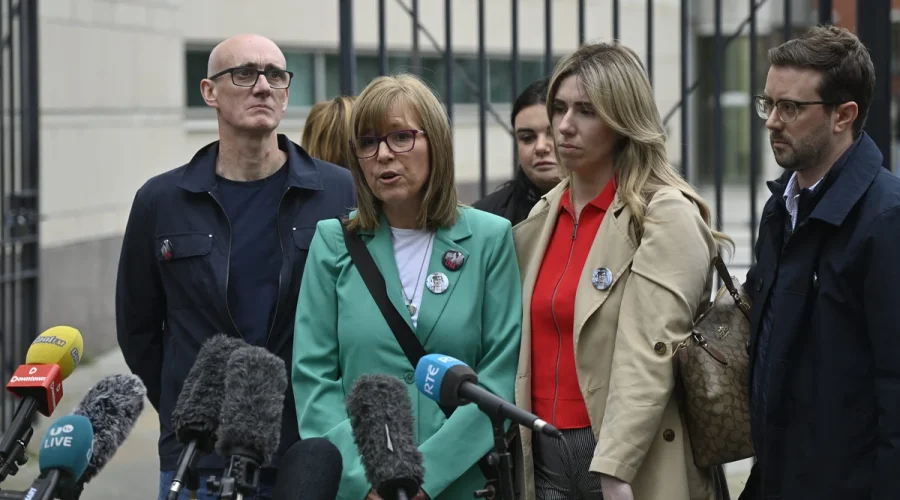
Speaking outside Belfast Crown Court, Ms. Corner expressed deep frustration with the legal outcome. “Today was a complete shock to our family,” she said, highlighting the sense of betrayal felt by those closest to Lyra. “The system has failed Lyra, and it has failed us.” Her words underscored the broader critique of Northern Ireland’s societal attitude toward silence, which she claimed has stifled witness testimony for years.
“There is a culture of silence in our country, where people fear speaking out, fearing the consequences of sharing what they know. This is not just about Lyra—it’s about justice for all victims.”
Ms. McKee, 29, was killed during a volatile clash in the Creggan area of Londonderry, where she was positioned near police vehicles. The incident, which unfolded amid chaotic scenes, resulted in her fatal injury when a bullet struck her. The family’s resolve to uncover the truth has become a symbol of resilience in the face of systemic challenges.
Legal Proceedings and Evidence
The three men—Paul McIntyre, 58; Peter Cavanagh, 38; and Jordan Gareth Devine, 25—were charged with joint enterprise murder. However, the court found insufficient evidence to support the prosecution’s case, which relied heavily on circumstantial proof. Judge Mrs. Justice Smyth highlighted the absence of a direct witness to the gunman’s actions, stating the verdict would “not bring any comfort” to Lyra’s loved ones.
During the trial, the prosecution argued that the men had accompanied a lone gunman and actively encouraged his actions. In contrast, defense counsel criticized the evidence, asserting it lacked the necessary strength to secure a conviction. The judge acknowledged the intention to target police but concluded that the men could not be held directly responsible for Lyra’s death.
“The gunman fired with murderous intent, and the attack was designed to create a fatal finale for the police. But the evidence was not enough to prove that the three men were the ones who pulled the trigger.”
Friends and relatives of the accused occupied one side of the court, while those of Lyra and members of the NUJ (National Union of Journalists) sat on the opposite side, their expressions a mix of grief and determination. After the verdicts were delivered, the family left the courtroom in silence, their disappointment palpable.
Context of the Attack
The night of Lyra’s death was marked by intense violence, with petrol bombs hurled at police and a car set ablaze in the midst of the chaos. Four shots were fired toward officers, and the New IRA claimed responsibility for the killing. The group, a splinter faction of the Irish Republican Army, has been involved in attacks targeting security forces for decades.
Ms. Corner recounted the events that led to her sister’s death, detailing the armed confrontation that began seven years, two months, and two weeks prior. “People took to the streets with lethal weapons, firing at police knowing innocent lives were at risk,” she said. “This is how it all started for us, and we’ve carried that strength ever since.”
“Our mother’s courage inspired us. Her love for Lyra and her belief in justice gave us the strength to fight, even when the system seemed to turn its back on us.”
Lyra’s family described the attack as a deliberate act of violence meant to send a message. The acquittal of the three men has reignited debates about the effectiveness of the justice system in Northern Ireland and the role of witness testimony in such cases. Ms. Corner noted that over 150 people witnessed the incident but none provided evidence, emphasizing the need to break the cycle of silence.
Further Charges and Outcomes
While the three men were acquitted of murder, five others were charged for their involvement in the rioting. Four of them were found not guilty, but Christopher Gillen, 45, of Balbane Pass in Derry, received convictions for rioting, possession of petrol bombs in suspicious circumstances, and throwing petrol bombs. This outcome highlights the complexity of assigning responsibility in such high-profile cases.
Ms. Corner’s statement reaffirmed the family’s commitment to justice, declaring that they would not let Lyra’s legacy fade. “We will not go down with this,” she said. “Lyra believed in fighting for what she believed in, and we will carry that fight forward.” Her words reflect the enduring impact of Lyra’s death on her family and the community.
“This is not over. Our strength comes from our love for Lyra and our desire to ensure that no stone is left unturned in the search for truth.”
Lyra’s murder sparked global outrage, with her name becoming a symbol of the ongoing conflict in Northern Ireland. The event brought attention to the risks faced by journalists and activists in the region, where the line between political struggle and violence often blurs. Her family’s determination to challenge the verdict underscores the broader movement for accountability in such cases.
As the trial concluded, the focus shifted to the next steps in the quest for justice. Ms. Corner’s resolve to continue the fight has galvanized others, reinforcing the idea that the search for truth is a collective responsibility. The acquittal of the three men may have been a setback, but it has also strengthened the family’s resolve to keep pressing forward.