
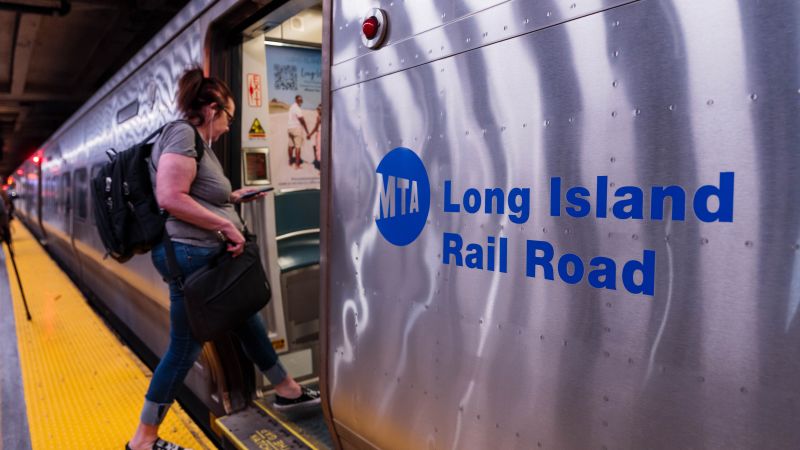
Long Island Rail Road, America’s Largest Commuter Railroad, Is on Strike
Long Island Rail Road America s largest – For the first time in over three decades, the Long Island Rail Road (LIRR) has fallen into a state of operational paralysis due to a strike by its unionized workforce. The decision by the five unions representing 3,500 employees has halted all train services, casting uncertainty over the daily commutes of hundreds of thousands of residents in the New York City metro area. This unprecedented action marks a significant disruption to one of the nation’s most critical mass transit networks, which has already struggled to regain pre-pandemic ridership levels.
Union Demands and Negotiation Breakdown
The strike, which began at midnight on Saturday, was triggered by unresolved disputes over wages and work conditions. The unions had been pushing for a raise in the 4% to 5% range, a demand they argue is necessary to reflect the steep cost-of-living increases experienced in New York’s most expensive market. However, the final push for agreement collapsed at the last minute, with management insisting on a healthcare coverage adjustment that the unions deemed unacceptable. This ultimatum, issued just hours before the strike commenced, left the parties without a resolution.
“After two days of nonstop discussions, parties were unable to reach a deal,” stated Kevin Sexton, a spokesperson for the union coalition and vice president of the Brotherhood of Locomotive Engineers and Trainmen. “The situation is a direct result of the management’s refusal to compromise on key issues.”
The unions’ grievances highlight a broader tension between labor and management, with members asserting that their 2022 wage freeze has left them unable to keep up with rising living expenses. The Metropolitan Transportation Authority (MTA), which operates the LIRR, has faced growing pressure to address these concerns, particularly as the region’s transit systems remain under strain from pandemic-related declines in ridership. Despite efforts to restore service, the LIRR has not yet recovered all the passengers it served in 2019, with current ridership hovering around 90% of pre-pandemic numbers.
Disruption and Commuter Struggles
The strike’s consequences are expected to be most acute on Monday, when nearly 300,000 commuters typically rely on the LIRR to navigate the city’s traffic congestion. With train services completely suspended, the MTA has deployed limited bus routes to mitigate the impact, but these can only accommodate approximately 13,000 passengers in the morning and another 13,000 in the evening. For many, this means a sudden shift to driving, a challenge exacerbated by rising gas prices and new tolls on vehicles entering Manhattan’s business district.
Even those with monthly passes will be affected, as the unions have announced that refunds will be issued for prorated portions of fares during the strike. This decision underscores the financial stakes involved, with the LIRR’s fare revenue contributing $636 million last year. The potential loss of $2 million per weekday during the strike could have long-term implications for the railroad’s ability to fund infrastructure improvements and maintain service quality.
MTA’s Position and Political Criticism
The MTA has accused the unions of prioritizing their own interests over the broader needs of commuters. In a statement, Janno Lieber, CEO of the MTA, criticized the unions for their strategy, claiming their demands would force the agency to “make a bad deal” that jeopardizes the system’s financial stability. “We cannot responsibly make a deal that implodes MTA’s budget,” he said, adding that the agency’s ability to fund operations is at risk if wage increases are not carefully negotiated.
“For me, it’s become apparent that these unions always intended to strike,” Lieber continued. “Their strategy is to inconvenience Long Islanders and try to force the MTA and the State to do a bad deal.”
New York Governor Kathy Hochul echoed this sentiment, condemning the strike as “reckless” and warning that the union’s demands could make fares unaffordable for regular commuters. In her statement, Hochul emphasized the hardships faced by workers, noting that the strike has left nearly 3,500 employees without pay during the labor disruption. “Commuters are dealing with unnecessary dysfunction and thousands of union LIRR workers are forced to go without a paycheck because of the decisions made by a small group of union leaders,” she said, urging both sides to return to the table for renewed negotiations.
Meanwhile, the unions have defended their stance, citing the MTA’s reluctance to meet their demands. “These riders are our friends, our neighbors, they live in our communities,” said Sexton, who represents the Brotherhood of Locomotive Engineers and Trainmen. “We understand the service that the Long Island Rail Road provides, but we can’t ignore the financial realities our members face.”
Regional Impact and Weekend Challenges
The strike has also disrupted the region’s economic activity, particularly in areas reliant on the LIRR for transportation. The Mets and Yankees, two of New York’s most prominent baseball teams, are set to play games at Citi Field on Saturday and Sunday, drawing crowds that would typically use the railroad. This weekend’s events have already seen an increase in off-peak traffic, which the MTA had anticipated but now faces the risk of being overwhelmed by the lack of rail service.
While the MTA has called for commuters to adjust their travel plans, the limited bus capacity remains a significant bottleneck. The agency has urged customers to work from home, avoid non-essential trips, and allocate extra time for their journeys. However, these measures may not be enough to prevent widespread delays, especially as the strike spans multiple days and affects both weekday and weekend travel patterns.
As the situation unfolds, the strike has reignited debates about the balance between fair wages for transit workers and the financial sustainability of the system. The MTA and unions are now in a standoff, with each side framing the other as the primary obstacle to resolving the dispute. The outcome of this conflict could have lasting effects on the region’s transportation infrastructure, the economic well-being of its residents, and the reputation of the MTA as a reliable provider of public services.
Key Players and Stakes
The LIRR’s strike involves a coalition of five unions, including those representing engineers, signalmen, and machinists. While conductors, who are also union members, have not joined the strike, they have supported the picket lines, further complicating the MTA’s response. The unions’ demands for a 4% to 5% wage increase have been a central point of contention, with management arguing that the railroad’s budget cannot absorb such a hike without sacrificing service quality.
The MTA’s leadership has positioned itself as a victim of the unions’ aggressive tactics, suggesting that the strike was inevitable. However, the unions maintain that the MTA’s last-minute push for healthcare cost adjustments was an unfair tactic to derail negotiations. As the strike continues, the question remains: how will the region adapt to this sudden disruption, and what does it mean for the future of mass transit in New York?
The financial implications of the strike extend beyond the immediate loss of revenue. With fares expected to be refunded for affected passengers, the MTA may face additional costs that could strain its already tight budget. This scenario has raised concerns among policymakers and commuters alike, with many questioning whether the MTA’s commitment to fair wages for its workers is worth the potential economic fallout.
As the MTA prepares to manage the logistical challenges of the strike, the unions remain steadfast in their position, emphasizing the need for a contract that reflects the real-world pressures faced by their members. The standoff between labor and management continues to dominate headlines, with the fate of the LIRR’s operations hanging in the balance until a resolution is reached.





