
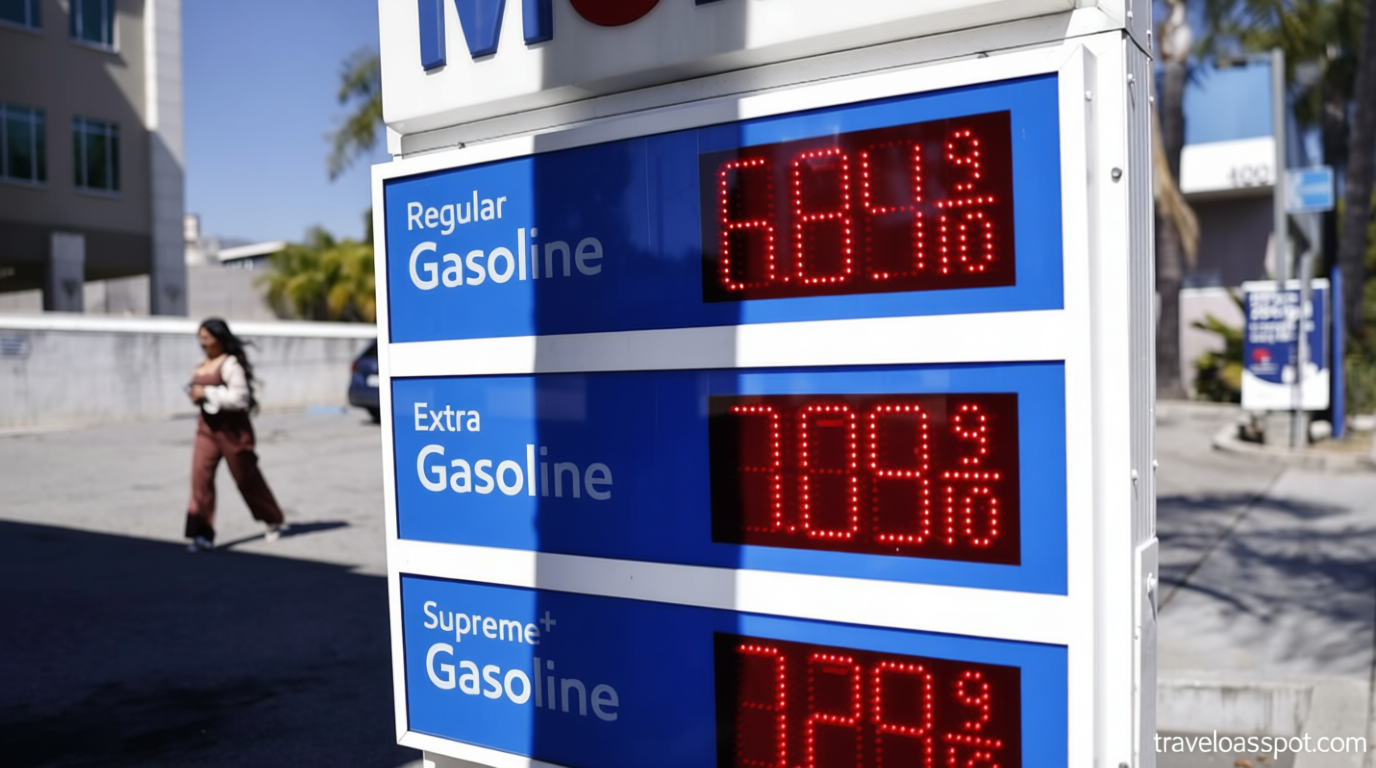
Memorial Day Sticker Shock: Gas Prices Near All-Time Highs
Fuel Costs Surge Amid Iran Conflict
Memorial Day sticker shock – As millions of Americans prepare for travel during the Memorial Day holiday, they are encountering gas prices that have reached historic levels. The ongoing conflict with Iran has disrupted global energy markets, leading to a sharp increase in fuel costs nationwide. Despite emergency measures introduced by the Trump administration to mitigate the impact, pump prices continue to climb, adding to the financial strain on households. This spike marks the unofficial kickoff of the summer driving season, intensifying concerns over rising living expenses and casting a shadow over the president’s economic agenda.
GasBuddy, a crowdsourced fuel price tracking service, forecasts that the national average for regular gasoline will hover around $4.48 per gallon this weekend. This figure represents a 42% surge compared to the previous Memorial Day period, placing it as the second-highest recorded average in history. The only higher price was in 2022, when the average reached $4.61 per gallon following Russia’s invasion of Ukraine. Analysts warn that the upward trend may persist, with Patrick De Haan, head of petroleum analysis at GasBuddy, predicting the national average could surpass $5 per gallon by next month if the Strait of Hormuz remains closed. For the entire summer season—spanning from Memorial Day to Labor Day—GasBuddy anticipates an average of $4.80 per gallon, which would eclipse the prior summer high of $4.43 set under President Biden in 2022.
De Haan emphasized the volatility of the current energy market, stating, “Prices were incredibly stable last summer. This summer is probably the complete opposite, perhaps the most volatile.” His forecast hinges on the status of the Strait of Hormuz, a critical chokepoint for oil shipments. The prolonged closure of this area has intensified supply chain challenges, compounding the effects of geopolitical tensions on fuel availability and pricing.
Economic Impact and Consumer Struggles
The surge in gas prices is particularly burdensome for everyday commuters, with many reporting significant increases in their weekly expenses. Chris Haenel, a Pittsburgh resident and computer technician, highlighted this issue, noting that his weekly spending on fuel has risen from $50 to $80 since the Iran war began. “Every day, I drive by the gas station and it’s just insane,” he said, underscoring the frustration of working-class Americans grappling with rising costs.
Broader economic data reveals the severity of the situation. The rise in energy prices has driven the U.S. inflation rate to nearly 4% in April, the highest level in three years. Real wages—adjusted for inflation—are now declining, meaning consumer prices are increasing faster than the income of most Americans. Haenel described the financial impact, stating, “Everything goes up – except the paycheck. My wife comes home with three bags of groceries and it’s $300.” For someone nearing retirement, this strain is particularly acute, as it limits savings and forces difficult trade-offs.
According to estimates from Brown University’s Climate Solutions Lab, Americans are facing an additional $43 billion in energy costs since the Iran war began. This calculation is based on the current price of gasoline and diesel compared to what prices might have been without the conflict. Gasoline alone accounts for approximately $24 billion of this increase, translating to nearly $200 per household. The financial pressure is felt across the country, with many families struggling to balance budgets amid these rising expenses.
Government Response and Political Reactions
Despite the economic toll, the Trump administration has implemented a series of measures to stabilize fuel prices. These include releasing record amounts of oil from the Strategic Petroleum Reserve, waiving the Jones Act to allow more domestic and foreign ships to transport fuel, invoking the Defense Production Act to boost domestic oil output, and temporarily halting Russian oil sanctions. White House spokeswoman Taylor Rogers defended these actions, asserting that the administration remains focused on unlocking American energy potential to lower costs and benefit families.
“President Trump remains committed to fully unleashing American energy dominance, lowering costs, and putting more money back in the pockets of hardworking American families,” Rogers stated. She framed the current price increases as a temporary setback, citing the administration’s efforts to exert maximum pressure on Iran to end the conflict. “As the president continues to exert maximum leverage over Iran with the ongoing successful blockade to bring this conflict to an end, we will see global energy markets stabilize and gas prices plummet back to the multi-year lows Americans enjoyed prior to the start of Operation Epic Fury,” she added.
However, public sentiment has shifted, with voters expressing dissatisfaction over the impact of the war on their finances. A recent CNN poll revealed that only 21% of Americans approve of Trump’s performance on gas prices, a stark contrast to his earlier campaign focus on energy affordability. Among Republicans, the majority disapprove of his handling of the issue, indicating a growing rift between the administration’s strategy and the public’s economic concerns.
Broader Implications and Future Outlook
The persistent high fuel prices are not just a short-term inconvenience but a sign of deeper structural shifts in global energy markets. Analysts suggest that the war with Iran has exposed vulnerabilities in the supply chain, making the U.S. more reliant on alternative sources and exacerbating price fluctuations. While the administration claims these measures will eventually restore stability, critics argue that the economic damage has already been done, with long-term consequences for household budgets and consumer confidence.
For many, the rising costs are a direct reflection of the war’s toll on daily life. Gary Auerswald, a retired Illinois resident, voiced his disagreement with Trump’s assessment, stating, “It’s not a small price to pay.” His perspective highlights the growing frustration among Americans who see the conflict as a catalyst for financial hardship. As the summer months unfold, the question remains: will the administration’s interventions succeed in curbing the price surge, or will the economic impact of the war continue to weigh heavily on households?
With the Memorial Day weekend approaching, the nation braces for another week of high fuel costs. The combination of geopolitical tensions, domestic policy decisions, and market dynamics has created a perfect storm for consumers. While the White House remains optimistic about future relief, the immediate reality is that millions of Americans are navigating a challenging landscape where every gallon of gas feels like a significant investment. The summer months, typically a time for leisure and travel, now carry an added layer of financial uncertainty, underscoring the far-reaching effects of the Iran conflict on the American economy.





