
Ahead of US China Summit, Taiwan’s Opposition Leader Seeks Strategic Balance
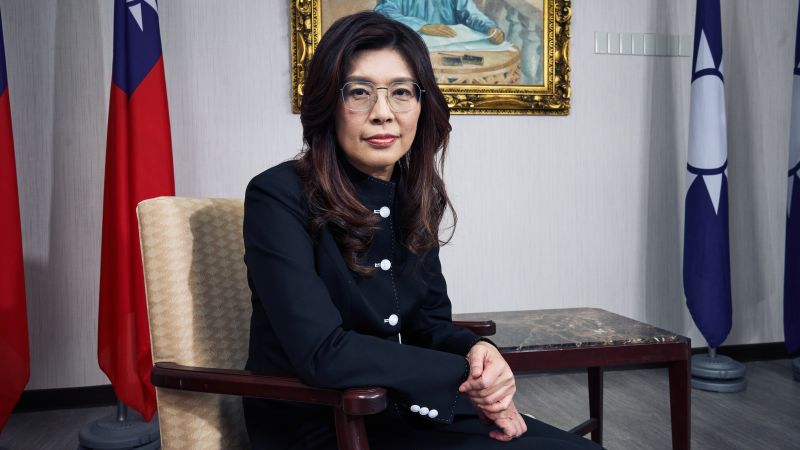
Ahead of US China summit Taiwan – Ahead of the US China summit, Taiwan’s opposition leader has emphasized the need for the island to maintain ties with both the United States and China. As the geopolitical stakes rise ahead of the critical meeting between Washington and Beijing, the Kuomintang (KMT) leader, Cheng Li-wun, has called for a more flexible strategy. Her remarks suggest that Taiwan could avoid being caught between the two superpowers by pursuing dialogue and cooperation, even as the U.S. continues to bolster its military presence in the region.
Defense Adjustments and Political Shifts
The KMT’s decision to scale back the defense package reflects a broader shift in Taiwan’s political strategy. While the original proposal included $40 billion in military spending, the revised version now focuses on a mix of arms acquisitions and domestic priorities. This adjustment has sparked debate about whether the cuts will weaken Taiwan’s ability to deter Chinese aggression or signal a pragmatic approach to securing long-term stability.
Cheng Li-wun, during a recent press briefing, highlighted the importance of balancing security needs with diplomatic engagement. “Taiwan does not want to become the next Ukraine,” she stated, underscoring the island’s desire to avoid a prolonged military conflict with China. Her party’s support for the modified defense plan indicates a willingness to align with U.S. interests while maintaining a nuanced relationship with Beijing.
Historical Context and Cross-Strait Dynamics
Cheng’s meeting with Chinese President Xi Jinping in Beijing marked a significant moment in cross-strait relations. This high-level dialogue, the first of its kind in over a decade, highlights the KMT’s evolving stance. Previously a vocal advocate for Taiwanese independence, Cheng now positions herself as a bridge between the two powers, reflecting the party’s internal shift toward a more conciliatory approach.
China has consistently viewed Taiwan as an integral part of its territory, and the recent summit preparations have intensified its focus on unification. Beijing officials have used global conflicts, such as the Ukraine war, to illustrate the risks of prolonged tension. Cheng’s visit to Beijing, however, signals a potential thaw in relations, with both sides seeking to avoid escalation ahead of the US-China summit.
Ambiguity and Analyst Perspectives
Analysts remain divided on the implications of the KMT’s defense adjustments. Some argue that reducing funds for domestic projects, like Taiwan’s drone development, could undermine the island’s defense capabilities. Others see it as a necessary compromise to ensure economic and political stability. “A balanced approach may allow Taiwan to navigate the US-China summit without sacrificing its sovereignty,” said a political strategist in a recent commentary.
As the US-China summit nears, Cheng’s leadership is being closely watched for its impact on Taiwan’s international standing. Her party’s support for the scaled-down defense plan suggests a strategic alignment with U.S. priorities, while her engagement with Beijing indicates an openness to diplomatic solutions. This duality positions Taiwan as a key player in the evolving dynamics of the US-China summit.
Towards a New Political Era
The KMT’s approach ahead of the US-China summit has been shaped by historical events and current regional pressures. Cheng’s journey from an independence advocate to a party leader advocating cooperation mirrors Taiwan’s own struggle to define its role in the global order. Her meeting with Xi Jinping, held just days before the summit, has been interpreted as a calculated effort to strengthen her party’s position in domestic politics.
With the US-China summit approaching, Taiwan’s political leaders face the challenge of maintaining autonomy while appeasing both allies and adversaries. Cheng Li-wun’s message of balance offers a glimpse into the island’s future, as it seeks to navigate the complexities of the US-China summit without alienating either power. This delicate act of diplomacy will be crucial in shaping Taiwan’s path forward in the years to come.





