
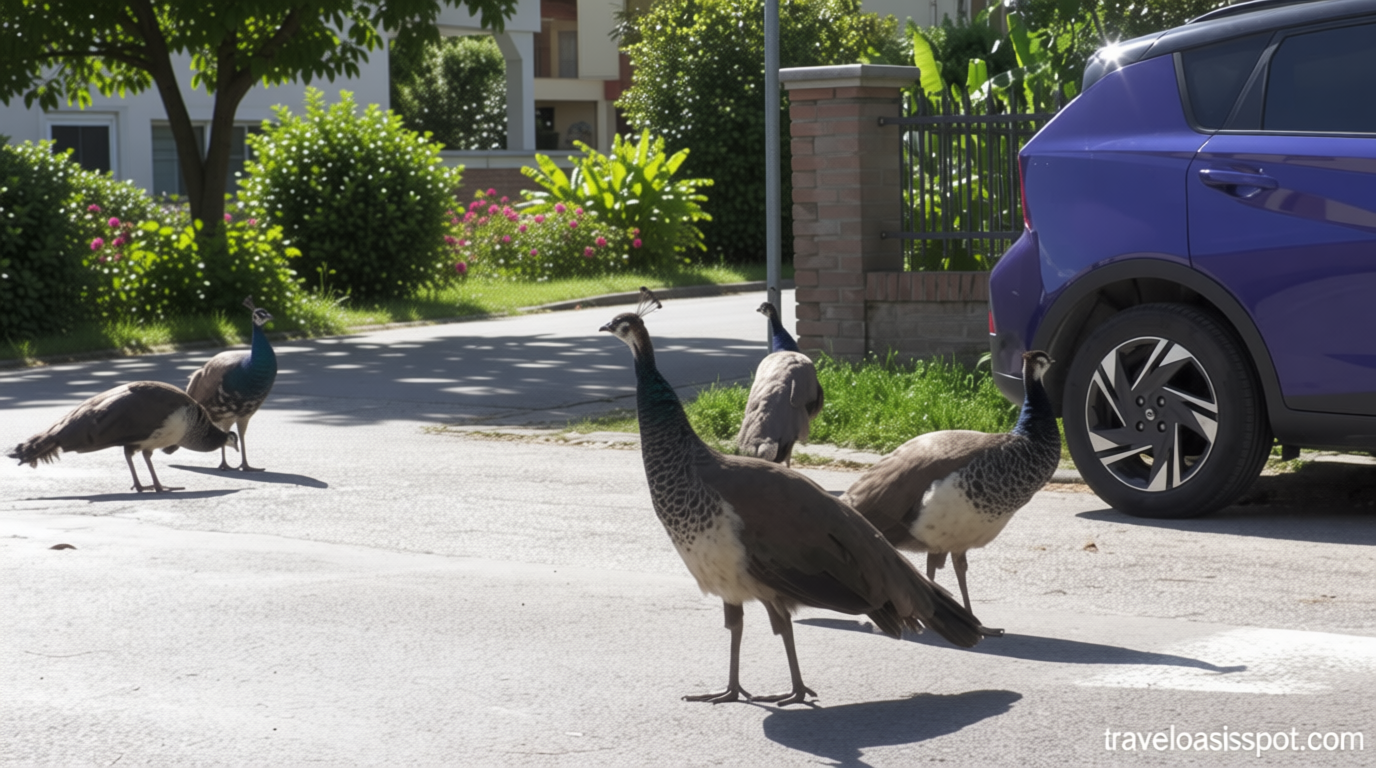
Horde of amorous peacocks ruffles feathers in Italian seaside town
Horde of amorous peacocks ruffles feathers – The coastal town of Punta Marina, nestled along Italy’s Adriatic coast, is grappling with an unexpected surge in its peacock population. Over 100 of these vibrant birds have taken over the area, creating a rift among residents over how to address their rapid increase. Some reports suggest the number could be as high as 150, with the animals displaying territorial behavior toward humans, vehicles, and even urban green spaces. The issue has intensified this spring as the birds enter their mating season, their calls disrupting the tranquility of the town’s mornings.
A Divided Community
Local business owners like Rosanna Golfarelli and her husband Claudio Ianiero are caught in the middle of the debate. Golfarelli, who runs a pastry shop, described the peacocks’ antics as a nuisance. “They attack cars by pecking at their reflections, leave sticky guano on sidewalks, and block traffic,” she said, sharing her frustrations with CNN. Meanwhile, Ianiero found the situation amusing, despite acknowledging the mess the birds create. “They peck at everything they find and make a mess, but we aren’t affected because we live away from the bakery,” he remarked, highlighting the community’s split in opinions.
“Peacocks are beautiful, but there are too many of them now; they make a mess and peck at everything they find,” said Ianiero, who admitted the noise from the birds was more bothersome for others than for himself.
Some locals advocate for culling or relocating the peacocks, while others push for their protection and even commercialization to attract tourists. Video footage of the birds, captured by influencers and musicians in the area, has sparked interest in their presence. In fact, platforms like Spotify and Amazon Music now feature “relaxing” playlists inspired by the peacocks’ calls, blending their natural sounds into the town’s cultural fabric.
The Origins of the Peacock Population
According to local folklore, the peacock colony began when a single bird escaped its enclosure in a pine forest near Punta Marina. The tale goes that the male peacock screeched through the spring to attract a mate, and a hen was eventually introduced by a nearby resident. As the population grew, the birds moved to a nearby military barracks before returning to the forest when the facility was renovated. Over time, they began colonizing parks and abandoned homes to escape predators such as foxes and wolves, whose numbers increased in the region.
Human intervention further fueled the population growth. Residents started feeding the peacocks, a habit that became more common during the 2020 lockdowns when outdoor activities were limited. This reliance on human-provided food has made the birds less wary of urban environments, leading to their proliferation. “The birds are now more comfortable in town, and with no natural predators nearby, their numbers have exploded,” explained Impellizzeri, a councilor focused on animal welfare.
Management Efforts and Controversies
For years, the municipal government of Ravenna has struggled to control the peacock population. The CLAMA Association, a non-profit dedicated to animal care, partnered with the town two years ago to manage the colony. They placed informational signs near the town’s entrances, urging people to avoid feeding the birds. “We’re trying to educate the public, but it’s a challenge,” said a representative from CLAMA, emphasizing the need for community cooperation.
Despite these efforts, the town’s residents remain divided. In 2022, the number of peacocks was estimated at around 30, but by 2023, the population had grown significantly. “That number is now outdated. Now we have people talking about 100-120 animals,” noted Francesca Impellizzeri, a Ravenna councilor, during a recent interview with Sky TG24. She revealed that a census is planned for the coming months to better understand the gender distribution and develop a strategy for the community.
Animal rights groups have expressed concerns over potential culling. When a zoo offered to take 20 peacocks, the proposal faced backlash. “Culling could be seen as cruel, but it’s necessary to prevent further damage to the town’s infrastructure,” argued a local environmental advocate. The debate continues, with some residents fearing the economic impact of a peacock population that has become a fixture of daily life.
Peacock Problems Beyond Punta Marina
Punta Marina is not alone in its struggle with peacocks. Similar issues have been reported in other regions, including Los Angeles County, where the birds have roamed for over a century. Officials in 2021 introduced a ban on feeding them after complaints about their nighttime shrieking and damage to property. In Florida, the village of Pinecrest has taken a different approach by offering vasectomies to male peacocks to limit their reproduction. Meanwhile, in Western Australia, a town experienced an influx of emus, which can grow to nearly 6.2 feet tall, creating a different kind of urban wildlife challenge.
The situation in Punta Marina underscores a broader trend of wildlife adapting to human environments. With the peacocks now a part of the town’s identity, their presence has both positive and negative implications. While they attract attention and contribute to tourism, they also pose logistical challenges. “The birds are a symbol of the town’s charm, but their numbers are overwhelming,” said a resident who supports their protection.
As the census nears completion, the town’s leaders are hopeful it will provide clarity on the peacock population’s size and help decide the next steps. For now, the balance between preserving the birds’ natural behavior and mitigating their impact on the community remains precarious. Whether the town will embrace them as a unique attraction or take action to curb their numbers depends on a careful assessment of their role in the local ecosystem and the preferences of its people.
Meanwhile, the peacocks continue their reign. With their striking plumage and loud calls, they have become an unavoidable part of Punta Marina’s daily rhythm. Some residents have even adopted the birds, like Golfarelli and Ianiero, who gave one of the local peacocks the nickname Pirilampo. They designed a special cookie shaped like the bird’s feathers, a small gesture of affection amid the chaos. “We can’t deny their beauty, but we’re also tired of their disruptions,” Golfarelli said, reflecting the mixed feelings of the town’s inhabitants.
The growing population serves as a reminder of how human activities can alter wildlife dynamics. From accidental escapes to intentional feeding, the peacocks’ journey from a rare sight to a common nuisance highlights the delicate relationship between nature and urban development. As Punta Marina navigates this issue, it may set a precedent for other towns facing similar challenges. Whether the birds will remain a beloved part of the town’s landscape or become a target of conservation efforts remains to be seen.





