
Russia Hammers Ukraine in Biggest Prolonged Aerial Assault Since War Began
Russia hammers Ukraine in biggest prolonged – In a significant escalation of the ongoing conflict, Russia launched its most extended and intense aerial attack on Ukraine since the war began, targeting Kyiv with a relentless barrage of drones and missiles. Ukrainian authorities reported at least 12 fatalities and 57 injuries, marking a grim chapter in the war as the capital endured a two-day assault. President Volodymyr Zelensky described the strike as the largest aerial attack on Ukraine in a two-day period, emphasizing that Russia had “stockpiled drones and missiles over a period of time and deliberately timed the strike” to maximize its impact. This attack, which spanned 11 hours of continuous air raid alarms, underscored the evolving tactics of the Russian military and their focus on overwhelming Ukraine’s defenses.
Devastating Strikes on Kyiv’s Residential Complex
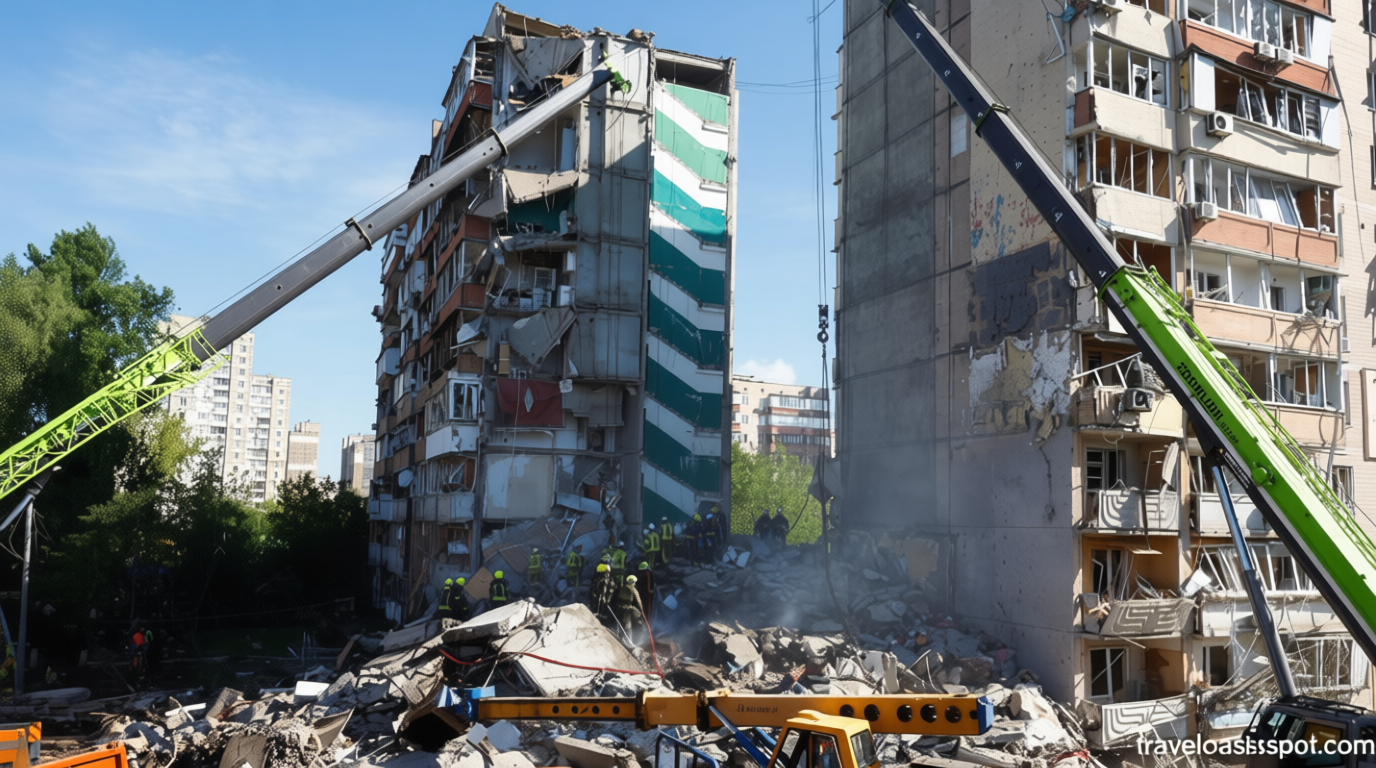
The attack culminated in a catastrophic strike on a nine-story residential building in Kyiv, resulting in the deaths of at least 11 individuals, including a 12-year-old girl and a 15-year-old girl, according to emergency services. Kyiv Mayor Vitali Klitschko declared the assault “the enemy’s largest-scale attack on the capital,” highlighting its strategic importance. The damage to the building was extensive, with residents reporting that the front entrance was completely obliterated. “I heard a loud explosion,” said Olena Suntovska, a 38-year-old mother of three, recalling her harrowing experience. “I ran out to the kitchen and saw people running around the yard, calling for help. Then I rushed out of the building and saw that the front entrance was gone,” she added, emphasizing the chaos and fear that gripped the city.
Residents’ Accounts of the Attack
Survivors provided vivid accounts of the attack’s aftermath, painting a picture of devastation and resilience. Polina, a 76-year-old resident, described waking up to find her balcony window blown out. “I never imagined the damage would be this bad; when I went out into the yard, I couldn’t believe my eyes,” she said, expressing disbelief at the scale of destruction. “We don’t have a proper bomb shelter here,” she continued, noting the lack of infrastructure to protect civilians. The State Emergency Service reported that over a dozen people were still missing, with some trapped under the rubble of the collapsed building. These personal testimonies underscore the human cost of the aerial assault and the vulnerability of urban areas to such strikes.
Meanwhile, the broader attack extended beyond Kyiv, with strikes reported in multiple regions, including Kharkiv, Odesa, Poltava, and Zaporizhia. In Kharkiv, an early morning assault injured at least 28 people, while the Odesa region saw two additional casualties. The damage to critical infrastructure, such as power substations and railway systems, disrupted essential services and highlighted the Russian military’s intent to cripple Ukraine’s logistics and energy sectors. “A power substation and a high-voltage power line were damaged in Kyiv following a missile and drone strike,” stated DTEK, the energy company, adding that the attack targeted key supply routes.
Ukrainian President Zelensky described the attack as a deliberate effort to test and overwhelm Ukraine’s air defenses. “Russia fired more than 1,560 drones on Ukraine since the start of Wednesday – making it the largest aerial attack in a two-day period since the war began,” he said, noting the staggering number of projectiles. The attack also included 56 missiles, which added to the destruction and demonstrated the Russian military’s coordination of multi-pronged strikes. Zelensky emphasized that the assault was part of a larger strategy to force Ukraine into a defensive position, with the goal of creating “challenges for our air defense” and reducing the country’s ability to retaliate.
As the dust settled, the mayor of Kyiv announced a day of mourning for the victims of the attack, a gesture that reflected both the gravity of the situation and the emotional toll on the population. The city’s emergency services worked tirelessly to rescue those trapped in the rubble, though the full extent of casualties remained uncertain. The attack served as a stark reminder of the increasing reliance on drones in modern warfare, with their precision and volume posing a new threat to civilian infrastructure. Analysts noted that the prolonged nature of the strike, lasting over 11 hours, marked a shift in Russia’s approach, blending traditional missile strikes with drone technology to maintain a sustained pressure on Ukraine.





