
Scientists identify ‘ghost’ of a long-extinct relative in humans today
A New Window into Ancient Human Evolution
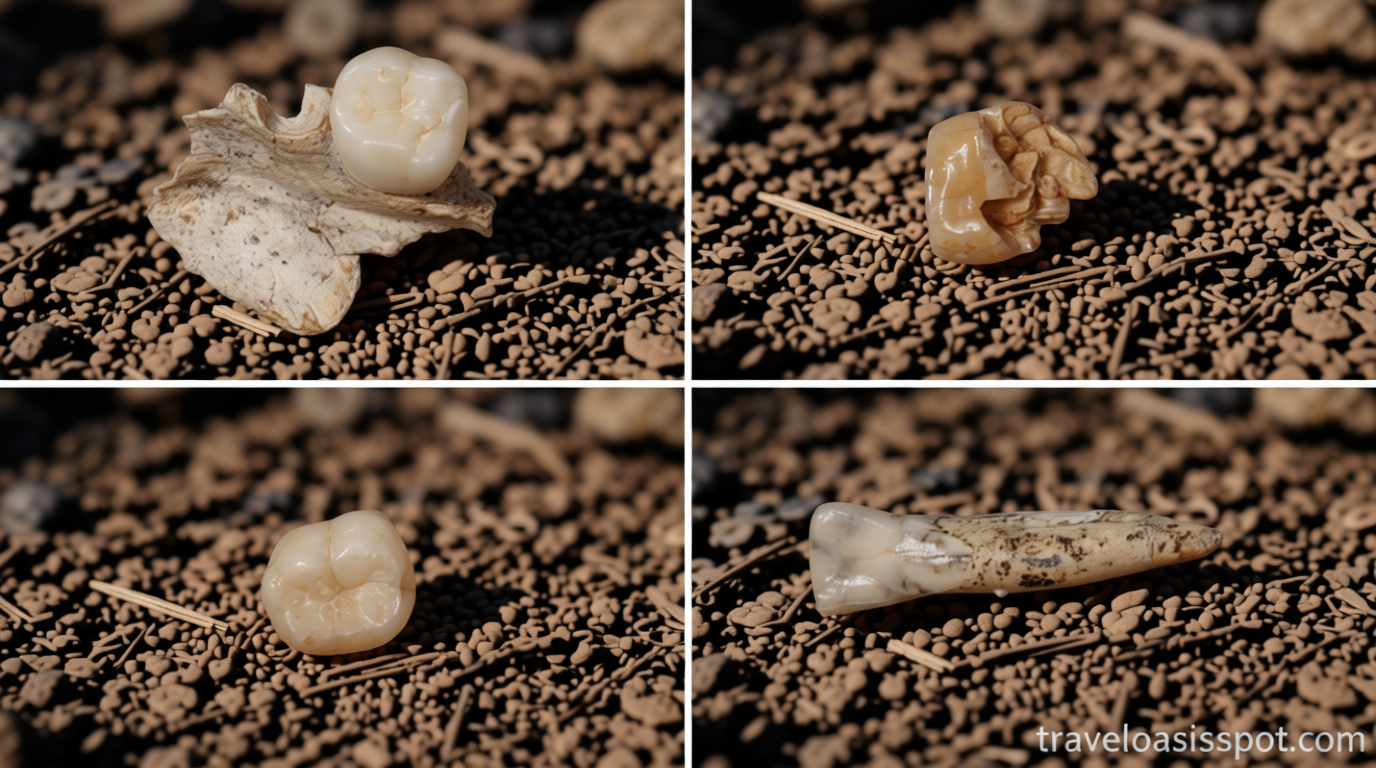
Scientists identify ghost of a long – For millennia, the evolutionary journey of early humans has been shaped by the study of fossils and skeletal remains. However, the genetic secrets of many prehistoric species have remained elusive due to the fragility of DNA over time. Now, a groundbreaking study has provided fresh insights by uncovering ancient proteins preserved in the remains of Homo erectus, the first human ancestor to venture beyond Africa. These proteins, extracted from six teeth discovered in China, have unveiled a molecular bridge connecting this long-extinct species to later human species, including modern Homo sapiens. The findings, published in the prestigious journal Nature, offer a more detailed picture of how ancient hominins interacted and interbred, challenging previous assumptions about the linear nature of human evolution.
“Tying together the fragmented branches of our evolutionary tree has been a puzzle for decades,” remarked Ryan McRae, a paleoanthropologist at the Smithsonian National Museum of Natural History in Washington, DC. “This research marks a significant leap forward in understanding how Homo erectus relates to other hominins.”
Overcoming the Challenges of Ancient DNA
Homo erectus, which roamed the Earth for nearly 2 million years, left behind a vast fossil record spanning Africa, Asia, and Europe. Yet, the absence of well-preserved DNA in these remains has made it difficult to trace their genetic lineage with precision. Fossils from this species are often too old or poorly preserved to yield usable DNA, leaving scientists to rely on indirect methods to study their biology. This new study, led by Chinese geneticist Fu Qiaomei and her team, circumvented this limitation by focusing on proteins rather than DNA. Proteins, composed of amino acid sequences, are more resilient than DNA, which degrades rapidly over time. While they contain less detailed information than genetic material, they can still reveal critical evolutionary clues, such as shared ancestry or interbreeding events.
A Breakthrough in Protein Extraction Techniques
The research team employed a novel, non-invasive method to analyze the teeth, which were unearthed from three distinct sites in central and northern China: Zhoukoudian, Hexian, and another location. Instead of drilling into the fossils to extract samples, they used acid etching to gently remove enamel, preserving the structural integrity of the teeth for further analysis. This approach not only minimized damage but also allowed the team to focus on specific protein markers that could be compared across specimens. Despite their success with the teeth, the researchers noted that DNA extraction from these fossils proved exceptionally challenging. They had previously attempted to recover DNA from similarly aged animal fossils found at the same sites but were unsuccessful. Fu Qiaomei, however, remained undeterred, emphasizing the importance of persistence in uncovering genetic histories.
“DNA is like a fragile thread that can easily snap,” said Fu, a professor at the Institute of Vertebrate Paleontology and Paleoanthropology, affiliated with the Chinese Academy of Sciences. “Proteins, on the other hand, are more durable and offer a reliable alternative when DNA is unavailable.”
Unraveling Ancestral Connections Through Amino Acid Variants
The analysis revealed that the six teeth shared two unique amino acid variations, one of which had never been observed before. This commonality strongly indicated that all the specimens belonged to the same species, Homo erectus. However, the presence of a second variant—previously identified in Denisovans, an enigmatic group of ancient humans—suggested a more complex narrative. The researchers hypothesize that Denisovans may have interbred with Homo erectus at some point, and later, with modern humans. This genetic exchange would explain why traces of Denisovan DNA persist in certain populations today, a phenomenon known as admixture. The study also highlights parallels with the well-documented interbreeding between modern humans and Neanderthals, which left a lasting impact on human genetics.
Sex Determination and the Genetic Tapestry of Asia
One of the study’s remarkable achievements was the ability to determine the sex of the fossils using protein markers. By identifying a sex-specific gene marker on the Y chromosome within the enamel proteins, the team concluded that five of the specimens were male, while one was female. This detail adds a new layer to our understanding of Homo erectus demographics, suggesting a diverse population structure. The findings also align with broader theories about human evolution in Asia, where genetic exchange between different hominin groups may have been more frequent than previously thought. Eduard Pop, a research scientist at the Naturalis Biodiversity Center in Leiden, Netherlands, highlighted the importance of this discovery in filling gaps in the evolutionary timeline.
“Geneticists have long suspected that Denisovans originated from an unknown lineage,” Pop explained via email. “This study strengthens that hypothesis by linking Homo erectus to Denisovans through protein evidence. It opens the door to exploring how these populations might have interacted in regions like Indonesia, where additional fossils could further clarify the picture.”
Comparing Past Discoveries and Future Implications
While the 2020 study on Homo erectus fossils from Dmanisi, Georgia, was a significant milestone, it lacked the detailed molecular insights provided by the current research. The Georgia study identified proteins but did not reveal how Homo erectus fits into the larger framework of hominin evolution. In contrast, the new study’s focus on amino acid sequences has offered a more nuanced perspective, demonstrating the potential of proteins to illuminate evolutionary relationships. Pop is now working with researchers to assess whether similar protein markers exist in Homo erectus fossils found in Indonesia, a region with a rich but poorly understood fossil record. If successful, this could further cement the role of East Asian populations in the genetic web of human ancestry.
Redrawing the Map of Human Evolution
The discovery challenges the traditional view of human evolution as a straightforward progression from one species to the next. Instead, it supports a model of overlapping populations that occasionally intermingled, creating a network of genetic connections rather than isolated branches. This perspective is particularly relevant in Southeast Asia, where modern human populations exhibit the highest levels of Denisovan ancestry. The study implies that Denisovans and Homo erectus may have coexisted and exchanged genetic material in this region, contributing to the diversity of human lineages today. As researchers continue to refine their techniques, the molecular signatures of ancient hominins may soon become as clear as the fossil record itself, providing a more complete story of humanity’s origins.
The breakthrough in protein analysis not only answers lingering questions about Homo erectus but also sets a new standard for studying ancient life. By leveraging these resilient molecular markers, scientists can explore evolutionary relationships where DNA is no longer available. The implications extend beyond Homo erectus, offering a framework for understanding how interbreeding shaped the genetic makeup of modern humans. As the field advances, the once-mysterious “ghost” of this species is becoming increasingly tangible, revealing the intricate and dynamic history of human evolution.





