Protesters Set Fire at DRC Ebola Treatment Center, Demand Body Return
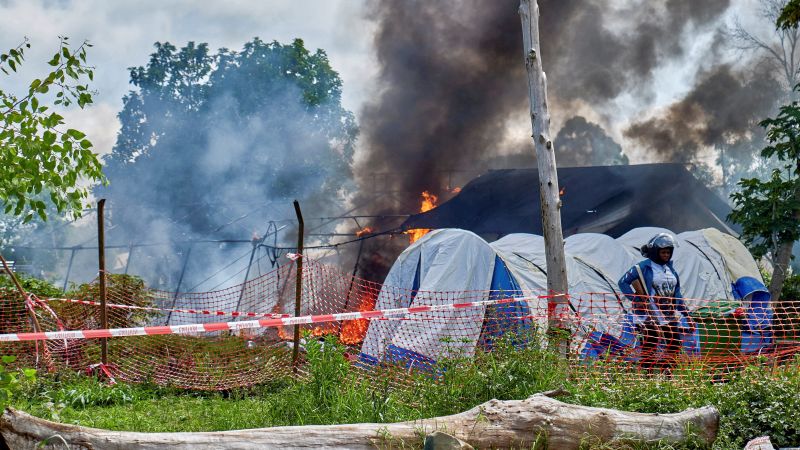
Protesters set Ebola treatment center on fire – On Thursday, a group of demonstrators in the Democratic Republic of Congo (DRC) ignited a fire at an Ebola treatment facility, sparking immediate concern over the spread of the virus. The incident occurred at the Rwampara Hospital in the eastern region of the country, which had been working tirelessly to combat the ongoing outbreak. According to local officials, the blaze destroyed two medical tents and forced six patients to seek shelter elsewhere. The unrest began after the family of a deceased young man refused to accept his body from health workers, leading to a heated confrontation that escalated into the fire.
Outbreak Context and Strain Identification
The DRC is currently facing a significant Ebola outbreak in Ituri province, where the Bundibugyo strain has become a major threat. This variant, which has no specific cure or vaccine, has caused rapid transmission among communities. As of the latest reports, the government has confirmed at least 160 deaths, with the number likely to rise. Health authorities have identified 13 new cases and 78 suspected infections, highlighting the severity of the situation. The World Health Organization (WHO) confirmed the outbreak is caused by the Bundibugyo virus, a strain known for its high fatality rate.
Despite the confirmed cases, the risk of international spread remains low, according to WHO officials. The DRC has documented 64 confirmed cases and 671 suspected ones, with over 1,260 individuals under investigation as potential contacts. The first suspected case was reported in mid-April, involving a healthcare worker who died in Bunia, a town in Ituri province. This has led to widespread fear and confusion, particularly in rural areas with limited access to medical resources.
Community Mistrust and Misinformation
Luc Mambele, vice president of the Congolese political party A2RC, attributed the violence to misinformation within the community. He told CNN that many residents believe Ebola is a “White man’s invention” and do not recognize its existence. This perception has fueled resistance to public health measures, with some families questioning the validity of the disease and its origins. The incident at Rwampara Hospital is a stark example of how misinformation can disrupt efforts to contain the outbreak.
“The population is not sufficiently informed or made aware of what is happening. To members of the most remote communities, Ebola is a White man’s invention; it doesn’t exist.”
Health officials had initially denied the family access to the deceased man’s body, which led to their retaliation. The protesters threw projectiles at the hospital, igniting the fire that damaged medical equipment and displaced patients. ALIMA, a humanitarian organization, confirmed the six patients were temporarily moved to the main hospital. The event underscores the growing tensions between local communities and health authorities in the region.
International Response and Cross-Border Spread
The Ebola outbreak has now reached neighboring Uganda, where two lab-verified cases were confirmed. One patient succumbed to the virus in Kampala, the capital, while the other has since recovered. Ugandan health officials reported that the female patient initially tested positive but later returned negative, placing her “currently out of danger.” The spread across borders has prompted increased vigilance, with public transport and flights between the DRC and Uganda temporarily suspended to prevent further transmission.
A U.S. citizen who was working in the DRC has tested positive for the virus and is now receiving treatment in Berlin, Germany. This case demonstrates the potential for international spread, though WHO officials maintain the global risk remains moderate. Enhanced border security measures have been implemented to monitor movement and reduce the chances of the virus spreading beyond the region. The incident also highlights the importance of international collaboration in containing the outbreak.
Immediate Aftermath and Government Reactions
Police officers arrived quickly to manage the situation at the hospital, as described by Mambele in a video shared with CNN. The officials fired warning shots to disperse the crowd, which had become increasingly agitated as the fire spread. “We were locked down at the hospital as the flames spread,” Mambele said, emphasizing the chaos that ensued. The government is now addressing the incident by working closely with