
Alaska Villages Drowned by Typhoon Fight to Rebuild Safely
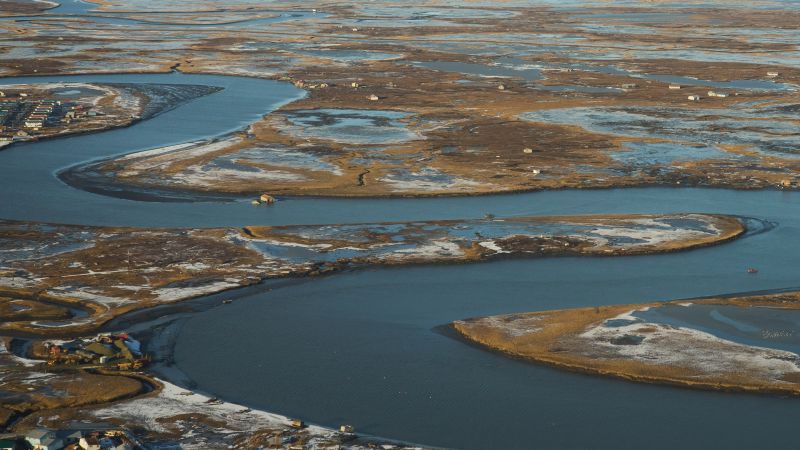
These Alaska villages were swept away – These Alaska villages were swept by a typhoon that left them in ruins. In October 2025, catastrophic flooding from Typhoon Halong devastated Kipnuk and Kwigillingok, two remote Native communities along the Bering Sea coast. Entire homes were lifted from their foundations and transported by floodwaters, with residents still inside. Gravesites were disturbed, exposing caskets that had remained untouched for years. The storm resulted in one death and two missing persons, while contaminated water mixed with sewage and fuel oil created a toxic environment that lingered in the air and on clothing, altering the village’s reality.
Flooding’s Impact on Infrastructure
The destruction of these Alaska villages was worsened by decades of permafrost thawing, a consequence of Alaska’s rapid warming. As the ground eroded, it weakened the foundations of critical infrastructure, including homes, schools, and wastewater systems. The state, known for its extreme weather, has faced three federal disaster declarations in recent years, each requiring swift recovery efforts. Yet, with limited resources, the villages now grapple with the decision to rebuild in the flood zone or seek higher ground, a choice that could determine their future.
Residents of Kipnuk and Kwigillingok have called for relocation, emphasizing the increased risk of recurring floods. However, FEMA has pushed for reconstruction in the original locations, citing legal frameworks that prioritize immediate rebuilding over long-term adaptation. This stance has sparked debate over whether the agency is equipped to address climate-driven disasters or if it is trapped by outdated policies that fail to account for rising sea levels and changing weather patterns.
Policy Challenges and Legal Constraints
The conflict highlights a broader issue in federal disaster response. Under the Biden administration, grants were introduced to fund resilient infrastructure and purchase properties in high-risk areas. FEMA Administrator Deanne Criswell noted that investing in resilience could reduce future recovery costs by up to $6 for every $1 spent. Yet, Trump-era policies froze such programs, leaving communities to shoulder the burden of repeated devastation. Now, with the state seeking assistance to construct permanent housing, the fate of these villages hinges on political will and legal flexibility.
Relocation remains a contentious option. While some advocate for moving to higher ground, the villages’ reliance on subsistence fishing and hunting makes the ocean essential for survival. A federal proposal to elevate homes in their current locations, combined with seasonal mobility, has been suggested as a compromise. However, this idea has not gained momentum, and the communities remain divided over whether to stay or leave, even as the threat of another typhoon looms.
Community Voices and Advocacy
“Our people know that’s no longer safe,” said Kipnuk tribal administrator Rayna Paul, emphasizing the urgency of relocation. She criticized FEMA’s insistence on rebuilding in place, arguing it ignores the climate realities that have transformed their environment. Advocates like Sheryl Musgrove from the Alaska Climate Justice Program echoed this sentiment, calling the policy a failure to adapt. “Spending federal dollars to rebuild a community in the same place they were wiped out sounds crazy,” she remarked, highlighting the need for flexible disaster management strategies.
Meanwhile, the state of Alaska has taken steps to support the villages, requesting FEMA assistance for permanent housing. Though the proposal is still pending, it offers a glimmer of hope. Senator Lisa Murkowski, who leads the Senate Committee on Indian Affairs, has endorsed efforts to allow displaced tribes to rebuild in safer locations. “As these communities look to rebuild in safer areas, we need the tools to make that happen,” said Hannah Ray, the committee’s communications director, underscoring the importance of policy changes to protect vulnerable populations.





